FFCE

Now Hiring: Are you a driven and motivated 1st Line Food Technologist?

FFCE

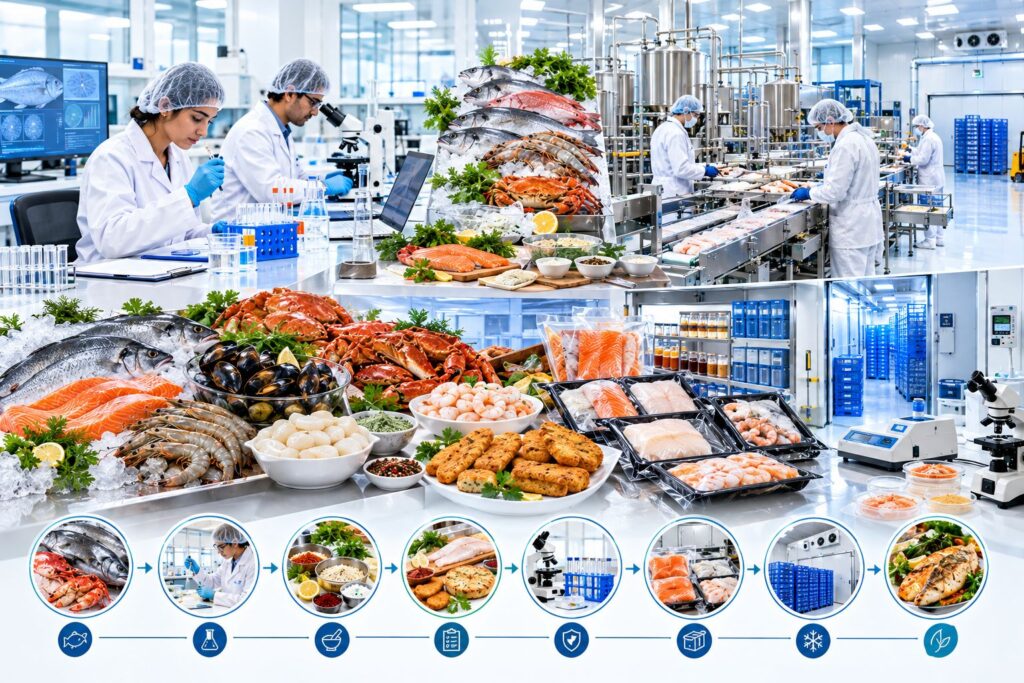
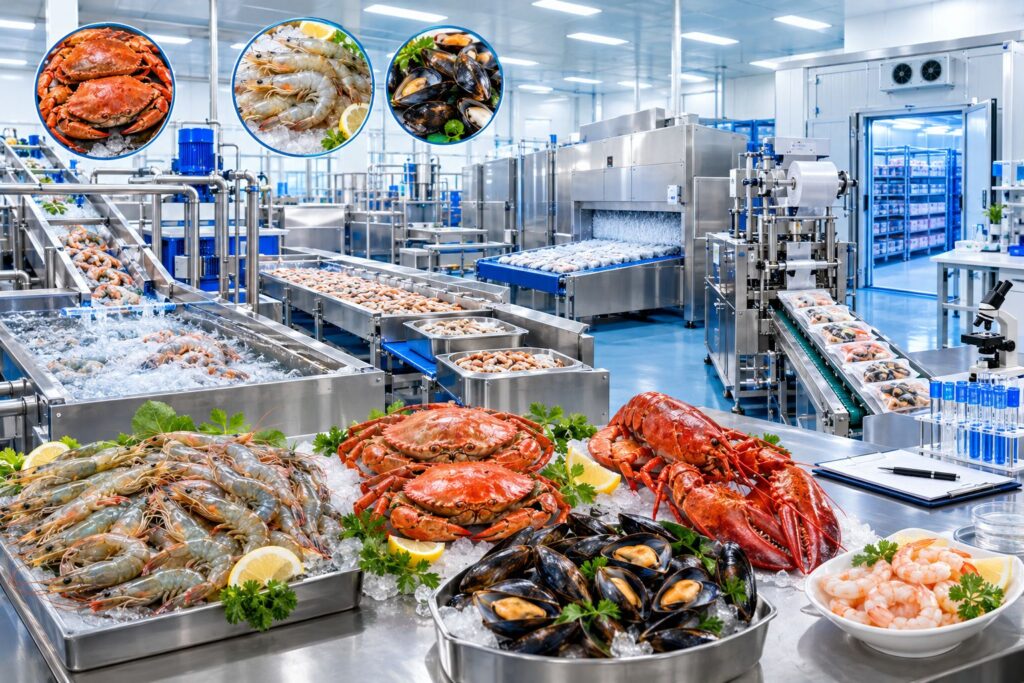
Shellfish product manufacturing facility with seafood processing and packaging equipment
FFCE

Top Shellfish Product Manufacturing Consultants in India

The world market is led by shrimp, crab, and lobster. India’s shellfish business is booming, and professional assistance from people like Frontline Food Experts and Engineers (FFCE) is invaluable. FFCE provides valuable services in shellfish product manufacture, quality standards, eco-friendly techniques, and the latest processing technologies. FFCE helps companies to develop proper marketing strategies, meet international certifications, and get streamlined processes. With FFCE, producers are assured of remaining at the helm of the cutthroat seafood market while ensuring the quality and readiness of goods for export. Shells can rely on FFCE as a partner for sustainability and quality. Introduction India is a world-known seafood country. Shrimp, crab, lobster, and mussels capture the market and have good business. These can come in high quality only by developing skills in processing and quality control besides sustainable methodologies. This is where the consultancy, Frontline Food Consultants and Engineers (FFCE) of India, takes place; they are a leading consultant company in shellfish product production. Why Choose Expert Shellfish Product Consultants? Shellfish production requires intricate processes, from procurement and processing to packaging and distribution. Partnering with professional experts like FFCE offers several advantages: Sustainable Practices: Suggestions for sustainable aquaculture and ethical harvesting methods. Processing Expertise: The application of advanced technology to enhance efficiency and quality. Quality Assurance: Compliance with international standards for food safety by producing export-ready products. Market Insights: Global and domestic market demand to integrate with strategic planning. Key Services by Frontline Food Consultants and Engineers (FFCE) 1.Shellfish Processing Design and Setup Professional shellfish processing plant layouts. High-technology application for cleaning, freezing, and packaging. 2.Certification and Quality Management Acquiring ISO, FSSAI, and HACCP for the shellfish product. All aspects of production must pass high-quality inspection. 3.Compliance with the Environment and Sustainability Environment-friendly aquaculture practices ensure the sustainability of aquaculture products For the client, guide towards ensuring all the legal conditions in seafood production for compliance purposes. 4.Market Development and Branding Update on recent activities in the shellfish industry. Strategies of branding commodities to position such as luxury products in external markets. India’s Role in the Global Shellfish Industry India is a significant exporter of shrimp and other shellfish products shipped to markets in Japan, Europe, and the United States. Indian manufacturers rely on consultants like FFCE to maintain their competitive edge for the following reasons: Enhancing the production capacity. Meeting the stringent requirements of safety and quality by international buyers. Implementing eco-friendly procedures to solve environmental issues. Conclusion The secret to success for Indian shellfish producers to corner the competitive seafood market is teaming up with Frontline Food Consultants and Engineers. FFCE is experienced in producing shellfish products; the companies are, therefore able to produce environmentally-friendly high-quality exportable products meeting the needs of the global marketplace.    
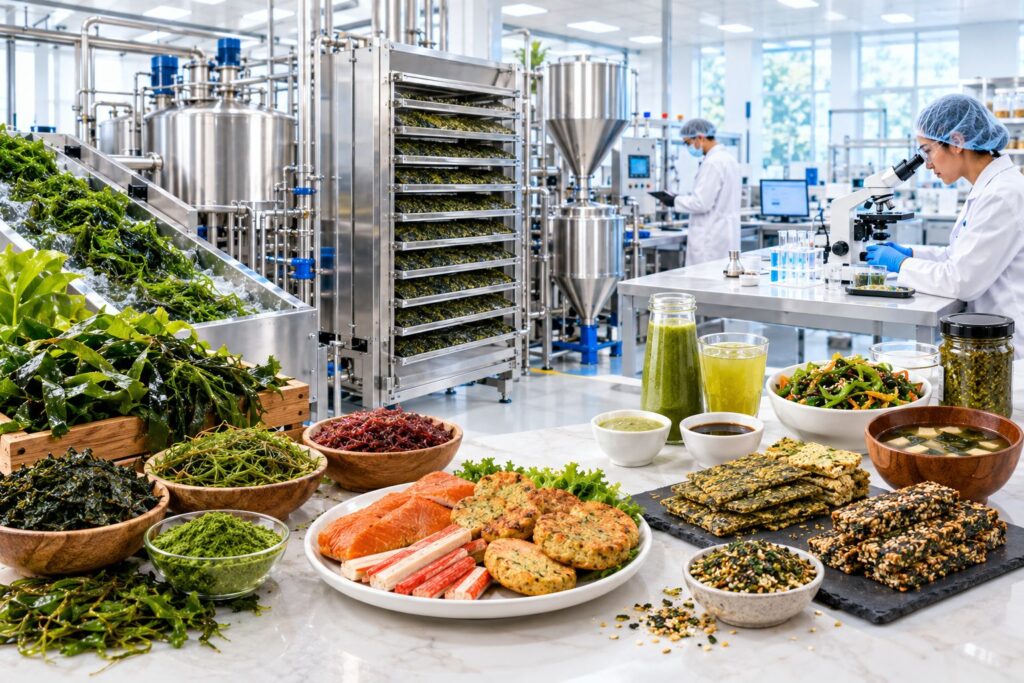
Seaweed processing and food product development facility
FFCE

Revolutionizing the Food Industry with Seaweed

Next generation in food, this seaweed offers a sustainable but nutrient-dense ingredient component. The FFCE are Frontline Food Consultants and Engineers where the brightest minds in food technology will work to come up with innovative products such as plant-based seafood, snack foods high in nutrients, and fortified beverages extracted from the seaweed to satisfy the consumer’s added needs in terms of sustainability and nutrition also. As the global food business progresses, new ingredients such as seaweed, with its nutritional, environmental, and functional properties, are generating waves. Advanced food technologists, in partnership with Frontline Food Consultants and Engineers (FFCE), are pioneering the use of seaweed to transform modern diets. Why Seaweed? Seaweed has emerged as a sustainable superfood, abundant in vitamins, minerals, antioxidants, and bioactive compounds. Its flexibility as a food element allows it to improve. Product compositions that prioritize health (for example, low-sodium snacks and plant-based meat replacements). Functional foods with prebiotic and gut-health benefits. Eco-friendly solutions for reducing carbon footprints in food production. FFCE’s Role in Seaweed Product Development Frontline Food Consultants and Engineers (FFCE) have decades of experience in research, product innovation, and process optimization. Their contributions include: Developed product compositions according to consumer trends and regulatory criteria. Integrated technology for efficient seaweed processing, which includes drying, extraction, and incorporation into various food matrices. Apply market-driven strategies to introduce competitive, high-quality seaweed products. Application of Seaweed in Food Products FFCE also promoted the development of novel seaweed-based products, including: Plant-based seafood substitutes with the same flavor and texture. Seaweed crackers and bars are nutrient-dense snacks. Beverages fortified with natural iodine and calcium. Seasonings and condiments will replace artificial additives. Conclusion Seaweed is taking the food sector by storm due to its sustainability, range, and health benefits. Today, leading food technologists, in partnership with FFCE, are developing novel seaweed-based products for modern-day consumers. It is that wave of innovation that can usher in a future of healthier, greener, and more sustainable food culture.

Seafood product development facility with R&D and processing equipment
FFCE

Trusted Seafood Product Development Consultants

Trusted seafood product development experts provide full support for creating high-quality, innovative seafood products. They have specializations in recipe optimization, quality assurance, sustainable practices, packaging, and market launch strategies for food safety compliance. Their expertise can be used by businesses to meet consumer requests, increase product attractiveness, and create long-term success. Introduction In the rapidly expanding seafood industry, the creation of innovative as well as high-quality products is a need to stay afloat in the market. FFCE (Frontline Food experts and Engineers) are trusted, expert seafood product development companies with specialized services to help businesses produce profitable, market-ready products. Experience covers all steps of the product development journey from conception to production with the ability to ensure compliance with regulatory requirements and with customer needs. Why Choose FFCE for Seafood Product Development? Frontline Food Consultants and Engineers (FFCE) are experienced in the industry with a history of delivering seafood products that meet the highest standards of quality, sustainability, and innovation. Their methodology is tailored to the needs of each client, ensuring that every product is designed with precision and market knowledge. Key Services Provided by FFCE in Seafood Product Development Product Conceptualization and Research: FFCE works with the companies to identify new trends in markets and opportunities and then comes up with a very distinct seafood product that captures many kinds of tastes by conducting extensive market research. Recipe Formulation and Testing: The team of FFCE collaborates with manufacturers to formulate recipes optimum in flavor, texture, and nutritional values. The company conducts thorough testing to improve and enhance the product. Recipe Formulation and Testing: The team of FFCE collaborates with manufacturers to formulate recipes optimum in flavor, texture, and nutritional values. The company conducts thorough testing to improve and enhance the product. Quality Assurance and Compliance: FFCE ensures all seafood products meet the relevant quality requirements and comply with the food safety laws of HACCP, FSSAI, and ISO. It assists in building effective quality control systems to ensure the consistency and safety of products. Sustainable Sourced and Innovation: With the growing requirement for sustainability in seafood, the FFCE helps them with responsible sourcing and ways of implementing environmentally friendly practices within their products to meet the increasing demands of the customers regarding sustainability. Packaging & Shelf Life Optimization: FFCE helps businesses in developing packaging solutions that preserve product integrity while also ensuring extended shelf life. They consider temperature control, preservation methods, and packaging design to ensure products remain fresh. Market Launch Strategy: FFCE aids in the commercial launch of new products from branding and marketing strategies to the distribution network, so products reach the right target market and attain market success. Conclusion Frontline Food Consultants and Engineers is the most consulted company for organizations looking forward to producing quality and reliable seafood products. Its all-around services in product development, sustainability, quality assurance, and market strategy will make new seafood products unique and successful in the competitive market. Companies engaged with FFCE may rest assured that their seafood products will meet customers’ expectations, meet industrial standards, and eventually support the long-term success of a business.

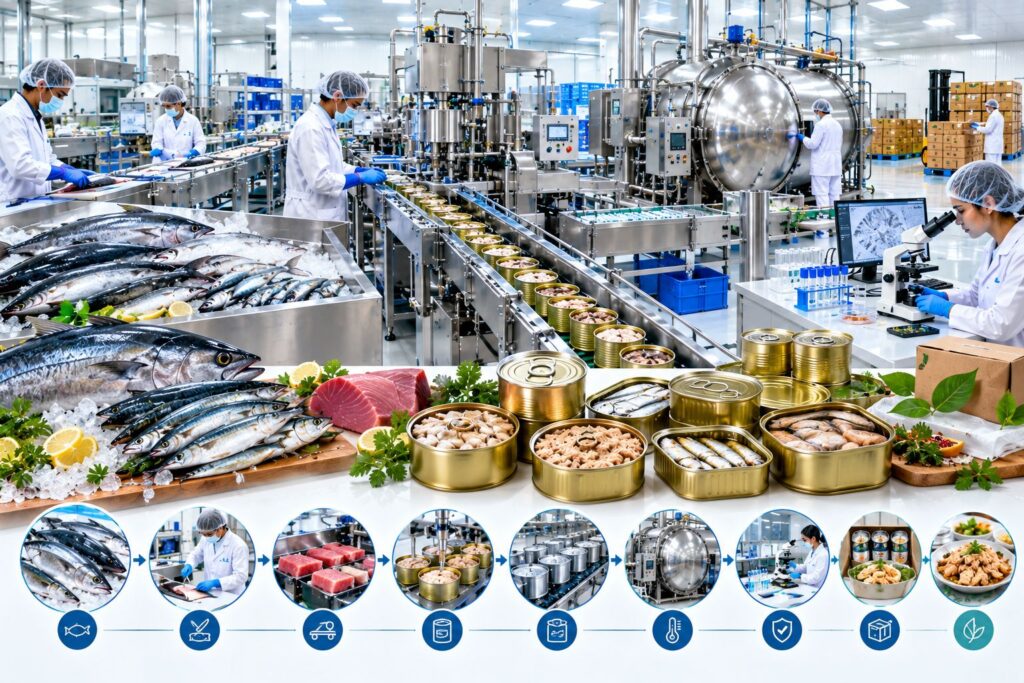
Canned fish production facility with fish processing and canning equipment
FFCE

Top Canned Fish Production Food Technologists in India

The Indian market for canned fish is growing rapidly since people increasingly demand quick, healthy, and tasty food. Technologists of food play an important role in the product’s quality, sustainability, and innovation. Food technologists have emphasized quality control, high-tech canning technology, environmentally responsible packaging, and adherence to the law. For instance, Frontline Food Consultants and Engineers (FFCE), has helped the industry through standardization and certification. With developing technologies such as smart canning and blockchain traceability, India is all set to expand into the domestic and global markets with its canned fish production. Introduction India is rapidly emerging as a food processing business hub, especially for canned fish production. More consumers are now becoming health conscious and convenient in their demands, thereby increasing the demand for increasing-quality, shelf-stable seafood. The growth has been supported by a group of industry-leading professional food technologists. Why Canned Fish? It is in high demand because it is easy to use, does not spoil fast, and has good nutrition. The product preserves necessary omega-3 fatty acids, vitamins, and minerals; therefore, it remains the first choice for healthy food consumers. Tuna, sardines, and mackerel are items whose consumption and export are slowly gaining ground in India, thus representing an increased demand for versatile, healthy food items. Role of Food Technologists in Canned Fish Production Food technologists are very essential in the manufacture of safe, high-quality canned fish. Their functions include: Quality Control: The seafood is fresh and free from contamination. Processing Techniques: Creating new ways of canning while retaining flavor and nutrition. Packaging Innovation: Developments of eco-friendly and long-lasting packaging to preserve product integrity. Compliance with Standards: Observe food safety requirements by FSSAI, HACCP, and international standards for export. Contributions in India Many professional persons in India work for companies related to canned fish. The people are mainly into research, product development, and activities that promote eco-friendliness. Organizations like Frontline Food Consultants and Engineers (FFCE), offer vital support structures and qualifications to individuals operating in the food business; this has the overall impact of streamlining operations, yet remains innovative. Advanced methods in extending shelf life for canned fish, with nutrition retention. Ensure that all canning and packaging is done sustainably and environmentally friendly. Improvement of quality control ensures the products meet international export standards. Industry Outlook The future for canned fish manufacturing in India looks bright with surging demands in both domestic and foreign markets. Cutting-edge technologies such as smart canning, automation, and blockchain traceability are likely to majorly revolutionize the sector. Food technologists will continue to contribute significantly to this innovation and to ensure high standards. Conclusion India’s canned fish industry is due to much of its success by dedicated food technologists who work hard behind the scenes. With their experience, the industry is poised for great expansion, contributing to India’s economy while satisfying the evolving wants of customers. Frontline Food Consultants and Engineers (FFCE), provides further information about industry certifications and developments.

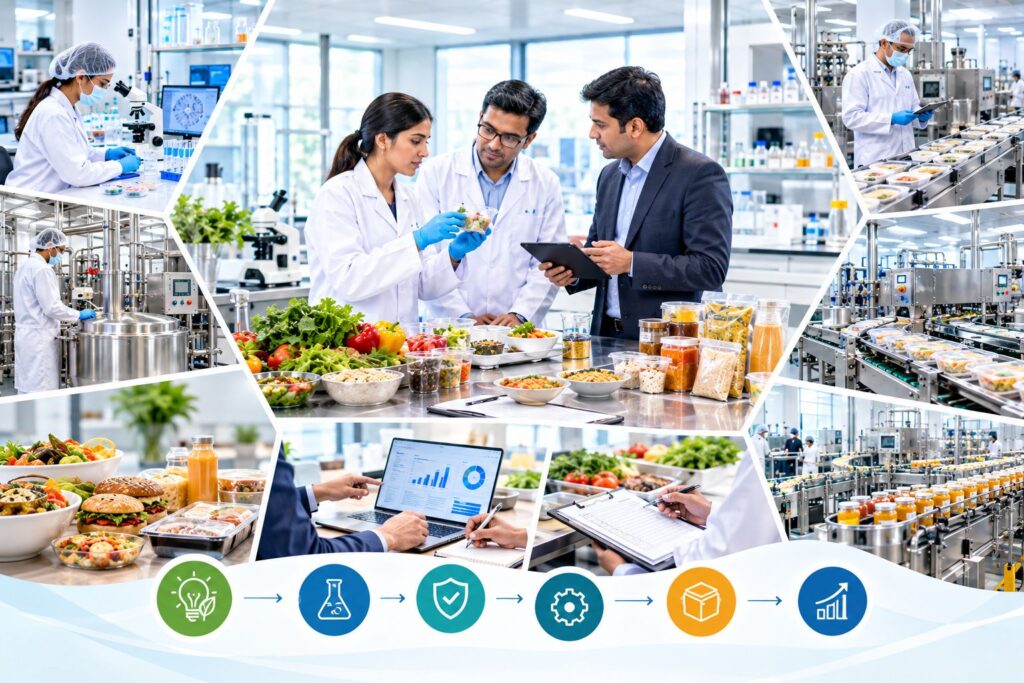
Food consultants supporting food product development, quality testing, and manufacturing innovation
FFCE

Food Consultants: Driving Innovation and Success in the Food Industry

Food consultants are experts who are involved in providing advice on issues such as marketing, compliance, product development, and operational effectiveness to food companies. They provide specialty solutions to solve market-related problems, foster innovation, and increase revenue. They can help businesses stay up to date with regulations, stay ahead of trends, and grow sustainably if they partner with experts like FFCE. Their knowledge turns ideas into profitable ventures, which makes them indispensable partners in the competitive food industry. Introduction Food consultants have become the backbone of efficiency and innovation in the food sector. They help companies meet various regulatory standards, streamline processes, and improve product quality by providing professional guidance and customized solutions. What is a Food Consultant? A food consultant is a professional whose specialty is in advising about various aspects of the food industry. It adds great insight to marketing and product development and ensures that businesses thrive within a dynamic market. Who Are Food Consultants? Expert practitioners who have a great depth of knowledge in the food sector, and food consultants are extremely skilled. They major in providing advice, solutions, and practical support to businesses, whether they be little startups, major manufacturers, or chains of restaurants. They have experience in several areas ranging from marketing, operations, compliance, and culinary arts, to food science. Using their knowledge, food consultants assist companies in overcoming their problems, increase their productivity, and reach their desired objectives. Their work may differ depending on the client’s objectives, but their main goal is always to produce relevant and lasting results. Why Food Consultants Are Essential for Success Industry Expertise: Food consultants pool years of experience and insider knowledge. From the psychology of the consumer to the latest advancements in technology, they know what the market subtleties are. This allows businesses to make informed decisions and avoid costly mistakes. Custom Solutions: Every food business has its unique challenges and targets. In order to offer the best, food consultants provide customized solutions that meet specific demands. Cost-Efficiency: The hiring of a food consultant may seem as if it is an extra expense, but when the money is needed, this foresight in finding cost-saving measures often saves dollars. Their advice is very productive if it is to be in terms of saving production costs, avoiding litigations, or boosting operational efficiency. Creativity & Innovation: The success of the food industry is greatly due to innovation. The newest trends and creative ideas are put in place through food consultants who help businesses outpace their competitors. Innovation allows a company to be different from competitors, and it can attract a new client. Risk Mitigation and Compliance: Non-compliance with regulatory requirements would lead to serious fines, lawsuits in courts, and even damaged reputation. Food experts minimize risk and ensure smooth operation through compliance of all firms with the requirements of the regulatory authorities. Key Roles and Responsibilities of Food Consultants 1. Product Development Product development is one of the most sought-after services by food consultants. This includes: Recipe Development and Innovation: It is developing new recipes or renovating the existing ones to maintain the flavor, level of quality, and appeal for the consumer. Nutritional analysis: Ensuring that the products meet dietary and health standards. Cost Optimization: Finding cost-effective ingredients and manufacturing methods without compromising on quality is termed cost optimization. Market Trends Integration: This is the matching of products with current consumer trends, such as a plant-based diet, gluten-free alternatives, or sustainable components. 2. Adherence to Regulations No food business is complete without the maze of food regulations. Consulting services help in this complex matter by: Maintaining Standards Compliance: This mainly deals with national and international regulatory standards, such as from the FDA, FSSAI, or HACCP. Preparing procedures and paperwork for successful certifications and inspections is known as audit preparation. Labeling Guidance: Ensuring that product labels, especially those including nutritional data and allergen declarations, are accurate and compatible with the law. 3. Operational Efficiency Operational issues can hinder growth and profitability. Food consultants provide avenues for improvement in operations such as: Optimizing Production Processes: Industrial workflows that improve productivity and reduce waste are termed “production process optimization.” Implementing Food Safety Protocols: Having robust processes in place to ensure cleanliness and prevent contamination is called “food safety protocols implementation.” Supply Chain Management: Better procurement strategies and reduction of delays are supply chain management. 4. Marketing and Branding Strategies Apart from making top-quality products, successful food firms understand how to market their products. Food consultants engage in the following activities among others; Market research: This is analyzing customer needs and trends in the market to ensure that products find their right position in the marketplace. Brand Development: The process of developing unique and recognizable brand identities that relate to specific target markets is called brand development. Packaging Design: Designing packages to make them more attractive and useful while illustrating the value of the item is called packaging design. Digital Marketing Strategies: Some digital marketing strategies include using the Internet as well as social media. 5. Menu Development for Food Service Businesses Food experts are crucial to cafes, restaurants, and catering businesses in the following ways: Creating innovative meals that balance profitability, diversity, and flavor. Standardize recipes to ensure uniformity between shifts or locations. Training kitchen staff on efficient preparation techniques. Real-Life Impact of Food Consultants Many companies have been transformed by food professionals. For instance: A small bakery, which was experiencing inconsistent quality of products, increased both customer satisfaction and revenue with the help of a consultant who standardized recipes and put quality control measures in place. A restaurant chain expanded its vegan options with the help of a consultant and attracted more customers and, subsequently, more revenue. After a consultant streamlined its supply chain and implemented more effective procedures, a food producer saw a 20% decrease in manufacturing costs. Trends Shaping the Role of Food Consultants Sustainability: A growing number of consumers have found that sustainable products are extremely attractive. Food experts have assisted companies in going green, such as through the reduction of food waste and acquiring sustainable products. Health & Well-being: There is an increase in the need for function and healthful foods. Consultants are helping companies build products that satisfy such

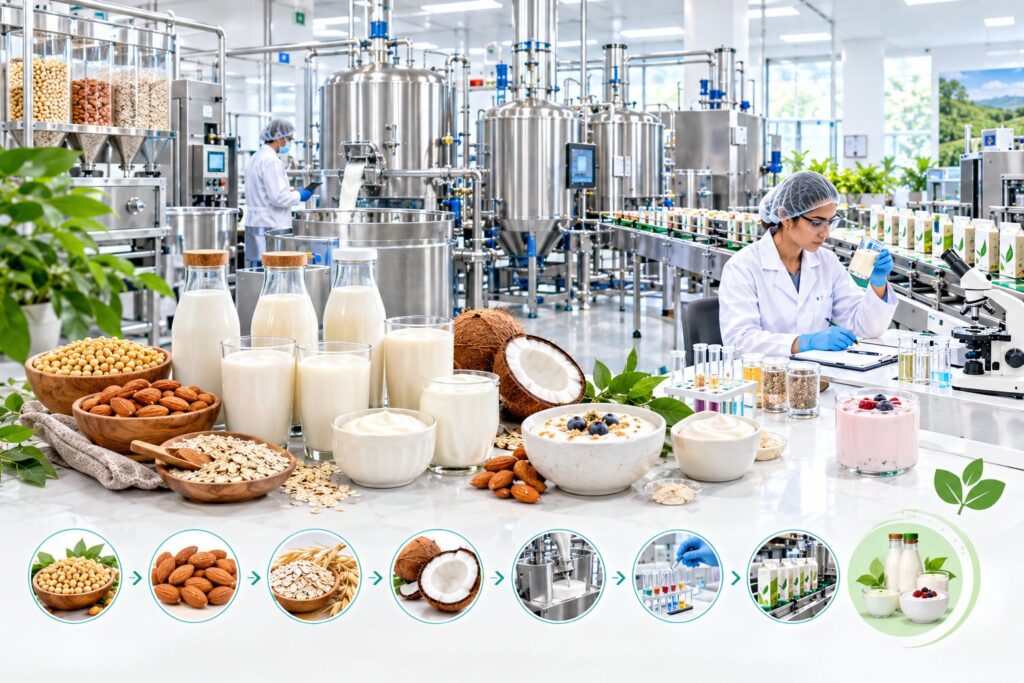
Plant-based dairy alternatives manufacturing facility with processing and quality testing
FFCE

Plant based dairy alternatives: – A healthy nutritional potential

Plant-based dairy alternatives are increasingly becoming popular due to health benefits, environmental sustainability, and ethical considerations. This content explores the nutritional potential of these alternatives, the processes involved in their production, key steps in setting up a plant-based dairy business, current market trends, and the role of consultants in establishing such ventures. Introduction In recent years, there has been a growing trend towards plant-based dairy alternatives. People are more aware of the health, environmental, and ethical issues linked to traditional dairy products. These alternatives, made from plants like soy, almond, oat, and coconut, offer a range of nutritional benefits and cater to various dietary preferences and restrictions. Brief about the process Production of plant-based dairy alternatives is a multistage process from the acquisition of raw materials to packaging. A more general overview: Sourcing Raw Materials: Acquisition of good-quality plant sources including soybeans, almonds, oats, or coconuts. Preparation: Washing, soaking, and crushing of the raw material in extracting the plantbased milk. Filtering: Getting a fine liquid by eliminating solid remains. Fortification: This stage involves supplementing vital nutrients like vitamins and minerals for enhanced nutritional status. Flavoring and Sweetening: Incorporation of natural flavors and sweeteners for taste improvement. Homogenization and Pasteurization: Ensuring that the texture is uniform, and the shelf life is increased. Packaging: Sealing the product in eco-friendly containers for distribution. Key Steps in Setting Up a Plant-Based Dairy Business Market Research: Identify consumer preferences, market demand, and competition Business Plan: Developing a detailed plan stating goals, strategies, and financial projections. Sourcing Ingredients: Identifying good sources of high-quality raw materials. Production Facility: Equipping a facility with necessary equipment and adhering to food safety standards. Product Development: Developing various products for different tastes and dietary requirements. Branding and Marketing: Building brand identity and also promoting products indifferent market channels. Distribution: Identifying the required distribution for reaching target markets. Market Trends The plant-based dairy market is growing rapidly, thanks to factors such as: Health Consciousness: Increased demand for healthier alternatives to dairy. Environmental Concerns: Higher awareness of the environmental damage caused by dairy farming encourages consumers to opt for a plant-based diet. Innovation: Continuous innovation in product development- new flavors and fortified. Retail Expansion: Greater availability of plant-based dairy in supermarkets and onlineplatforms. Role of Consultants in Setting Up Consultants play a crucial role in the successful establishment of a plant-based dairy business by providing expertise in various areas: Market Analysis: Provides insight into the market trends and consumer behavior. Regulatory Compliance: It is always important to comply with food safety and industryregulations. Product Development: Supports in creating innovative and nutritionally balancedproducts. Operational Efficiency: Improves the production processes and hence enhancesefficiency while reducing the cost. Marketing Strategies: Design effective marketing campaigns that build brand awarenessand enhance sales. Conclusion Business opportunities and consumers have a very promising place with plant-based dairy alternatives. Having numerous health benefits, environmental advantages, and high demand in the market, such products are destined to become the new norm of the modern diet. It is essential to know about the process of production, trends in the market, and the consultants to be a successful entrepreneur in this plant-based dairy industry to contribute towards a healthier, more sustainable future.

Gut health and dairy products with yogurt, probiotics, and dairy research
FFCE

Gut Health: The Role of Dairy Products

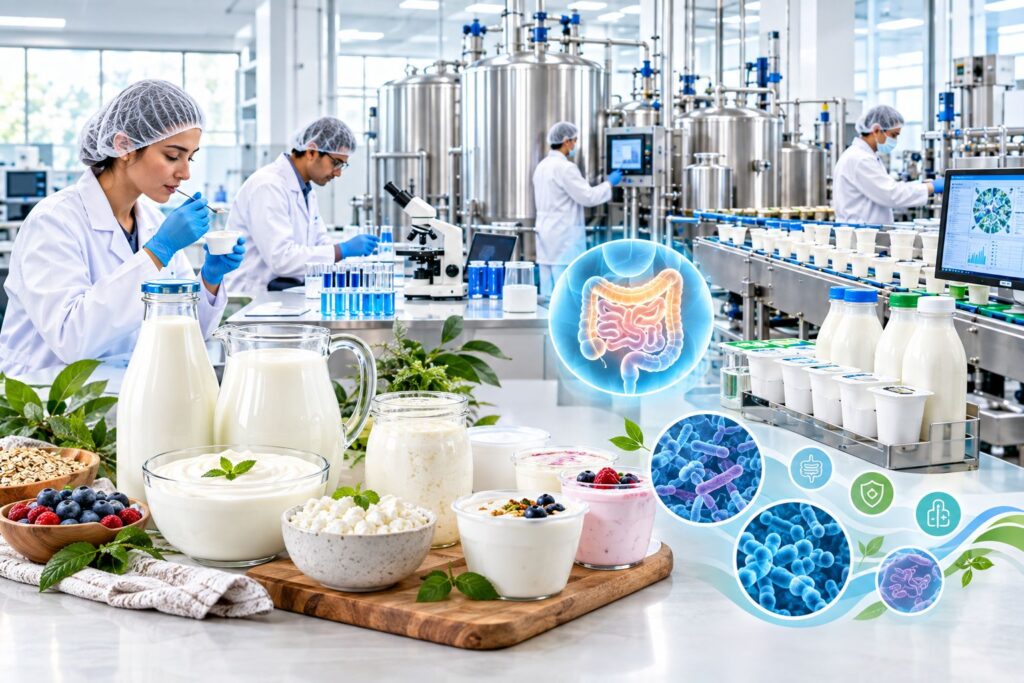
The dairy products are rich in probiotics, prebiotics, and other essential nutrients that promote gut health. Such foods, especially fermented dairy such as yogurt and kefir, help maintain a healthy balance of the gut microbiome, facilitate better digestion, and improve well-being in general. The article delves into the role of dairy in gut health, key benefits, market trends, and the role of consultants in shaping dairy innovations. Introduction Gut health is one of the core factors that influence general wellness and digestion, immunity, and even mental health. Fermented dairy products are especially famous for their positive effects on gut microbiomes. Such products introduce good bacteria to the digestive system, ensuring that there is a good balance that would improve digestion and immune functions. Brief About the Process Fermentation: Yogurt, kefir, cheese are fermented that introduces the probiotics — live helpful bacteria that also promote beneficial gut health, aiding to digest food with healthy flora in the guts. Nutrient Content: These foods are rich in calcium, vitamin D, and proteins, which play a major role in gut health maintenance. These nutrients also assist in the absorption of other vital nutrients and enhance the immune function. Prebiotics and Probiotics: Dairy contains both prebiotics (which feed beneficial gut bacteria) and probiotics (live beneficial bacteria). Together, they help in improving digestion and promoting a balanced microbiome. Key Points of the Process Probiotics Benefits: Fermented milk products are live probiotics that help in digestion and gut health. Digestive Aid: Dairy helps in digesting lactose for individuals with mild lactose intolerance, reducing digestive discomfort. Gut Microbiome Balance: The regular consumption of dairy has been said to improve the gut microbiota’s balance. It helps raise immunity while maintaining digestive health. Absorption of Nutrients: Dairy products improve the intake of nutrients such as calcium, which is important for health of the gut and bone. Brief About the Process Fermentation: Yogurt, kefir, cheese are fermented that introduces the probiotics — live helpful bacteria that also promote beneficial gut health, aiding to digest food with healthy flora in the guts. Nutrient Content: These foods are rich in calcium, vitamin D, and proteins, which play a major role in gut health maintenance. These nutrients also assist in the absorption of other vital nutrients and enhance the immune function. Prebiotics and Probiotics: Dairy contains both prebiotics (which feed beneficial gut bacteria) and probiotics (live beneficial bacteria). Together, they help in improving digestion and promoting a balanced microbiome. Key Points of the Process Probiotics Benefits: Fermented milk products are live probiotics that help in digestion and gut health. Digestive Aid: Dairy helps in digesting lactose for individuals with mild lactose intolerance, reducing digestive discomfort. Gut Microbiome Balance: The regular consumption of dairy has been said to improve the gut microbiota’s balance. It helps raise immunity while maintaining digestive health. Absorption of Nutrients: Dairy products improve the intake of nutrients such as calcium, which is important for health of the gut and bone. Conclusion Many benefits of dairy products for gut health include improved digestion, among other things, and gut microbiome balancing. Consumer awareness of gut health continues to increase, thereby pushing the market for probiotic-rich dairy products forward. Consultants guide the dairy industry to innovate in product development, ensuring that the dairy industry responds appropriately to these changing needs. To ensure dairy products can continue serving gut health, embracing some trends and responding to consumer wants can contribute to health-focused and environmentally sustainable options.

Farm to fork food processing and supply chain from farm to consumer
FFCE

Evolution of the Process in Food: From Farm to Fork

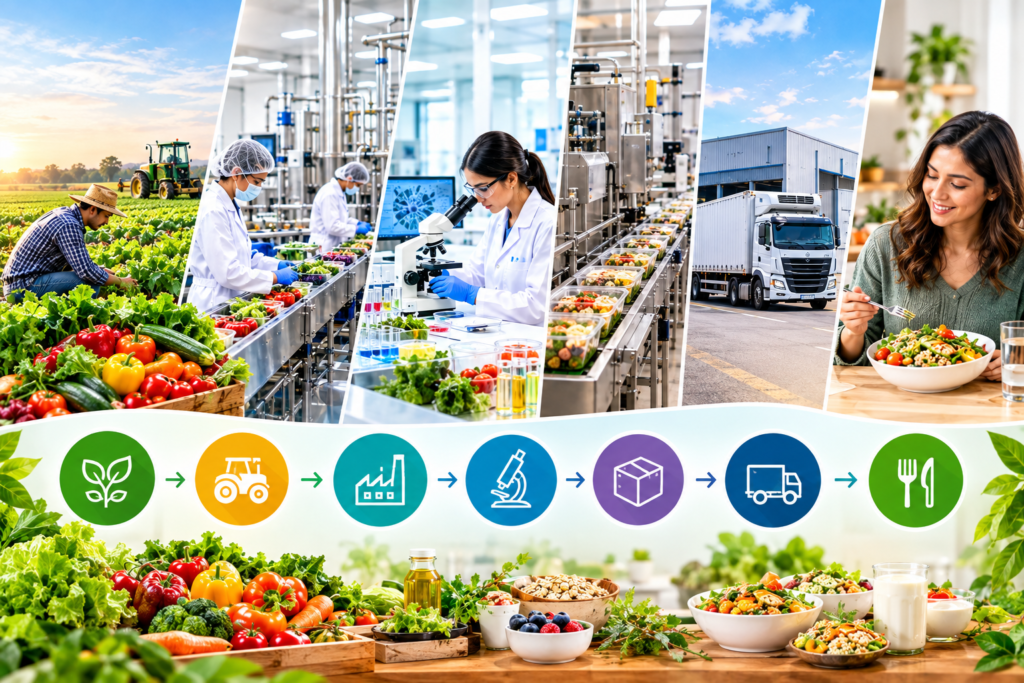
The journey of food from farm to fork has really changed over time, with all changes being influenced by new developments in technology, changes in consumer preferences, and issues surrounding sustainability. These transformations change farming, processing, packaging, distribution, and consumption practices, which shape how food is brought to our tables today. The food industry now focuses on quality, safety, and eco-friendliness to meet modern consumer demands. Introduction The food supply chain, from cultivation to consumption, has undergone a sea change, driven by innovation and changing consumer expectations. The shift toward more sustainable, healthier, and efficient food production methods is reshaping the entire food industry, making it more responsive to global challenges. Brief About the Process: Farming and Cultivation: Agriculture has changed from conventional methods to more technologically advanced methods, such as precision farming, GMOs, and vertical farming, for more efficient and sustainable purposes. Processing: Technologies such as freezing, canning, and fermentation have improved the shelf life of food and enhanced safety. The trends in plant-based and lab-grown products are also changing the processing of food. Packaging: From simple materials to more advanced, eco-friendly packaging methods to reduce waste and enhance food preservation, packaging has changed over time. Distribution: Efficient distribution channels, such as global logistics and e-commerce, make food more accessible while meeting rising demand for convenience and freshness. Consumption: Consumers’ focus on health, sustainability, and ethical sourcing leads to demand for organic, plant-based, and locally sourced foods. Key Points of the Process: Technological Innovation: Precision farming, automation, and biotechnology improve production efficiency and sustainability. Sustainability Focus: Eco-friendly packaging and sustainable sourcing are critical as consumers demand greener options. Consumer Health Trends: Demand for organic, plant-based, and functional foods increases as people have become increasingly health conscious. Global Distribution: Advanced logistics ensure global availability of fresh, diverse food products. Market Trends: Plant-based Foods: There is a boom for plant-based proteins as well as alternatives to meat and dairy, driven by both health and environmental factors. SUSTAINABLE PACKAGING: Pressure for eco-friendly packaging is now putting brands on the move towards biodegradable and recyclable material. Online Grocery Shopping: The movement toward e-commerce has brought about the evolution of grocery shopping and increased its accessibility to consumers. Role of Consultants in the Food Industry: Process Optimization: Food producing process analysis is done to analyze inefficiencies and provide ways for improvement. This may involve improvement in supply chains, minimization of waste, and deployment of automation technologies in maximizing productivity and cost efficiency. Regulatory Compliance: The food industry is an industry that is subjected to heavy regulation. Consultants guide the businesses in keeping away from non-compliance. Consultants ensure that business keeps abreast with food safety regulations, labelling laws, environmental standards, among other statutory requirements. Market Research and Consumer Trends: consultants help businesses understand market dynamics and emerging consumer preferences. They conduct research to identify trends, such as the rise in plant-based products or sustainable packaging, enabling companies to adapt their offerings to meet consumer demand. Sustainability and Innovation: The concern for sustainability is growing in the food industry. Consultants help companies adopt sustainable practices such as reducing carbon footprints, sourcing ethical ingredients, or using eco-friendly packaging. They also support innovation in product development, keeping businesses ahead in a competitive market. Supply Chain Management: Effective supply chain management is the backbone of the food industry. Consultants optimize sourcing, distribution, and inventory management to ensure that products reach consumers at the right time and with the right quality. Branding and Marketing Strategy: Consultants help businesses develop effective branding and marketing strategies. They provide insights into consumer behaviour, help design marketing campaigns, and assist in establishing a brand identity that resonates with target audiences. Financial Management: Food industry consultants typically help businesses improve their bottom line. They often guide the business on managing cost, pricing, and planning financials to increase profit and reduce operational costs. Conclusion This is a very modern process of food, farm to fork, as developed with technological innovations, sustainability practices, and changes in consumer preferences. Thus, as the industry catches on to these trends, more personalized, healthier, and eco-friendly options will continue to shape the future of food production and consumption.

Food processing audit consultation for food safety and compliance
FFCE

The Role of Consultation While Auditing in Food Processing Sectors

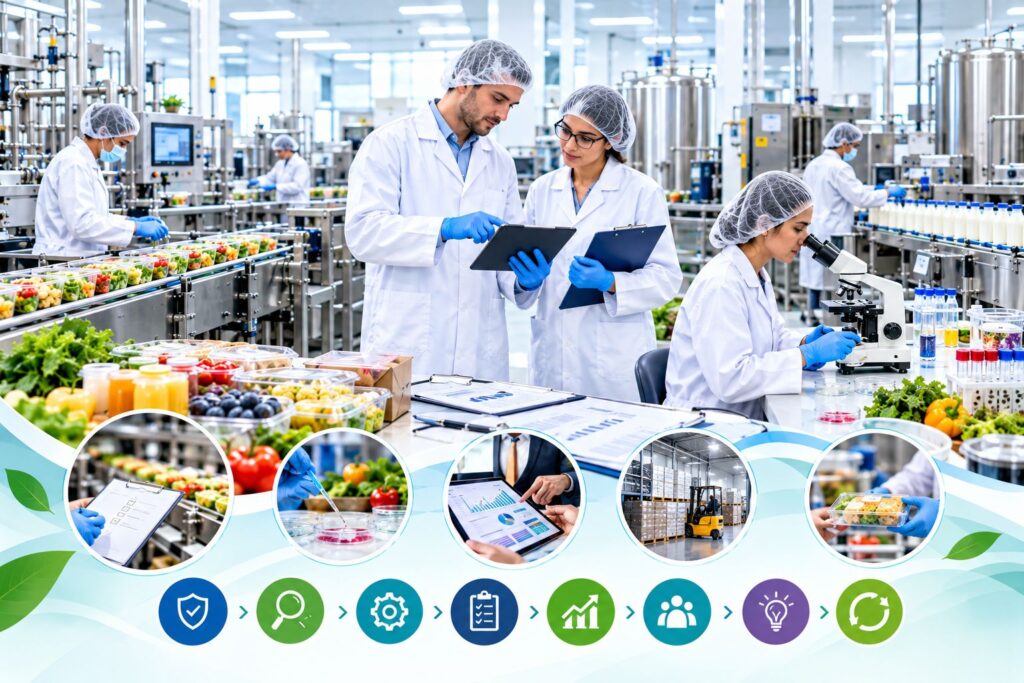
Consultation plays a key role in ensuring effective auditing in the food processing industry. Consultants bring expertise and make compliance processes easier to streamline, hence enhancing efficiency in operations in accordance with the standards of the market.   This will be a core activity during the auditing process in the food processing sector. Consulting is helpful in following any regulation, identifying areas with operational inefficiencies, and assisting businesses in following any industry standards and market requirements. Consultants bridge regulatory frames and practical implementation by encouraging continuous improvement and ensuring the establishment of competitive advantage. Introduction In the food processing sector, auditing makes sure that requirements for safety, quality standards, and operational procedures of food items are complied with. Consulting is essential while auditing; otherwise, regulation requirements cannot be filled practically in everyday activities. Auditing in the food processing industry is critical to food safety, quality assurance, and operational integrity. Although audits are used to measure compliance and identify areas for improvement, consultation complements the audit process by providing expert advice and tailored solutions. This synergy ensures that businesses meet regulatory requirements but also adopt best practices for sustained growth. Brief About the Auditing Process: The auditing process of food processing involves the following steps: Pre-Audit Preparation: Collection of documents, familiarity with operational workflows, and definition of audit objectives. On-Site Inspection: Inspection of facilities, equipment, and processes to check compliance with standards like ISO 22000 or HACCP. Data Collection and Analysis: Review of records and performance metrics. Reporting: Identification of gaps, actionable insights, and recommendation of corrective measures. Follow-Up: Ensuring the implementation of recommended improvements effectively. Key Points of the Process Compliance Verification: Checking for compliance with food safety laws and standards. Risk Assessment: Identifying hazards in the production process. Operational Efficiency: Checking workflows to reduce waste and maximize performance. Documentation: Ensuring accurate and accessible records for traceability. Continuous Improvement: Recommending improvements to sustain high-quality production. Trends in Food Processing Audits Technology Integration: AI and IoT adoption for real-time monitoring. Sustainability Focus: Eco-friendly practices and waste reduction. Global Standards: Increased alignment with international certifications such as FSSC 22000. Traceability: Blockchain and digital solutions for enhanced supply chain transparency. The Role of Consultants Expert Guidance: Providing insights on regulatory updates and industry standards. Customized Solutions: Tailoring audit strategies to the specific needs of the business. Training: Equipping staff with the knowledge to maintain compliance. Gap Analysis: Identifying weaknesses in current processes and suggesting improvements. Efficiency Enhancement: Streamlining operations to meet compliance with minimal disruptions. Conclusion Consultation is one of the fundamental elements that make up auditing in the food processing industry. Beyond ensuring compliance, consultants drive innovation and efficiency. Their work promotes sustainability and sets businesses in a position to respond appropriately to the dynamic nature of market demands. Efficient consultation on audits transforms what would be regulatory challenges into opportunities for growth and excellence.

Food and beverage project management with production planning and manufacturing operations
FFCE

The Expanding Role of Project Management in the Food and Beverage Industry

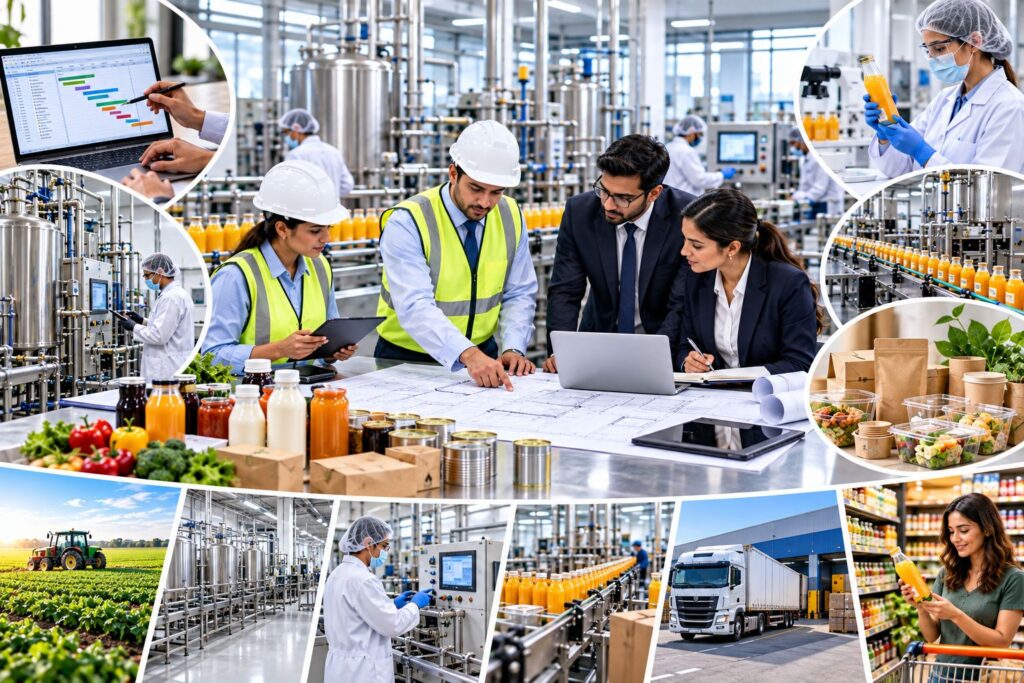
Project management is, therefore increasingly becoming very significant in the food and beverage sector as most operations have been streamlined through this means for compliance reasons, to drive innovation to keep pace with market developments, and ensure one is within regulatory requirements yet also compliant with consumer requirements.   Project management is essential in the food and beverage industry, facilitating efficiency, compliance, innovation, and adaptability. It addresses challenges like regulatory demands and evolving consumer preferences while ensuring businesses maintain competitiveness and deliver quality. Introduction The food and beverage industry is dynamic with regulatory changes, consumer preferences, and technological advancements. In this regard, effective project management has emerged as a pivotal factor in the ability to handle these challenges. From product development to supply chain optimization, project management ensures that processes are efficient, innovative, and aligned with industry standards. Brief About the Project Management Process: The food and beverage industry project management process comprises: Initiation: Setting clear objectives, defining the scope, and identifying key stakeholders. Planning: Developing comprehensive strategies, allocating resources, setting budgets, and creating timelines. Execution: Coordinating team efforts, utilizing resources efficiently, and implementing plans. Monitoring and Controlling: Tracking progress, ensuring compliance, addressing risks, and maintaining quality. Closure: Completing deliverables, conducting reviews, and documenting insights for future projects. Key Points of the Process: Risk Management: The identification of possible risks and the control of these in the supply chains, productions, and compliance. Resource Optimization: Optimistic utilization of material, labour, and capital resources. Innovation Integration: Controlling innovation on new products or new technology. Regulatory Compliance: Compliance of the project to the food safety standard and laws. Stakeholder Collaboration: Co-ordination across functional teams. Market Trends in Project Management: Digital Transformation: Empowerment through automation and on-time tracking using project management software and tools. Goals for Sustainability: Inception of environmentally friendly practices in project frameworks. Practices of Agile: Flexible and iterative procedures to respond to changing requirements. Globalization: Managing international projects to meet the needs of diverse markets. Consumer-Centric Approaches: Projects that improve product quality, health benefits, and transparency in the products. The Role of Consultants: Strategic Planning: Help to align the goals of a project with business objectives. Expert Advice: Keep one abreast of the industry trends, regulatory updates, and best practices. Resource Management: Helps in budget optimization and effective resource allocation. Training and Development: Skilling the teams for effective project execution. Technology Implementation: Help in adoption of the tools for project management. Continuous Improvement: Identifying areas of improvement and sustainable practices. Conclusion The growing role of project management in the food and beverage industry underlines its significance in terms of achieving operational excellence and innovation, as it deals with dealing with challenges and capitalizing on opportunities for a thriving business in the ever-changing world. Consultants have played their part in ensuring that consultants are not only done in line with time and budget but create long-term success and sustainable outcomes.

Scroll to Top

Your Trusted Food-Tech Partner Simplifying Solutions, Maximising Success

    Your idea is 100% protected by our Non Disclosure Agreement

    What is Refresh icon

    Your Trusted Food-Tech Partner Simplifying Solutions, Maximising Success

      Your idea is 100% protected by our Non Disclosure Agreement

      What is Refresh icon

      Your Trusted Food-Tech Partner Simplifying Solutions, Maximising Success

        Your idea is 100% protected by our Non Disclosure Agreement

        What is Refresh icon

        Powering your food business forward