
The Indian Bakery Market: Evolution of Bakery Products
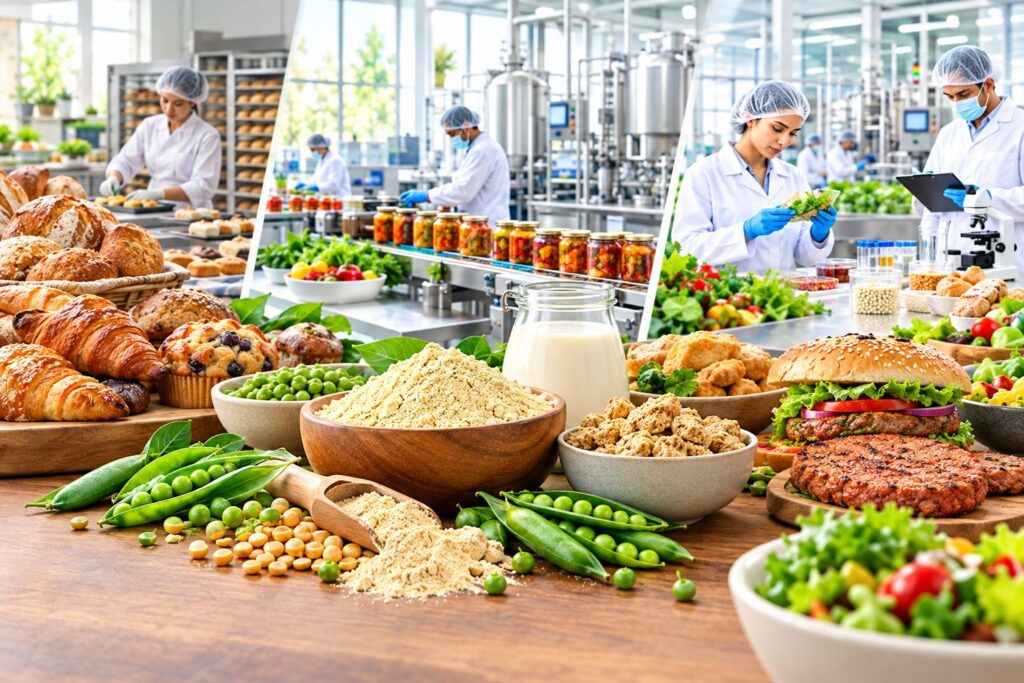
Bakery in India has moved far beyond the neighbourhood bun shop. Over the past three decades the category has evolved from commodity breads and biscuits to a multi-segment industry that spans industrial breads, packaged biscuits, premium patisserie, frozen par-bake/ready-to-bake (RTB) systems, and functional / ethnic bakery innovations. For entrepreneurs, retailers and co-packers this evolution creates technical challenges and commercial opportunities — and a clear place for specialist food consultants to add value. Following is a brief, technically precise overview of how the Indian bakery landscape has evolved, what is propelling product development, production and process implications you should be aware of, market trends, and how food consultants (e.g., FFCE-type companies) assist companies at each step. Historical path — from small local to industrial and premium Pre-1990s: Small local bakeries, traditional breads (naan, pav), minimal mechanization. 1990s–2000s: Inclusion of organized players (modern retail, packaged bread franchises), industrial scale-up (continuous ovens, automatic dough systems). 2010s onwards: Premiumization — artisanal bakeries, patisseries, fusion products, and expansion of frozen/RTB supply chains to serve QSRs and hotels. Today: A multi-channel industry — retail FMCG breads & biscuits, direct-to-consumer premium patisserie, foodservice frozen par-bakes, and health-/functional bakery. Market shape & opportunity (high-level) The bakery & biscuits business is India’s largest snacking FMCG category. Instead of one number (which, depending on source/time, can differ), see market size in layers: Mass-market packaged buns & breads (staple, high volume, low margin). Biscuits & crackers (large, branded FMCG category). Frozen/RTB & industrial bakery ingredients (increasing rapidly because of QSRs, hotels). Premium patisseries & artisan (urban focus, higher margin) Factors contributing to growth: urbanisation, working families, modern retailers, online grocery, QSR growth, improvements to cold chain & freezing, and health/functional positioning (multigrain, low sugar, high protein). Practical context for the B2B plan: the first consideration — are you selling volume (packaged biscuits / bread) or selling value (premium patisserie, frozen par-bake) or a niche (keto, gluten free, functional). Each option will determine different capex, QC and distribution. Technical issues — raw materials, formulation and process A. Raw materials & functionality Choice and quality of flour: Improvers and enzymes comprise emulsifiers (e.g., DATEM, SSL) which enhance both freezer stability and crumb softness, oxidizing agents (e.g., ascorbic acid) which enhance dough strength, and amylases, which retard staling in bread. Fats & shortenings: Selectively choosing will affect aeration, mouthfeel and shelf life. Interestified fats and palm fractions are employed as substitutes for hydrogenated fats (trans-fat regulation). Water quality & salt: Water hardness influences dough rheology; manage mineral load. Salt influences yeast activity, protein strengthening and flavor. Functional ingredients: Proteins (WPI, soy), fibres (inulin), seeds, fruit inclusions require formulation adaptation for water, dough stability and shelf life. B. Process technologies Mixing: Spiral and planetary mixers for artisan to small industrial; continuous mixers (dough mixers with dosing) for large-volume lines. Temperature control and dough development are important. Fermentation/Proofing: Temperature/time control (retardation for flavour); automatic proofers with humidity control to ensure uniform oven spring. Forming & Laminating: Rotary moulder, wire-cut, sheeting and lamination (for croissants/puff) — strict control of fat distribution, gluten network and lamination temperature. Baking: Tunnel/retard ovens, rotary rack ovens, and deck ovens for various products. Thermal profiles influence crust colour, Maillard reactions and moisture gradients. Cooling & Slicing: Controlled, rapid cooling minimizes condensation and microbial hazard. Slicing lines for packaged bread introduce contamination risks — hygiene & metal detection required. Freezing / Par-bake: IQF or spiral freezers for items to frozen supply chain; par-bake tactics (60-80% baking, finish on retail) enable large-scale distribution. C. Shelf life and packaging Bread and other high-moisture baked goods have a longer shelf life because to modified atmosphere packaging (MAP). Barrier films and nitrogen flushing preserve crisp items (crackers). Antistaling tactics: Enzyme systems, moisture management, packaging permeability engineering. D. Quality & analytical controls Dough rheology (Farinograph, Extensograph) for upstream QC. Moisture & aw for shelf life. Sensory & texture equipment (texture analyzers for firmness of crumb, shear). Microbiological controls: Particularly on cream fillings, custard, cake production and slicing lines. HACCP critical control points: proofing, cream filling, cooling, storage. New products & technical advancements Frozen retail and par-bake ranges (This includes retailers like grocery stores & QSRs): muffins, croissants, artisan loaves — focuses on freezer-grade formulation & proofing profiles. Functional bakery: Protein-bread, fiber/prebiotic breads, low-GI/millet breads — formulation is related to enzyme packages, shelf-life modeling, and compatibility between protein and wheat. Ready-to-heat / in-home bake: RTB dough balls, frozen parathes, instant pizza bases — require strong dough formulas to withstand cold chain. Technical enablers Controlled atmosphere retarding and programmable proofers for schedule and flavour flexibility. Automated dosing & inline mixing for repeatable micro-ingredient addition (improvers, enzymes). Advanced freezers (spiral/IQF) and precise thaw/bake finish control for par-bake. Adoption of predictive shelf-life modelling (Arrhenius, moisture sorption) to minimize trial cycles. Manufacturing scales & CAPEX considerations Micro / artisan bakery: low capex (₹5–40 L), manual/bench top mixers, deck ovens — quality and innovation focus. Semi-industrial (retail-supplier): (₹40 L – ₹3 Cr) pack lines, continuous mixers, spiral ovens — formal QA/QC labs required. Industrial & co-packers: (₹3 Cr +) automatic dough lines, proofers, wrappers, frozen lines — high automation for efficiency and cost control. (Exact CAPEX widely varies; consultants operate DPRs and vendor quotes to generate accurate budgets.) Market trends, distribution & consumer shifts Modern trade + e-commerce expand base for premium SKUs and frozen lines. Small-pack penetration in semi-urban/rural markets drive volumes for biscuits & small bread packs. Foodservice/QSR growth generate strong B2B demand for frozen par-bakes, burger buns and pizza bases. Health & wellness: Protein breads for fitness segment; sugar-reduced bakery for diabetic awareness. Regulatory & safety FSSAI guidelines for declaration of allergies, use of additives (emulsifiers, leavening), and labeling (nutrition panels). Regulations governing trans fats: reformulation to eliminate partly hydrogenated fats; use of authorized substitutes; and disclosure. HACCP / FSMS / GMP: for larger plants and export supply chains. Role of food consultants (technical & commercial worth) Food consultants speed up time-to-market, minimize technical risk and maximize production economics. Common consultancy activities involve: A. Concept → Product development Ingredient choice