FFCE

Now Hiring: Are you a driven and motivated 1st Line Food Technologist?

FFCE

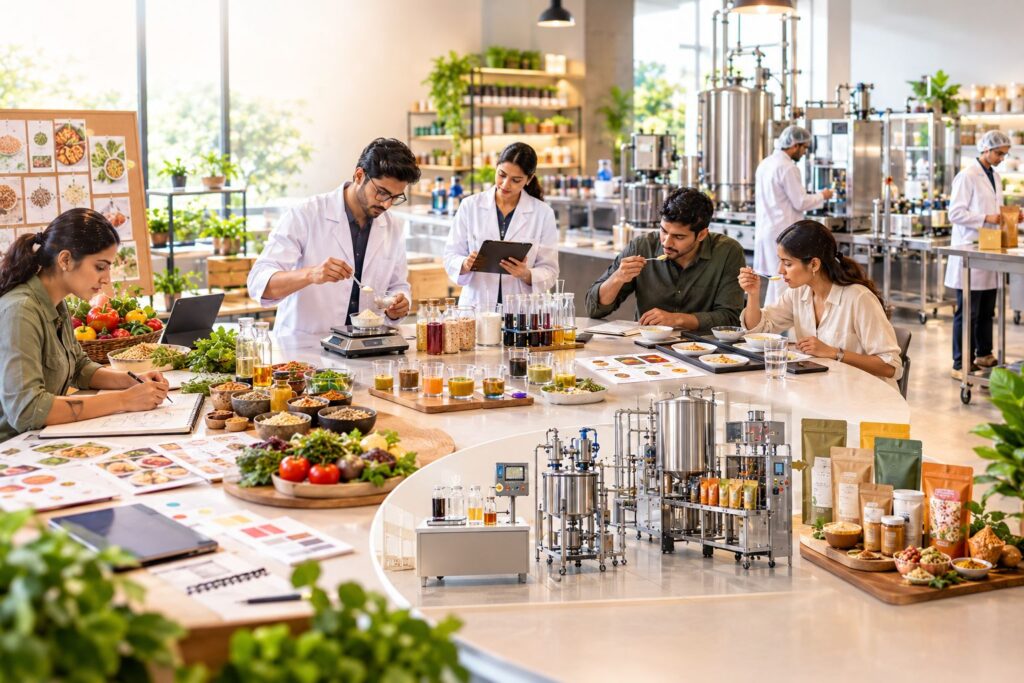
Food R&D consultant working on food product development, formulation and laboratory testing
FFCE

How a Food R&D Consultant Accelerates Successful Product Launches

Food trends are always in a state of flux and so it is important to stay abreast of the latest developments for long-term success. Analyzing the target market is the cornerstone of a successful product launch. Floating a new product bolsters a food company’s growth but transforming ideas into tangible food and drink alone does not bring home the bacon. Failure to pay close attention to safety, legal, quality, packaging and processing parameters will severely undermine the product launch and sabotage your success. Embracing a holistic approach is therefore essential and amassing knowledge about safety assurance, legislation, use of ingredients, thermal processing etc. becomes significant. A resurgence of interest in functional foods is conspicuous and rising concerns around sustainability and health have driven food companies to focus on the development of gluten-free products, plant-based foods, gut-friendly commodities, electrolyte drinks, multivitamin supplements etc. Capitalizing on these current trends and attempting to solve consumer pain points validate the need for investment in product development. This initiates the development of product and recipe formulation through a food consultant. They play an indispensable part by channeling their creativities and expertise towards the formation of a customized recipe in addition to offering comprehensive strategies that combine market requirements and company objectives. A food R&D consultant also assist companies in implementing food safety plans, obtaining certifications, complying with existing regulations, labeling, claims and allergen warnings, identifying cost-effective ingredients for the process, conducting sensory analysis and iterations for quality improvement, preventing product recalls etc. Establishing a food processing unit requires meticulous planning in the selection of equipment and plant layout. A food consultant recommends the right machinery tailored to the specific product requirement, capacity and throughput and also offers technical expertise to cut down operational bottlenecks, improve the maintenance of equipment and propose solutions to increase productivity. They also analyze the supply chain processes for any chances of operational inefficiency. Streamlining the supply chain will minimize wastes, boost productivity, and securing product availability. A strong brand identity is important to survive in this cut-throat business world. Food consultants also craft riveting brand strategies by developing innovative packaging, unique visuals and adopting multichannel selling for better market penetration. Risk management is an inherent element of a company’s success and so it is important to conduct feasibility studies to mitigate the associated risks. A feasibility study is conducted to assess the viability of the project and this is followed by a risk assessment approach to analyze the threats and hazards that can derail the process. It is therefore recommended to integrate these strategies to safeguard one’s enterprise and reach the pinnacle in business world. A strong collaboration between a food consultant service provider and a business entity will enable to turn a vision into reality and bring about a successful food product launch.

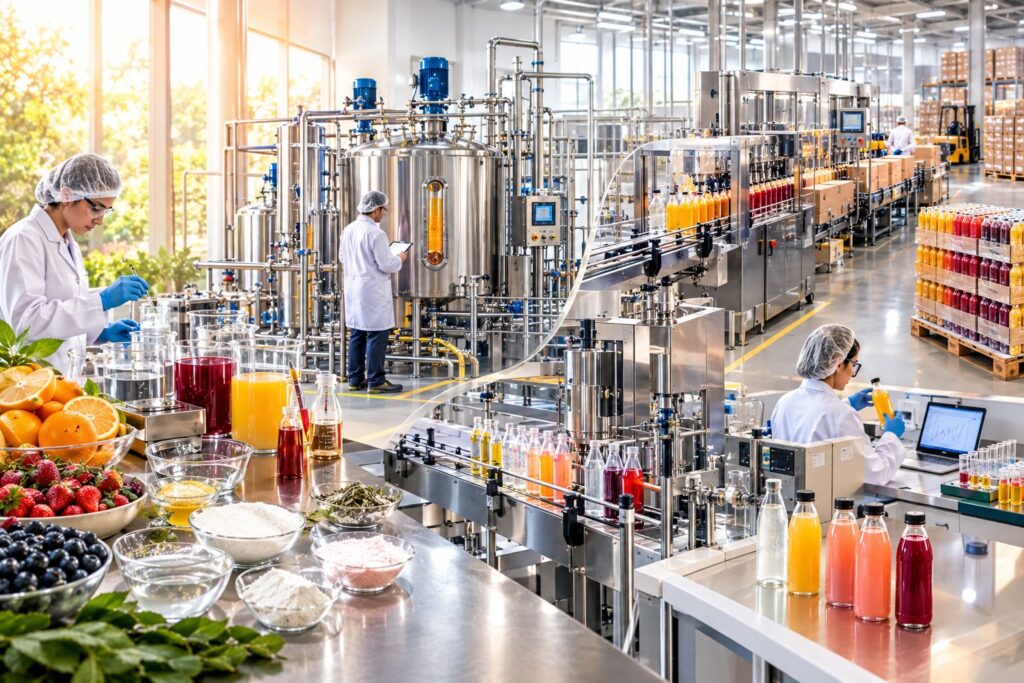
Food product development process from ingredient selection to commercial manufacturing
FFCE

Food Product Development Process: From Idea Validation to Market Launch

Transforming a recipe from a concept into a tangible product is no easy feat and it demands knowledge, creativity and a fastidious approach. This process of food product development goes through several stages – ideation and research, proper planning and recipe formulation, discussion with food scientists, ingredient selection, testing and prototyping, sensory evaluation, scale-up and regulatory compliance, packaging design, analysis of marketing strategies, identifying the current trends and finally product commercialization. The recipe formulators who glean customer preferences and attempt to balance quality with business sustainability will navigate the path of success. Food recipe development is achieved by focusing and understanding the intricate aspects such as food properties, functions and sensory evaluation (appearance, taste, texture and aroma). This will enable the customers to resonate with the product. New product development is one of the key avenues available for a company to thrive and this starts with product prototyping. This step is very crucial as it equips the food developers with the confidence to produce it in large scale. The initial versions of the product derived from a formulation are presented to sensory analysts and the responses obtained from them are taken into consideration for further iterations. This approach brings benefit in refining recipes by assessing the performance with respect to shelf-life stability and nutritional aspects, ensuring quality and food safety, identifying the economical ingredient substitutions with limited productions costs. Of late, consumers are inclined towards low-calorie, gluten-free and high-protein products that help in their overall wellbeing. It is therefore imperative to leverage advanced technologies to develop safe and innovative products. The integration of artificial intelligence in the food sector has helped in identifying safety hazards with corrective actions, thereby elevating the product quality and safety. Products developed 0 + Years experience 0 + Countries served 0 + Clients served 0 + Transitioning from lab-scale to large-scale production is the next stage in development that requires pilot testing. This study helps to identify challenges in processing times, instrument efficiency and variations in food ingredient interactions and therefore recommendations from food product development consultants and engineers becomes significant. Effective marketing emphasizes the unique selling points and the health benefits associated with the product. This will help to lure customers and drive sales. The final phase is the successful launch of the product that encompasses design, packaging, pricing and distribution. A successful launch is preceded by a pre-launch buzz that involves sharing tidbits of information through social media. This whets consumers’ appetites for the product. Public relations, digital campaigns and in-store promotions enable building brand awareness. Repeat product purchases is possible only by obtaining customer feedback and so the companies must focus on post-product launch analysis for consumer retention.

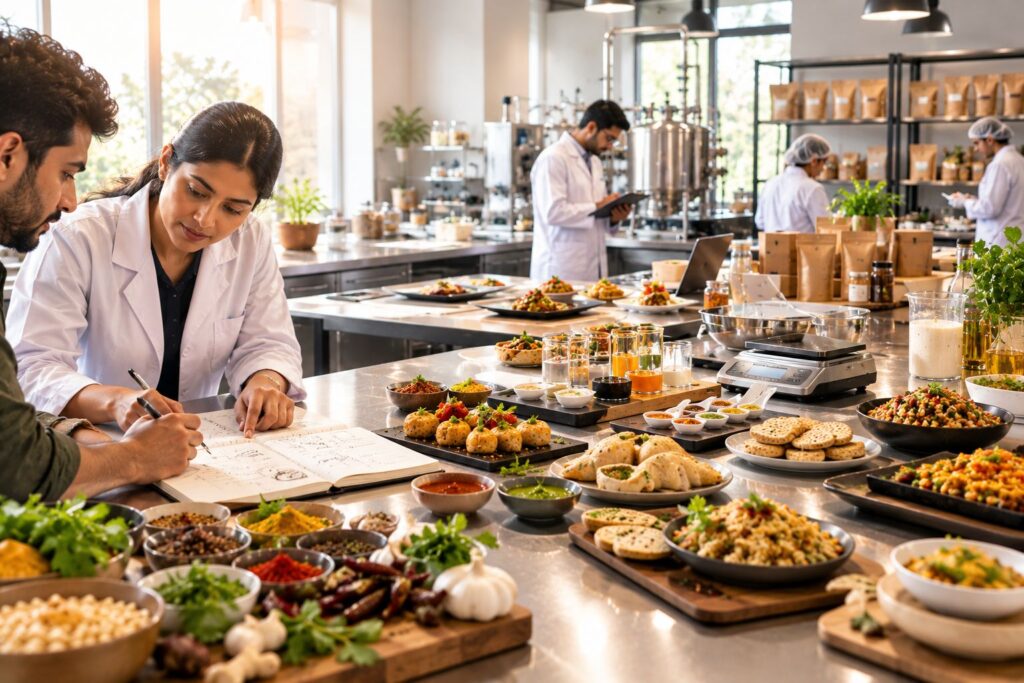
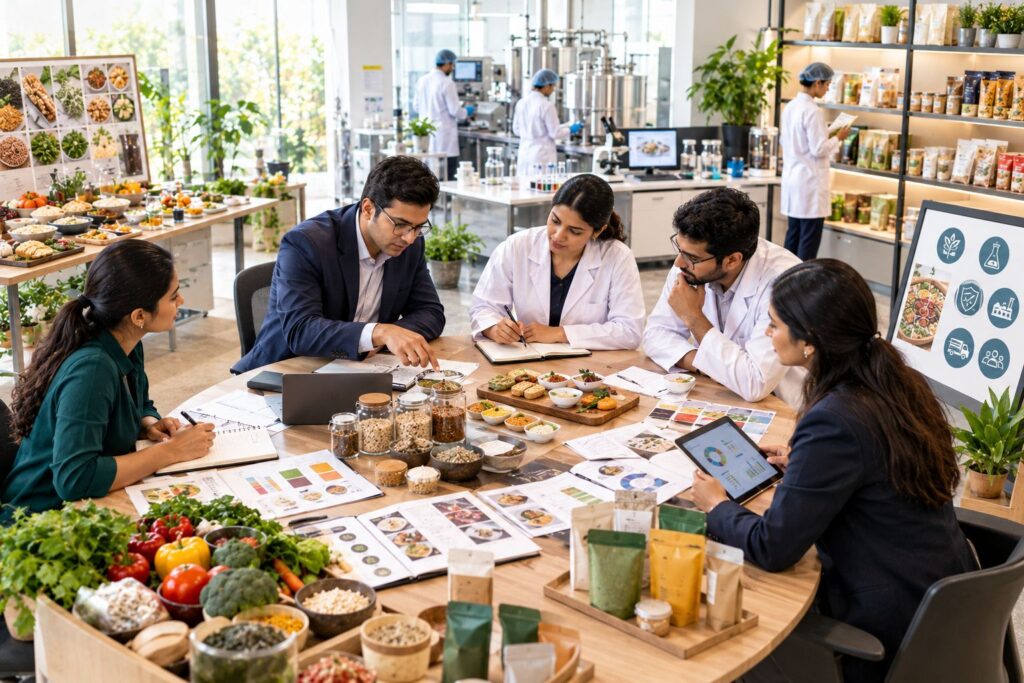
Food recipe development in India with ingredient selection, formulation and product testing
FFCE

Food Recipes Development: From Innovative Ideas to Market-Ready Products

Everybody has their favourite food products, and we are sure you would have one too. When you look at your favourite food product, there must be a question that crosses your mind: “Who thought of this?” Anyone can bring their innovative ideas to market-ready products with the right knowledge and guidance. Many businesses in the food industry have thrived because they had the required support. FFCE, your first-choice food consultant, has 15 years of expertise and knowledge. We have developed more than 50,000 food recipes. Food recipe development is an important step in market-ready products, and we have mastered it in such a way that our clients didn’t just get the recipes, but they got the full-fledged information package where their products were a win in the market. Now, the question arises: what if our product is not something people need in the market? We say “Do not worry” because we do all the research and will guide you accordingly. The process for a market-ready product is (idea, guidance, product formulation, market research, manufacturing and market-ready). Food recipe development in India has a very broad concept since India is a land with diverse food products, including spices, flavours and recipes. FFCE has helped many entrepreneurs in India in formulating products that were exported globally. Not just in India, FFCE also expanded its wings in foreign countries as well, such as the USA, Canada, Australia, the Middle East and many more.   If you have an idea and do not know where to start, you can trust us and we will make sure your idea gets the right insight. Products developed 0 + Years experience 0 + Countries served 0 + Clients served 0 + Conclusion In conclusion, turning a food product into a market-ready product requires an extensive amount of expertise, knowledge and research. FFCE, with a proven record of successful business, makes sure each customer demand is fulfilled precisely. We are not just food consultants; we want to be the reason you shine.

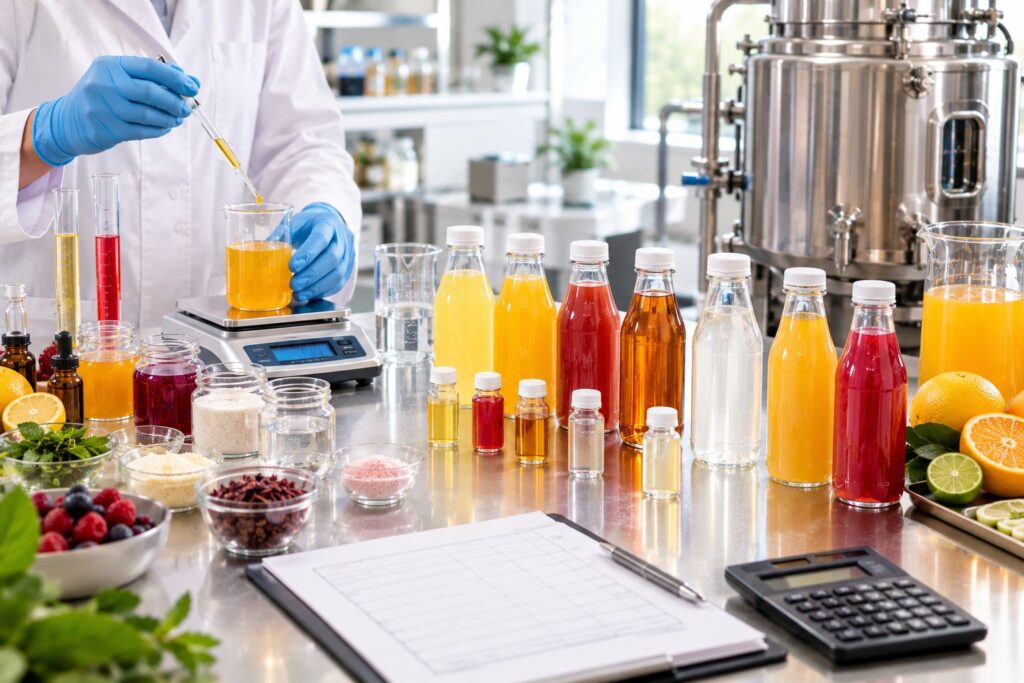
Beverage recipe formulation consultant developing innovative drink recipes and formulations
FFCE

How Beverage Recipe Formulation Turns Ideas into Successful Products

Beverages are the top choice when it comes to energy, social gatherings, occasions, sports, health and much more. Have you ever wondered how these beverages are made and how they are successful in the market? Let us spill the tea. Whenever you think of a beverage idea, we start with the first and important stage, which is beverage recipe formulation. This step involves doing the taste test, finding the right ingredients, and making sure compliance and standards are kept in check; also, customer satisfaction is prioritised. Once the beverage is formulated, we make sure it undergoes nutritional testing so our consumers get the right quality.   We, as a beverage business consultant, make sure the product is perfect; the word ‘perfect’ refers to right flavours, quality, nutritional value, healthy ingredients and much more, so we use our knowledge and vast experience for amazing results. Once a food consultant makes sure the initial stage is achieved, then come the consumers; the simple strategy towards customer satisfaction is quality over quantity, and FFCE makes sure the product meets the expectations in all ways. A successful beverage business is established when the beverage is loved by its customers; any marketing or strategy cannot do anything when the product doesn’t meet the standards. According to studies, the biggest fail of businesses in any business industry is when the product quality is compromised. The loophole is (product quality is compromised because of lack of knowledge or expertise, manufacturing is done, product is brought into the market, consumer dissatisfaction, bad reviews, supplier denies future business, and business collapses). To save you from all the chaos and loss, FFCE guides you along the way from scratch to end because we have been doing research for more than 15 years.   When we say recipe development is a crucial stage, it’s because your whole success story is fully dependent on it. FFCE has brought many beverage businesses into the market where customer satisfaction, client reviews and standards are met in all areas. It doesn’t matter if it is a functional, social, carbonated, healthy, dairy beverage or any beverage idea. FFCE is here to make you successful in your goals. Products developed 0 + Years experience 0 + Countries served 0 + Clients served 0 + Conclusion Thus, the successful journey of a beverage product starts with the idea. Thoughtful recipe formulation, guidance and support. From selecting the right product to market research, compliance and licenses. FFCE has got you covered; we are not just beverage consultants; we are a one-stop shop for all your beverage manufacturing needs.

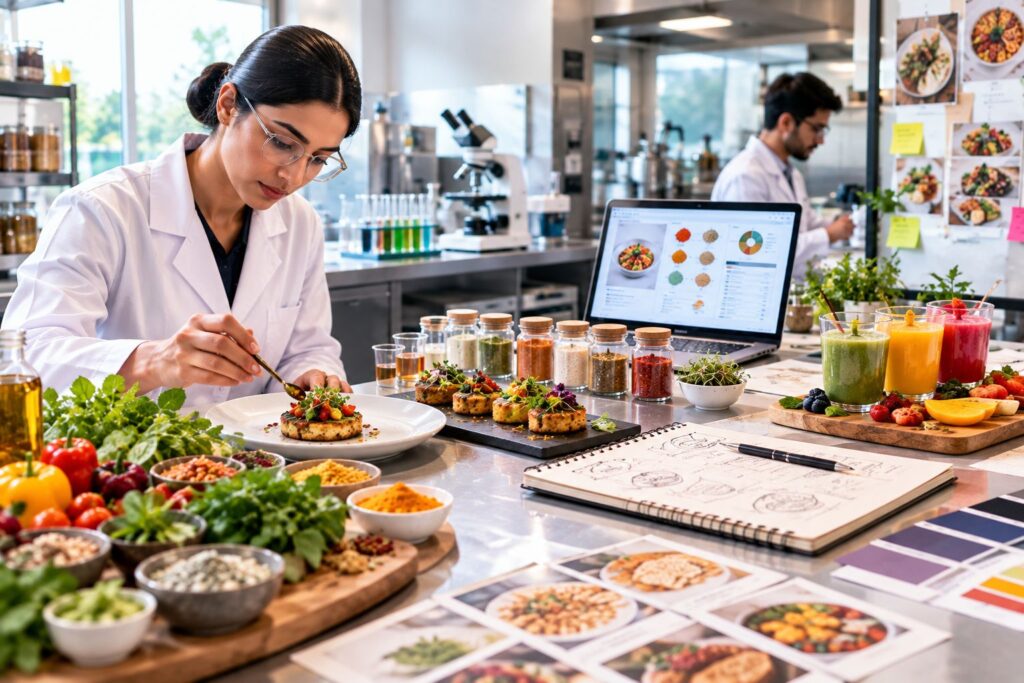
Alt Text: Food recipe formulation and product development for innovative food products
FFCE

Why the Recipe Formulation Process Is Crucial in Food Innovation

Whenever you think of an idea, FFCE makes sure your idea comes into reality, and one of the steps towards your goal is recipe formulation, the initial stage of any big ideas. For example, you want to manufacture any product that has unique Flavors; to bring that product to life, our team of experienced food technologists does their magic. They procure ingredients and do taste profile checks and also keep compliance and other factors in mind as the food recipe is developed, and one of the FFCE’s core values is to make sure our customers are happy and satisfied. Recipe formulation is a strong foundation towards full-fledged production and manufacturing of the product, and we as food consultants are fully packed with information required for food innovation. Besides all the factors, the best part is whenever food recipe development is done, it is important that we keep consumers healthy and happy. With that said, we are also keeping in mind to source the right materials and quality so the consumers are satisfied. Without recipe formulation and correct knowledge, a product will have no flavors, can be a long-term failure, wouldn’t be compliant, and consumers’ health can be compromised, which can lead to future business collapse, bad reviews, and more issues in the future. That’s why food consultants like FFCE come to the game. Your win is our win since we know the responsibility of formulating a recipe, consumer satisfaction, client satisfaction, and health; we make sure we go above and beyond and no stones are left unturned. Products developed 0 + Years experience 0 + Countries served 0 + Clients served 0 + Conclusio Behind every food innovation, successful businesses and ideas, food recipe development is the backbone. At FFCE, we are using our expertise for formulation, compliances and customer satisfaction. We are helping businesses with not just recipe but with the type of expertise that helps businesses win in the food industry.

Beverage shelf life testing in a food laboratory for quality and stability analysis
FFCE

Beverage Shelf Life Testing: A Complete Guide

What Is Beverage Stability Testing? Beverage stability testing is a series of scientific studies that verify a drink maintains its intended quality — taste, colour, pH, appearance, and microbiological safety — throughout its declared shelf life. It tells you whether the product you formulated today will still be the same product your consumer opens in 6, 12, or 18 months. Key Takeaways Beverage stability testing is not optional — it is required by every retailer, co-manufacturer, and regulatory body before commercial launch. There are two types: accelerated stability testing (faster, uses elevated temperature and humidity) and real-time testing (slower, uses actual storage conditions). Stability testing measures pH, colour, taste, microbiology, turbidity, sedimentation, emulsion stability, and nutritional content. Most beverages require 6–24 months of declared shelf life — and you need stability data to prove it before launch. Skipping stability testing does not avoid the problem — it just ensures the problem surfaces at retail, at customer cost, and with brand damage attached. Category-specific risks (juice oxidation, plant-based sedimentation, energy drink vitamin degradation) require tailored testing protocols. FFCE designs and manages beverage stability studies as a standard part of the A beverage formulation that performs perfectly in the lab can fail dramatically on the shelf. Whether your product originated from structured beverage recipe development with a specialist food formulation consultant or an existing recipe, stability testing is the stage that validates every earlier decision made in your development process. Colour shifts to brown. Sediment settles at the bottom. Vitamins degrade below the label claim. Microbial counts rise above safe limits. Taste changes from what the consumer expected. None of these failures are surprises to experienced beverage R&D teams. They are entirely predictable — and entirely preventable through rigorous beverage stability testing conducted before commercial launch. This guide explains what beverage stability testing is, what it measures, how it works, and what happens to beverage brands that skip it. It is written from the perspective of FFCE’s beverage R&D team — food technologists who have managed stability studies for 100+ commercial products across India and international markets. Products developed 0 + Years experience 0 + Countries served 0 + Clients served 0 + Why Does Every Beverage Need Stability Testing? The simple answer: because time changes things. A beverage is a complex chemical system — water, acids, sugars, colours, flavours, proteins, vitamins, minerals — and these components interact with each other, with packaging, with oxygen, and with heat over time. Beverage stability testing quantifies how these interactions affect product quality and safety. There are four non-negotiable reasons every beverage requires structured beverage testing before launch — whether you are working with a beverage consultant or managing beverage product development in-house: Retailer requirements: Every major retailer — from supermarket chains to online grocers — requires validated shelf-life data before listing a product. Without stability data, there is no listing. Co-manufacturer requirements: No contract food manufacturer will run commercial production without a validated product specification that includes shelf-life data. Regulatory compliance: FSSAI (India), FDA (USA), FSA (UK), and most global food regulatory authorities require that food manufacturers have evidence to support any shelf-life declaration on packaging. Brand protection: A product that fails on shelf — colour shifts, sedimentation, off-flavour — damages brand reputation and triggers product recalls. The cost of post-launch failure consistently exceeds the cost of pre-launch stability testing by a significant margin. The question is not whether to conduct beverage stability testing — it is whether to conduct it before launch or discover the problems after. Every beverage brand that has skipped pre-launch stability testing has conducted it involuntarily, on the market, at consumer expense. What Does Beverage Stability Testing Measure? Stability testing for beverages is not a single test — it is a structured battery of analyses conducted at defined time intervals across a declared storage period. Here is what each parameter measures and why it matters. Parameter What Is Measured Why It Matters pH Acidity level of the beverage pH controls microbial safety (most pathogens cannot survive below pH 4.0) and affects colour stability, flavour perception, and preservative efficacy Brix / Total Soluble Solids Sugar content and dissolved solids Changes indicate fermentation, ingredient degradation, or processing inconsistency Colour (CIE L*a*b*) Colour value changes over time Colour shift is one of the most visible quality failures — consumers notice before they taste Turbidity / Clarity Cloudiness or haze formation Haze development indicates protein-tannin interaction, pectin breakdown, or microbiological contamination Sedimentation Visible sediment or phase separation Indicates stabiliser system failure, ingredient incompatibility, or improper homogenisation Emulsion Stability Oil-water separation in emulsified beverages Emulsion breakdown causes ring formation, oiling off, or creaming — visually unacceptable Microbiology Total plate count, yeast, mould, pathogens The safety parameter — confirms microbial counts remain below safe limits throughout shelf life Sensory (Taste & Aroma) Panel evaluation of flavour changes Off-flavours, staleness, or loss of top notes indicate flavour compound degradation Vitamin / Nutrient Assay Nutrient level retention over time Required to substantiate label claims — e.g. “contains 100mg Vitamin C per serving” Water Activity (Aw) Available water for microbial growth Critical for concentrated and semi-solid beverage formats Preservative Efficacy Antimicrobial effectiveness over time Preservative concentration must remain above minimum inhibitory concentration throughout shelf life Headspace Gas Oxygen and CO₂ levels in packaging Residual oxygen drives oxidation; CO₂ loss in carbonated beverages indicates seal failure Not every parameter is relevant to every beverage. A still water beverage does not require emulsion stability testing. The right parameter set depends on decisions made during beverage recipe formulation — ingredient type, pH target, preservation approach, and packaging format all determine which stability risks are most relevant. A functional energy drink requires vitamin assay. A beverage stability testing protocol should be designed specifically for the category, ingredients, and packaging format of each product. Step-by-Step Beverage Stability Testing Process Step-by-Step Beverage Stability Testing Process Step 1: Define the Target Shelf Life and Storage Conditions Before testing begins, the target shelf life and storage conditions must be defined. Is this product ambient (25°C), chilled (4°C), or frozen (-18°C)? What is the declared shelf life — 6 months, 12 months, 18 months? What is the packaging format — glass, PET, Tetra Pak, can? All

Beverage recipe formulation with carefully selected ingredients and flavor development
FFCE

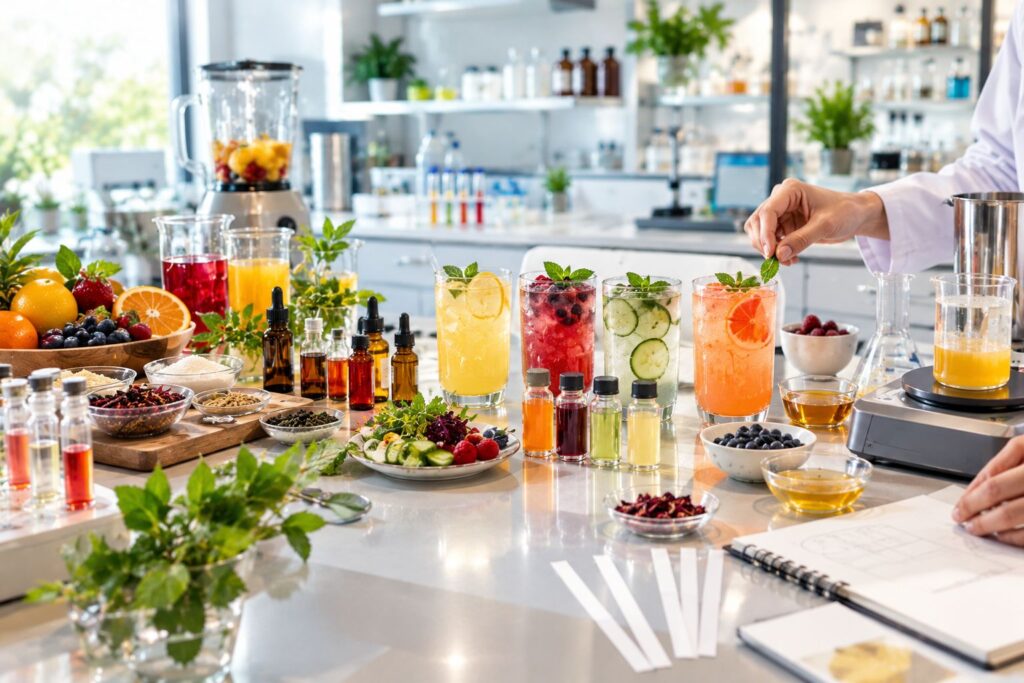
Beverage Recipe Formulation: How to Convert a Recipe into a Commercial Formula

Beverage recipe formulation is where most first-time founders get stuck — not because the drink tastes wrong, but because nobody has shown them how to turn “800ml water, 150ml lemon juice, 100g sugar” into a document a manufacturer can actually run. This guide is a practical, worked-through walkthrough of beverage recipe development and drink recipe formulation: how to convert household measures into batch percentages, set tolerances, and scale the math correctly, with a full numeric example you can follow alongside your own beverage formulation recipe. Products developed 0 + Years experience 0 + Countries served 0 + Clients served 0 + What Is the Beverage Formulation Process? Converting a beverage recipe into a commercial formula means expressing every ingredient as a percentage of total batch weight instead of household measures, then assigning a tolerance range to each ingredient so the ratio can be reproduced accurately at any batch size. The process runs through documenting the original recipe precisely, converting volumes to weight, calculating percentages, flagging ingredients that do not scale in a simple straight line, and validating the converted formula through small-batch and pilot-batch trials before it goes to a manufacturer. Key Takeaways A recipe measured in cups and spoons cannot be handed to a manufacturer — it has to become a percentage-based formula first. Converting to weight-based percentages, not volume, is what makes a formula reproducible at any batch size. Not every ingredient scales in a straight line — preservatives, flavours, colours, and carbonation each behave differently at volume. A converted formula still needs small-batch and pilot-batch validation before it is manufacturing-ready; the math is necessary but not sufficient on its own. Table of Contents What Is Beverage Recipe Formulation? Recipe vs. Formula: The Core Conversion Explained Why a Recipe Cannot Go Straight to a Manufacturer The Recipe-to-Formula Conversion Process, Step by Step Worked Example: Converting a Kitchen Lemonade Recipe Batch Scaling Math: What Changes as Volume Increases Ingredients That Don’t Scale in a Straight Line Common Mistakes in Recipe-to-Formula Conversion Decision Framework: Is Your Recipe Ready for Conversion? Recipe-to-Formula Conversion Checklist DIY Conversion vs. Working with a Beverage Recipe Consultant What Happens After the Formula Is Finalised FAQs Expert Tip — FFCE Beverage Team Most successful commercial beverages go through 6–12 recipe iterations before they are ready for formulation. Document every ingredient change and sensory observation during development — this record becomes invaluable during commercial scale-up, investor due diligence, and any reformulation work that comes later. Brands that skip this documentation consistently spend more time reformulating than brands that record it from day one. Talk to Our Team What Is Beverage Recipe Formulation? Beverage recipe formulation is the technical work of translating a drink’s taste and composition into a written, reproducible document — first as a tested recipe, then as a scalable formula. It sits underneath every stage of beverage product development: a brand’s flavour, texture, and nutritional identity all trace back to how precisely this document is built. Most people use “recipe” and “formula” interchangeably, and for a home kitchen or a small stall, that is fine. The distinction becomes commercially important the moment a beverage formulation recipe needs to be reproduced by someone other than the person who invented it — a co-packer, a plant technician, a second production shift. At that point, beverage recipe development and beverage formula development become two different documents with two different jobs. This is also usually the point where founders bring in a food consultant to make sure the conversion is done correctly the first time. For the wider view of how this step fits into full commercial beverage formulation — ingredient sourcing, stability testing, packaging, and scale-up — see our beverage formulation pillar page, and for a broader introduction to beverage recipe formulation in the Indian market, our beverage recipe formulation in India guide covers ingredient trends, branding, and market context. Recipe vs. Formula: The Core Conversion Explained A recipe describes what you did once; a formula describes what has to happen every time, at any scale, within defined limits. The table below is the conversion in miniature — everything else in this guide is really just expanding on these four rows. Recipe Formula Measured in cups, ml, spoons, “a pinch” Measured as % of total batch weight Describes one specific batch Describes a repeatable ratio, valid at any batch size No defined acceptable variation Every ingredient has a tolerance range (e.g. 9.5% ±0.3%) Understood only by the person who made it Usable by any trained operator or contract manufacturer Why a Recipe Cannot Go Straight to a Manufacturer A contract manufacturer works from a specification, not a story. Handing over “a splash of lemon juice, sugar to taste” gives a production team nothing they can weigh, batch, or reproduce twice the same way. Beverage manufacturing process equipment measures by weight and volume at scale, using tanks, pumps, and metering systems calibrated to defined quantities — not taste memory.   In many beverage projects we review, founders usually discover that the biggest challenge isn’t creating a good-tasting drink — it’s reproducing that same taste consistently once manufacturing begins. This is also why founders who skip conversion and go directly to a manufacturer often get a first batch that tastes “close but not quite right.” The manufacturer had to interpret ambiguous instructions and made reasonable assumptions that simply were not the same assumptions the original recipe relied on. The Recipe-to-Formula Conversion Process, Step by Step Recipe-to-formula conversion follows eight steps, moving from a documented recipe to a manufacturing-ready specification with tolerances defined for every ingredient. Step 1: Document the Original Recipe Precisely Write down every ingredient and quantity exactly as currently used, including anything treated as an afterthought — a garnish, a finishing touch, a “to taste” adjustment. If the recipe has ever been made slightly differently between batches, note which version is the one being converted. Ambiguity at this stage carries through the entire beverage formula development process. Step 2: Convert Every Ingredient into Weight Volume measurements (ml, cups, spoons) need to become weight measurements (grams

Beverage formulation process showing ingredient selection, mixing and product development
FFCE

Beverage Formulation Process: Step-by-Step Guide from Idea to Commercial Production

The beverage formulation process is the structured sequence a drink concept moves through — from ingredient selection and recipe development to stability testing, pilot batching, and commercial scale-up — before it becomes a market-ready product. Most founders underestimate how many stages sit between “this tastes great in my kitchen” and “this is ready for a filling line,” and skipping stages is the single biggest reason commercial batches fail to match the sample a brand originally approved. This guide walks through every stage of the beverage formulation process in order, breaking down the beverage formulation steps and the drink formulation process a product moves through across its beverage product lifecycle, with the checkpoints, common mistakes, and decision points that determine whether a product survives contact with commercial-scale production. Products developed 0 + Years experience 0 + Countries served 0 + Clients served 0 + What Is the Beverage Formulation Process? The beverage formulation process moves through ten connected stages: concept validation, category research, ingredient selection, recipe-to-formula development, lab trials and flavour iteration, sensory evaluation, stability and shelf life testing, pilot batch production, regulatory and packaging readiness, and commercial scale-up. Each stage produces a checkpoint the next stage depends on, which is why rushing or skipping one almost always resurfaces as a problem later — usually at the most expensive point to fix it. Key Takeaways The beverage formulation process is not linear in practice — sensory or stability results routinely send a formula back to an earlier stage for adjustment. A recipe and a commercial formula are different documents; converting one into the other is where most of the real formulation work happens. Pilot batching exists specifically to catch problems that never show up at lab scale, and skipping it is the most common cause of commercial-batch failure. Regulatory and packaging decisions made early in the process are far cheaper to change than decisions made after commercial production has started. Table of Contents What Is the Beverage Formulation Process? Why the Process Matters for Commercial Success The Complete Beverage Formulation Process: 10 Stages Stage 1: Concept & Idea Validation Stage 2: Category & Market Research Stage 3: Ingredient Selection & Sourcing Stage 4: Recipe-to-Formula Development Stage 5: Lab Trials & Flavour Iteration Stage 6: Sensory Evaluation Stage 7: Stability & Shelf Life Testing Stage 8: Pilot Batch Production Stage 9: Regulatory & Packaging Readiness Stage 10: Commercial Scale-Up & Product Launch Beverage Formulation Process Timeline by Category In-House vs. Outsourced Beverage Formulation Common Mistakes in the Beverage Formulation Process Beverage Formulation Process Checklist Decision Framework: Is Your Beverage Ready to Commercialise? A Typical Project: Kitchen Recipe to Retail Shelf FAQs Expert Tip — FFCE Beverage Team Most successful commercial beverages go through 6–12 recipe iterations before they are ready for formulation. Document every ingredient change and sensory observation during development — this record becomes invaluable during commercial scale-up, investor due diligence, and any reformulation work that comes later. Brands that skip this documentation consistently spend more time reformulating than brands that record it from day one. Talk to Our Team What Is the Beverage Formulation Process? The beverage formulation process is the technical and regulatory pathway a drink concept follows to become a stable, compliant, commercially reproducible product. It covers everything between a flavour idea and a finished specification sheet a manufacturing line can run from — ingredient selection, recipe-to-formula conversion, testing, and scale-up. The confusion most founders run into is treating “formulation” as a single event — get the taste right, done. In practice, the beverage development process is a workflow with defined inputs and outputs at every stage. A flavour that passes a lab trial still has to pass sensory evaluation, then stability testing, then a pilot batch, before it is anywhere near ready for commercial production. Each of those checkpoints exists because a different category of failure shows up at each stage — taste problems at the lab-trial stage, physical stability problems in testing, and scale-dependent problems only at pilot batch. For a deeper breakdown of the services and testing methods behind each stage, our beverage formulation consultant page covers the full scope of what a formulation engagement includes. Why the Process Matters for Commercial Success Following the full beverage formulation process, rather than shortcutting to production, is what separates a product that survives its first year on shelf from one that gets recalled, reformulated, or quietly discontinued. Every stage in the sequence exists because a specific, well-documented failure mode shows up when it is skipped. A beverage that skips stability testing might launch successfully and still fail three months later when a batch separates or loses colour under retail lighting — a problem stability testing is designed specifically to catch before launch. A beverage that skips pilot batching might taste identical in the lab and different on the commercial line, because mixing shear, hold time, and heat exposure all change with batch size. None of these are edge cases; they are the most common patterns in beverage product development failures, and each has a specific stage in the process built to catch it. If you are earlier in your journey and still deciding whether to formulate in-house, through a consultant, or by handing a recipe directly to a manufacturer, our guide on beverage recipe formulation in India covers how that decision typically plays out for Indian and export-focused brands. The Complete Beverage Formulation Process: 10 Stages The beverage formulation workflow runs through ten stages, each with a distinct output that the next stage depends on. The table below is a quick-reference map; the sections that follow cover each stage in detail. Stage Primary Output What Gets Tested or Decided 1. Concept & Idea Validation A validated product brief Category fit, target consumer, differentiation 2. Category & Market Research Competitive and pricing benchmark Existing products, ingredient trends, price positioning 3. Ingredient Selection & Sourcing A verified ingredient list Function, cost, supply reliability, regulatory status 4. Recipe-to-Formula Development A percentage-based formula Ingredient ratios and tolerances 5. Lab Trials & Flavour Iteration An approved bench-scale formula

Beverage recipe development with ingredient formulation and product testing
FFCE

Beverage Recipe Development: How to Create a Commercially Successful Drink

Beverage recipe development is the process of turning a drink idea into a working, commercially viable prototype. Most beverage businesses jump straight to manufacturing without completing a structured beverage recipe development process — and it is exactly why so many drink launches fail at shelf. Before you can formulate a drink for production, you need a recipe that actually works. That is what professional beverage recipe development services deliver: a tested, sensory-validated recipe that can survive commercial scale-up without expensive mid-project reformulation. This guide walks through the complete beverage recipe development journey — from concept to approved prototype. Products developed 0 + Years experience 0 + Countries served 0 + Clients served 0 + What Is Beverage Recipe Development and Why Is It Important? Beverage recipe development is the process of creating a working drink formulation from a product concept — defining what goes into the drink, in what proportions, and achieving a sensory outcome (taste, colour, aroma, mouthfeel) that meets both consumer expectations and commercial production requirements. It is the creative and technical phase that happens before commercial formulation. A recipe is not yet a formula. A recipe defines what you want the drink to be. A formula defines how to make it at scale, under process conditions, with shelf-stable ingredients, at target cost. Recipe development answers the questions: What does this drink taste like? What is in it? Does it work sensory? Is it buildable? Beverage recipe formulation — which is a different and later stage — answers: Can we make this consistently at commercial volume? What are the process parameters? What is the declared shelf life? The distinction matters because rushing from concept to formula without proper recipe development produces products that fail sensory testing, require expensive reformulation mid-project, or reach retail with a taste profile that misses the target market entirely. In practice: Beverage recipe development typically requires 4–12 prototype iterations before a recipe is ready to proceed to the beverage formulation process. Brands that skip this stage almost always revisit it — expensively — after production trials. Aspect Beverage Recipe Development Beverage Formulation Stage Concept → working prototype Prototype → manufacturable specification Goal Create a drink that tastes right Create a formula that can be made at scale Environment Kitchen / bench-scale lab Pilot plant / manufacturing scale Key outputs Working recipe, sensory benchmarks Manufacturing spec, process parameters, shelf life data Ingredients used May include fresh/perishable ingredients Commercial shelf-stable equivalents Shelf life focus Not primary concern Central technical requirement Cost focus Getting the taste right Bill of materials at target COG Regulatory output None at this stage Nutrition facts, ingredient declarations Who leads it Food technologist + sensory team Food technologist + process engineer What comes next Formulation begins Pilot trials, stability testing Step-by-Step Beverage Recipe Development Process There is no single formula for developing a beverage recipe — but there is a logical sequence of decisions that separates structured development from expensive guesswork. Here is the process FFCE’s beverage R&D team follows across all beverage product development projects. Define the Product Concept Before a single ingredient is selected, the concept must be clearly defined: What type of drink is this? What consumer occasion does it serve? What is the brand positioning — premium, functional, natural, nostalgic, indulgent? A poorly defined concept produces a directionless recipe. Spend time here. Every decision downstream flows from this definition. Define the Target Consumer The consumer drives sensory expectations. An energy drink targeting 18–25 year old male fitness consumers requires a very different flavour profile, sweetness level, and mouthfeel than a wellness herbal beverage targeting 35–50 year old female health consumers. Sweetness tolerance, acidity preference, and flavour familiarity all vary significantly across demographics. Define your consumer before you define your recipe. Select the Beverage Category The category determines the technical framework: pH targets, Brix range, carbonation level, packaging format, and preservation system. A carbonated soft drink, a functional RTD, and a plant-based milk all require fundamentally different recipe architectures. Selecting the category is not just a marketing decision — it is a technical starting point. Select Base Ingredients Water quality is the foundation. Hard water affects taste, soft water affects mouthfeel. Most beverage recipes require treated or RO-purified water with controlled mineral content. After water: your primary base — juice, tea extract, dairy, plant milk, or plain water for carbonates. The base determines everything that follows. Sweetener Selection and Brix Targeting Sweetness is the most technically nuanced decision in structured beverage R&D. Sucrose gives clean sweetness with a fast onset. HFCS gives sweetness with a slight delay. Steviol glycosides give intense sweetness with a lingering aftertaste that must be masked. Erythritol gives cooling mouthfeel. Each sweetener behaves differently across pH, temperature, and processing conditions. Target Brix based on category benchmarks, then select sweetener system to achieve it. Acid Balance and pH Acidulants do three things in a beverage recipe: they adjust pH for microbial safety, they contribute to flavour perception (tartness), and they modulate sweetness. Citric acid is the most common. Malic acid gives a softer, more fruit-like tartness that lingers pleasantly. Phosphoric acid is used in colas. The ratio of sweetness to acidity — sometimes expressed as Brix:acid ratio — is what determines whether a drink tastes balanced or cloyingly sweet or harshly sour. Getting this ratio right takes several prototype iterations. Flavour System Development Flavour selection for a beverage is not picking a flavour compound from a supplier catalogue. It is selecting a primary flavour, a top note, a middle note, and sometimes a masking agent — then testing how each interacts with your base, sweetener, and acid system at the target pH and temperature. Flavour performance changes significantly between ambient and chilled, between carbonated and still. Benchmark against 2–3 competitor products. Know what you are matching and where you are differentiating. Mouthfeel Engineering Mouthfeel is the most underestimated element of developing a beverage recipe. Consumers describe mouthfeel as “thin,” “watery,” “thick,” “creamy,” “smooth,” or “heavy” — and it is driven by viscosity, dissolved solids, carbonation level, and fat content. In zero-sugar beverages,

Scroll to Top

Your Trusted Food-Tech Partner Simplifying Solutions, Maximising Success

    Your idea is 100% protected by our Non Disclosure Agreement

    What is Refresh icon

    Your Trusted Food-Tech Partner Simplifying Solutions, Maximising Success

      Your idea is 100% protected by our Non Disclosure Agreement

      What is Refresh icon

      Your Trusted Food-Tech Partner Simplifying Solutions, Maximising Success

        Your idea is 100% protected by our Non Disclosure Agreement

        What is Refresh icon

        Powering your food business forward