FFCE

Now Hiring: Are you a driven and motivated 1st Line Food Technologist?

FFCE

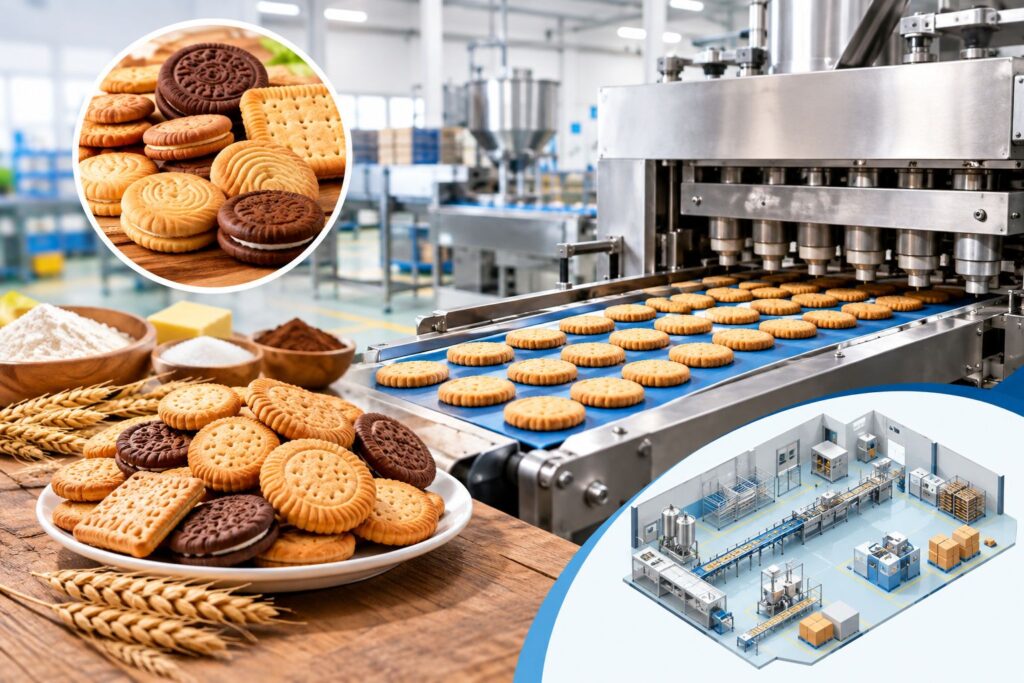
Biscuit and cookies manufacturing unit with production machinery and conveyor system
FFCE

A Complete Guide for setting up the biscuit & Cookies manufacturing unit.

The fascination of bakery products along bakery industries are growing day by day because of their rich nutritional properties and feasibility of their use in feeding programmes and other natural calamities such as floods, earthquakes etc. Among the world of baking, Biscuit is the most multifaceted bakery product in the food industry acquiring a noticeable position due to its longer shelf life, crispy texture & easy to carry rich & nutritious snack. HISTORY OF BISCUIT INDUSTRY. According to the tradition, the creation of biscuit can be traced back to classical civilizations, where simple flatbreads were baked as a means of nourishment. Though, it wasn’t until the middle Ages that the idea of biscuits inculcate, incorporating sweeteners and spices. These initial biscuits were often wholesome and hard, making them well-suited for long journeys. The Indian biscuit industry flourished in the world of baking industry by the end of 20th century. Currently, Indian biscuit industry is known as the largest among all the food industry having a turnover of 3000 Crores. India is the 2nd largest producer manufacturer of biscuits followed by USA. KEY STEPS INVOLVED IN BISCUIT MANUFACUTING PROCESS Biscuit manufacturing process generally consists of several key steps which are Selection of Raw Material (i.e. Whole purpose flour/ Multigrain flour/Wheat Flour etc.), proper mixing, shape forming, baking and packing the final products i.e. Biscuit. In this process the major ingredients are Fats, Flours, Salt & sugar as per the desired end products. Mixing stages could be one stage mixing or two stage mixing or three stage mixing. While baking a biscuits the perfect combination of Time- Temperature of oven play a crucial role a final texture of biscuits depends on these parameters. BISCUIT PROCESSING PLANT SET-UP In baking World, Biscuit making could indeed a commercially successful business and it can also start with a small plant set-up. One can start this business with small amount of capital. Before setting up the processing line of biscuit manufacturing, we need to explore the market size of biscuits & study the strategic plans such as how to sell, what is targeted population etc. After that, we need to procure the required machineries such as oven, dough mixer followed by Legal registrations & Food license. We also need to be taken care of of utilities such as water, electricity etc. while set-up the processing plant of biscuit. FOOD LICENSE & LEGAL REGULATIONS SUCH AS FSSAI, FDA, GMP, HACCP. Food safety Laws & legislation is very terms in bakery industry. It apply to all manufacturers & consumers globally. Basically, these regulations provides the regulatory framework to the entire food industry including bakery & confectionaries items and guarantee the quality & food safety , prevent food fraud & protect the consumers along with brand reputations. These legal regulations consists of various food standards such as Food Safety Standard of India (FSSAI), Food & Drugs Regulations (FDA), Good manufacturing Practices (GMP), & Hazard Analysis Critical Control Point (HACCP) etc. FSSAI: – It offers various certifications schemes just to ensure that the Product complies with all safety standards. FDA: – It offers the schemes for protecting the public’s health by assuring the food safety, health safety & its efficacy. GMP & HACCP: – These regulation plays a crucial role in bakery industry. GMP standards validate & verify the all hygiene conditions with respect to bakery items, processing area & related equipment. Whereas HACCP validate & remove the all possible hazards which are associated with bakery products & processing. Conclusion Biscuits are globally used for their nutritional values & having a long shelf life. India majorly contributes globally, in the process production of biscuits. We have also came across that the ingredients used for making biscuits play a vital role in the texture & colour of biscuits. Processing line of biscuits may be fully automatic or Semi-automatic as per the requirements. Apart from that, Food laws & regulations ensures the food safety & quality standards in order to maintain the brand reputation globally & protecting consumers’ health. Biscuit industry has significant benchmark on global platform.
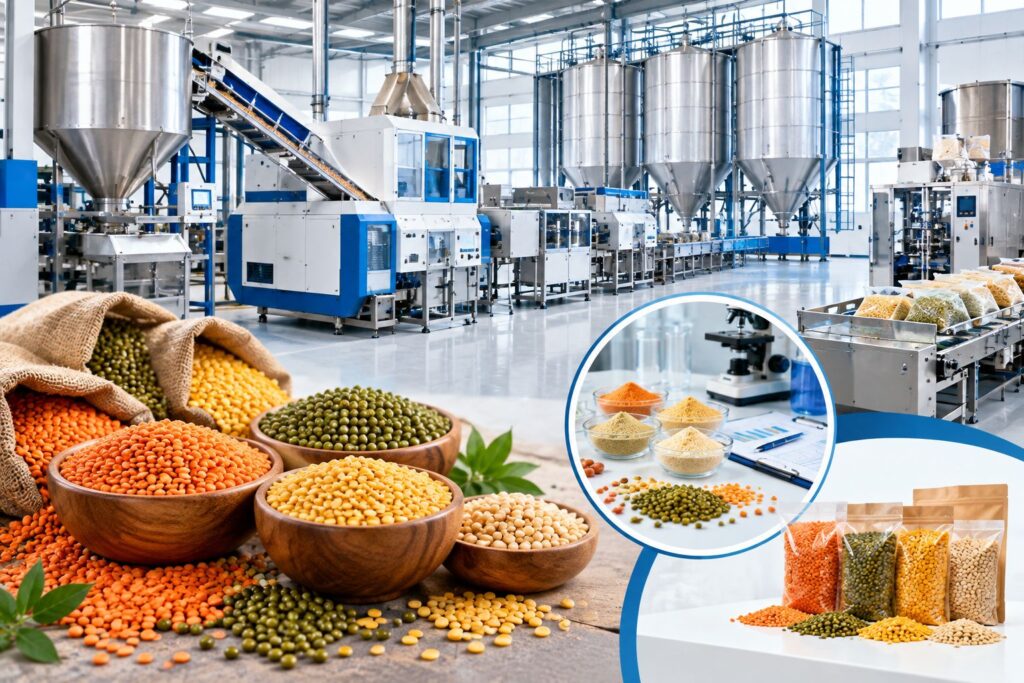
Lentil milling facility with pulse processing machinery and product development setup
FFCE

Top Lentil Milling Product Development Consultants

Transforming Lentil Milling for a Healthier Tomorrow. Lentil milling has proved to be a major focus for high-quality lentil-based products such as flour, snacks, and isolates. Professional consultants engage more advanced pulse milling techniques in terms of cleaning, dehulling, and grinding towards desired consistency and nutritional values while innovating value-added solutions to create a diverse lineup of lentil-based product lines that meet the consumer’s demand for gluten-free, high proteins, and convenient foods. “FFCE: Revolutionizing Lentil Milling for a Better Future. The demand for sustainable food solutions and health-conscious customers is pushing the market for lentil products upward steadily around the world. Concentration areas for companies looking to be ahead in this changing market are grinding techniques for pulses and new product development for lentils. Consultants leading the sector have expertise in lentil processing optimization, thus guaranteeing premium goods that satisfy consumer demands. What is Lentil Milling? The process of lentil milling can refine raw lentils into flour, dehulled lentils, and value-added goods. This procedure of washing, processing, and preparation is what is involved in order to better lentils’ nutritional, functional, and sensory qualities for many culinary uses. Lentils Miling Setup Regarding the company’s lentil milling facility, careful planning to make it operational is necessary to be done with proper instruments along with some professional help. Superior quality procurement of raw materials, laying machines from pre-cleaners to the de-hullers up to grinders and packaging unit, and utilities like potable water and power supply facilities shall be provided. The process steps include cleaning, dehulling, grinding, and sieving to produce lentil flour, split lentils, and dehulled lentils. The food safety regulations should be followed in this regard. The setup can be streamlined by collaborating with professionals like Frontline Food Consultants and Engineers, who offer specialized knowledge, efficient designs, and sustainable solutions that are suited to industry expectations. Innovative Lentil Products, Meeting Consumer Demands Consultants assist in developing several products prepared from lentils, including: Lentil Flour: It is an excellent gluten-free substitute for baking and cooking. Snacks: Roasted lentils, extruded products, and crisped lentil lentil chips. Protein-rich foods: Lentil protein isolates and concentrates for plant-based diets and sports nutrition. Convenience Foods: Meal kits, lentil soups, and curries that are ready to be consumed fall under convenience foods. Why Choose a Lentil Milling Consultant? Pulses milling requires a blend of science, technology, and creativity; it’s not about crushing pulses alone. They contribute to consultancy on these grounds Expertise in Pulse Milling Techniques: They optimize every step involved in the milling process ranging from the grinding of fine flour to cleaning and dehulling. Innovative Lentil Products: They help companies create value-added products like protein isolates, snacks, lentil flour, and ready-to-eat meals. Sustainability Focus: To achieve sustainability with which the world will be followed, modern consultants emphasize some environment-friendly and waste-reducing techniques. Trusted Consultants at FFCE Frontline Food Consultants and Engineers(FFCE), known for their proficiency in food processing consulting, is one of the good names. The engineers here at FFCE assist various businesses to innovate and expand using customized solutions related to product development and pulse milling. A few of their offers include: Optimization of the process to decrease waste and maximize yields. Support for the production of differentiated lentil products in response to consumer demand. recommend the latest equipment and technologies. Conclusion Finally, the lentil milling process is crucial in refining the raw lentils for excellent products like flour, dehulled lentils, and innovative food product developments. With advanced methods and a commitment to quality, a business can meet the industry’s high standards. Through partnerships with organizations such as Frontline Food Consultants and Engineers (FFCE), the improved workflows, environmentally-friendly remedies, and tailored consultancy advice assure a successful lentil milling enterprise.

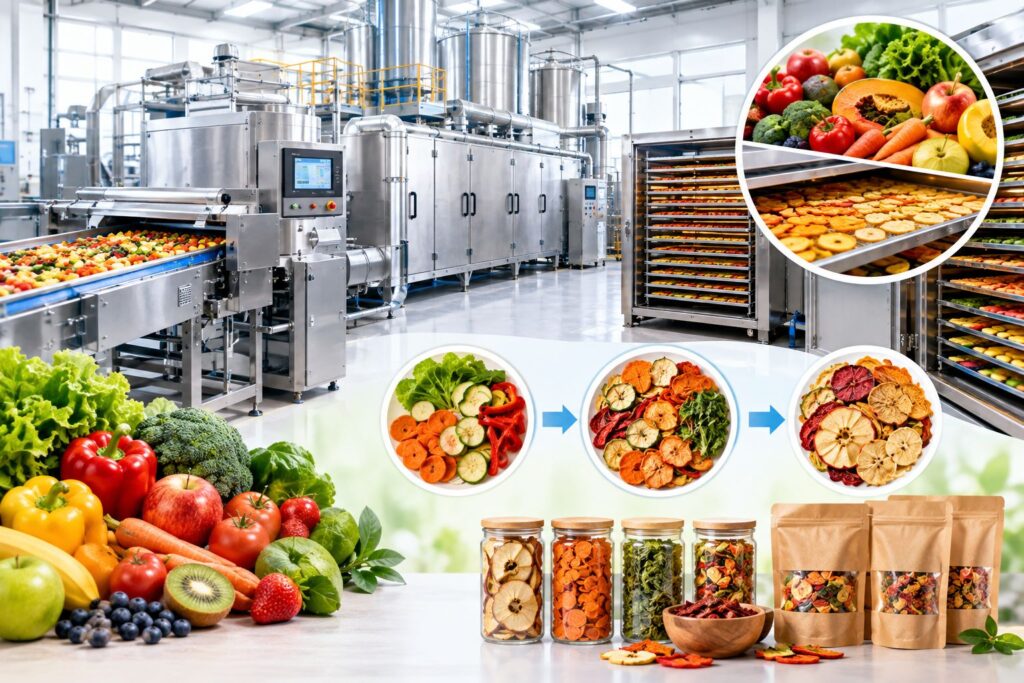
Fruit and vegetable dehydration process with industrial drying equipment
FFCE

Exploring the process improvements in fruits and vegetables sectors through dehydration.

To anybody, who is processing fruits & vegetables processed products on a commercial basis, one of the most consequential challenges they have faced is that they have to sell it before it gets ruin. The perishable food has luckless fact that as they reach to the maturity stage they start deteriorate. In order to tackle such issues we have to develop the process which increase the life span of processed fruits & vegetables products. As a result of this issue dehydration process come to existence in food sector. SIGNIFICANCE & TRUE MEANING OF TERM “DEHYDRATION” DEHYDRATION means process of removal of majority portion of water from fruits and vegetable using any heat techniques such as heating, sun drying etc. In food processing sectors, especially in fruits & vegetable processing units it plays a crucial role. As a result of this process we would be able to accelerate the life span of perishable products, reduce the bulk of products which saves the extra cost of packaging material & storage space. KEY PROCESS STEP OF DEHYDRATION PROCESS Dehydration process is generally consist of several key steps which are selection of fruits & vegetables of your preference, followed by washing & peeling process. After that, slicing is the reduction of the size of raw material, and cooking, drying and packing. Drying could be done by various stages. It also depend on the real characteristic of raw material. DEHYDRATION PROCESSING PLANT SET-UP Establishing a dehydrated processing plant with proper execution requires careful planning, effective Layout, essential machines requirement etc. In order to set-up an effective dehydrated processing unit you need to take counsel from food processing consultant. It provides a true guidance on selection of proper machineries based on output and efficiency. They also provide us the valuable feedback of market trend and current scenario of the dehydration sectors. This information is vitally important when you are launching the new food products commercially. They can also guide us on regulatory standards and technology integration. SCOPE & CURRENT MARKET TREND Nowadays in India, The scope of dehydrated fruits & vegetable market gains a popularity due to its raising demand in food processing Snack industry, ready-to-eat cook sectors. It offers opportunity to export sectors, health conscious customers & catering business. As per the recent research, India market size was valued at 25.9 Billion USD in 2023, and it is expected to grow by 27.08 Billion USD by end of the 2024 due to increasing the small scale food start-up & HoReCa business sectors. Conclusion In a Nutshell, Dehydrated fruits and vegetable products are used for their longer shelf life, rich nutritional properties. In India dehydrated food processing sectors are gaining popularity globally. We have also came to know that under a guidance of food consultant we can also establish an optimized line with proper knowledge. After coming dehydrated technologies, the commercial business of dehydrated food and vegetable products have flourished in food processing sectors exponentially. Now we can increase life span of perishable fruits & vegetable!

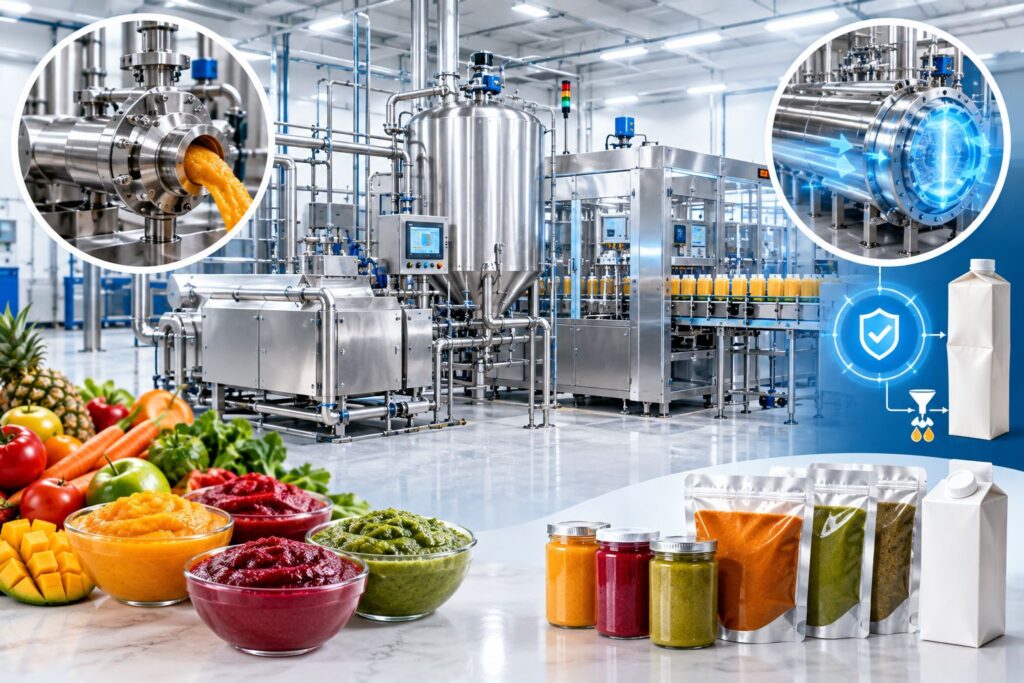
Aseptic sterilization equipment for pulp and paste processing industry
FFCE

The future of aseptic sterilization in a pulp and paste processing industry

SCOPE OF ASEPTIC PROCESSINGIn India, aseptic sterilization has a significant value in food processing sectors especially in pulp and paste industry. The basic motto of aseptic sterilization process is to safe the proceeded products before going to the final consumers. It is an alternative to retorting process. In India, it has a wide scope to grow more with delivering and producing safe and quality products. WHAT IS ASEPTIC STERILIZATION? Aseptic sterilization is a process at wherein commercially thermally liquid product such as fruit & vegetable pulp & paste are packed in to sterile containers under the sterile conditions to produce stable products which do not need any type of storage conditions like refrigeration, chilling temperature etc. PURPOSE The significance of the aseptic processing is to increase the life span of pulp and paste in order to retain and maintain nutritional characteristics with real sensory properties. It play also crucial role in order to prevent the spread of infection which cause the spoilage in pulp quality. ASEPTIC STERILIZATION IN PULP & PASTE PROCESSING STEPS:- Basically this sterilization process involves few steps, such as Sterilize the product by means of immediate heating and rapid cooling process. The same techniques applied while packing the product into the containers or can followed by in aseptic sterile condition. Before packing the packing material should be treated by saturated super steam in order to get sterile. INSPECTION:- Inspection of aseptic processing is one of the most crucial activity, for that you need to consult a food consultant, who is having expertise in that field. Under the only guidance of food consultant expert you can prepare & full fill the regulatory requirements in all the areas of facility. FUTURE DEMAND & MARKET TREND As per future scenario, it would be estimated that the Indian market of aseptic sterilization of pulp processing would be projected as a 6.7 % CAGR till 2033.By increasing the demand of pulp & paste products with premium quality leads to automatically increase the demand of aseptic sterilization process products in food sectors. Big food leaders are constantly on a pressure to supply the high quality pulp products which enforce them to switch to the aseptic sterilization technologies. High demand in food & beverages industry also arise the demand of aseptic processing techniques. Conclusion To sum up all, we can analyse that in coming time the aseptic sterilization process in pulp and paste industry will grow exponentially. We can also conclude from market trend that everyone needs high quality food which enforces the major food players to switch to aseptic sterilization processing from the regular process. Apart from that we can see that to maintain business growth & keep business growing we have to adapt this technique. Stay happy & Healthy!

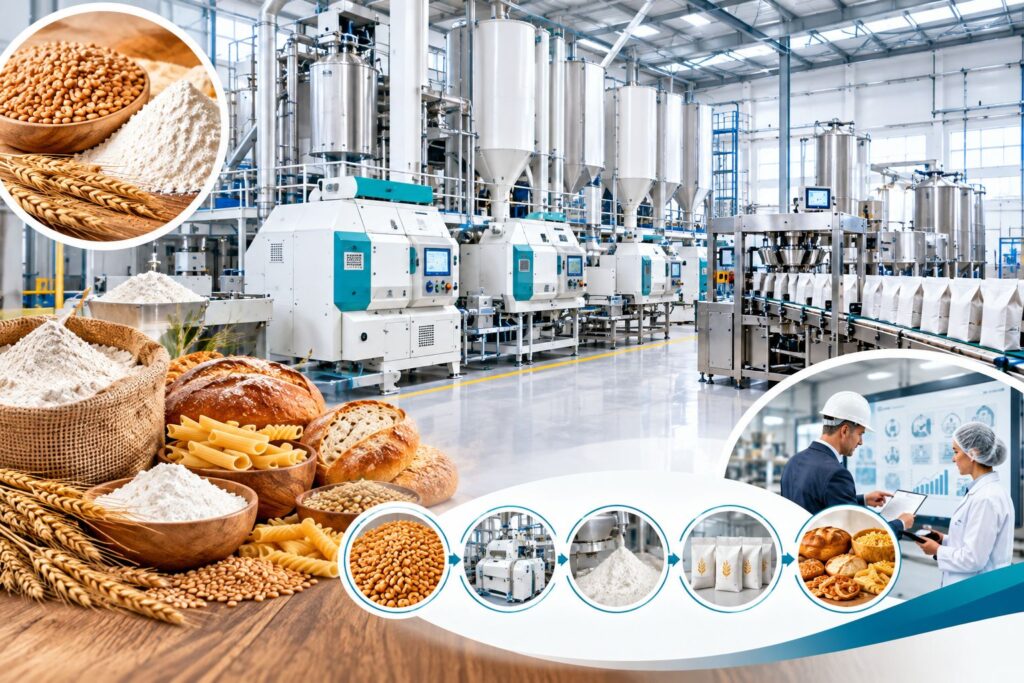
Flour milling and food manufacturing facility with industrial processing equipment
FFCE

Leading Flour Milling and Food Manufacturing Consultants

Where Quality Meets Innovation in Flour Milling and Food Production.Flour milling transforms grains into the right amount of flour needed for food production. Consultants like like Frontline Food Consultants and Engineers (FFCE) maintain adherence to the regulation of food safety while ensuring streamlined processes, increased productivity, and enhanced quality products. They help companies save on cost, adopt environmentally friendly procedures, and remain competitive in an ever-changing market. Food production and flour milling are key food supply links in the global chain. With the industry’s growing competitive landscape of changing consumer expectations, these businesses engage in professional consulting to stay afloat. Foremost among these are those found at like Frontline Food Consultants and Engineers (FFCE).in who design specific plans to upgrade the quality of their products, simplify processes, and ensure rule compliance. What is Flour Milling? Flour Milling refers to the milling process which reduces cereal grains like wheat to a fine powder termed as flour. The several processes involved remove all parts that are usable of grain for grinding it into a usable form and turning it into an object, so it can be put up with baking or for another usage. Cleaning: The grains are cleaned very well to remove dirt, stones, and impurities. Grinding: The grains are then crushed into a finer powder using rollers or stone mills. Sifting: Then sifting follows, by which the bran and germ are separated from the endosperm to come up with different kinds of flour such as whole wheat or refined flour. The Role of Consultants in Flour Milling and Food Manufacturing Expert consultants provide guidance across several key areas, including: Process Optimization: Consultants evaluate present processes and identify opportunities to enhance milling and production output to reduce waste and optimize productivity. Regulatory Compliance: There is an important requirement to follow the food safety laws. To safeguard product integrity, consultants ensure local and international standards such as HACCP, ISO, and FSSAI are in place. Product Innovation: In order to respond to changing consumer preferences, consultants help formulate new products, such as gluten-free substitutes or fortified flours. Technology Integration: Today’s milling plants have used automation, IoT, and AI. Skilled consultants aid in the smooth adoption of technology for smarter operations. Sustainability Solutions: Environmental sustainability is fast becoming a key priority. Consultants help initiate energy-efficient machinery, water-saving methods, and waste-reduction strategies. Case Studies: Success Stories with like Frontline Food Consultants and Engineers (FFCE) Fortification in Flour MillingTo cater to the enhanced health expectations of consumers, FFCE.in collaborated with a prominent flour mill for vitamin-enriched flour. The initiative struck a balance between innovation and commercial success by achieving profitability along with enhancing the appeal of the product. Food Production AutomationA client in the food manufacturing industry came to FFCE.in and streamlined the production process by reducing the production time by 25% through advanced automation systems. This freed up the quicker supply of their products and ensured greater responsiveness in the market. Sustainability InitiativesBy installing energy-saving machines and optimizing processes, FFCE.in assisted the milling factory in saving 30% of its energy. The green strategy encouraged eco-friendly behaviors while saving on operating costs. Conclusion Frontline Food Consultants and Engineers (FFCE) in represents the commitment to sustainability, efficiency, and innovation in the food production and flour milling sectors. Their tailored solutions, from automation to energy optimization and fortification, help companies meet market expectations by cutting costs and improving competitiveness. Clients may use their experience to reach long-term success and operation excellence.

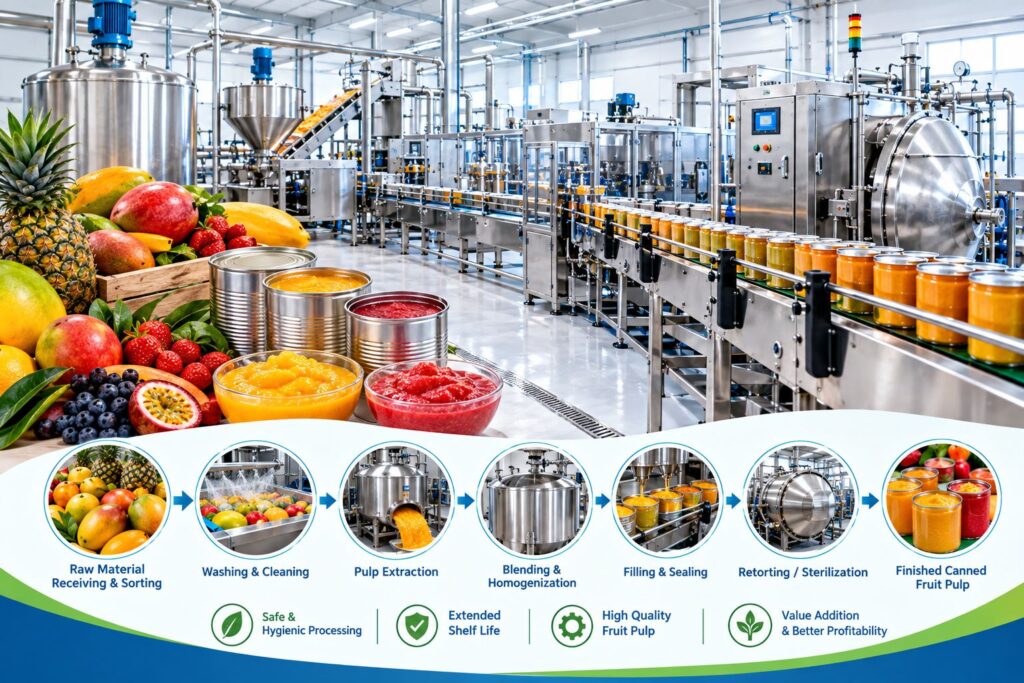
Fruit pulp processing and canning line with filling and sterilization equipment
FFCE

A complete guide for setting up process line for preserved process food (CANNING PROCESS FOR FRUITE PULP).

Let it first blossom and be the fruit pulp. Fruit pulp process has given a major goal to retain the perishable fruit quality for longer life. Professional are more passionate about the process of canning of fruit pulp in food processing industry in terms of processing steps, marketing value & nutritional values while innovating value-added solutions to create a diverse lineup of perishable fruits that meet the consumer’s demand for nutritious value and convenient foods. Introduction In this term canning refers to a process are involving to heating good stuff in hermetically containers sealed specific temperature to specific time to eliminate microorganisms’ pathogens that endanger to public health enzymes that deteriorate food during storage. History of canning Important Centuries establish in canning are under;Nikolas Appert, 18th Centaury is credited a manner creating this canning process.Early 19th Century peter Durand a British trader secured a method for a new technique. of preserving food in tin cans which was a noteworthy progress as it was more durable and portable than glass jars.Food preservation was revolutionized by canning, Facilitating the storage and shipment of food over long distances without spoiling. It’s an essential method still used today for preserving a wide variety of foods.The fruit pulp market is anticipated to expand significantly at a CAGR of 5.1% from 2023 to 2032. The demand for fruit pulp is increasing because of its convenience, Nutritive value and use as a flavoring and coloring. Process step for pulp: Creating pulp is a key step in the canning-making process. Here are the general steps involved in making pulp, Harvesting and Selection Start with selecting, high-quality fruits or vegetables suitable, Peeling and Pit Removal the outer skin and seeds of the produce, if necessary. this step ensures the pulp has a Luscious and is free of unwanted parts, Juicing Process the cleaned produce into a pulp using mechanical methods (blenders, grinders) or use chemical methods, tailored to in specific type of produce, heat the pulp to a specific temperature to eliminate any dangerous microorganisms. this step is essential for food hygiene, filter the pulp take out any remaining solids or impurities, maintaining a uniform texture, pasteurize the pulp by heat it again to ensure it is safe for consumption and to increase the duration its shelf life. this step also helps to preserve the flavor and nutritional value, cooling and storage Let the containers cool down and store them in a cool, dry place. Proper storage is crucial to sustain the quality and safety of the canned pulp until it is ready for distribution or consumption, every variety of produce might have unique requirements or additional steps. Food regulation: Legal guidelines for fruit pulp production and manufacturing, you can refer,1955 issued by the Food Safety and Standards Authority of India (FSSAI). Health and safety adherence documents ensuring your facility meets health and safety regulations. Required approved documents for the packaging and labeling of your fruit pulp products. Permits If you plan to trade internationally, these permits are necessary. Good Manufacturing Practices (GMP). Hazard Analysis Critical Control Point (HACCP). TRUSTED ADVISOR at FFCE Frontline Food Consultants and Engineers (FFCE), known for their expertise in food processing consulting, is one of the renowned firm. The engineers here at FFCE assist various businesses ideas to explore and expand using technical & innovative solutions related to product development and pulse milling. Optimize the process & enhance the process efficiency. Bolster up the fruit & vegetable processing sectors such as pulp processing, establish canning line etc. Suggest to use the highly technical equipment with better technologies. Conclusion Canning fruit pulp are globally used for their nutritional values & having a long shelf life. India majorly contributes globally, in the process production of canning pulp. We have also come across that nutrition value Processing line of pulp canning may be fully automatic or Semi-automatic as per the requirements. Apart from that, Food laws & regulations ensures the food safety & quality standards in order to maintain the brand reputation globally & protecting consumers.

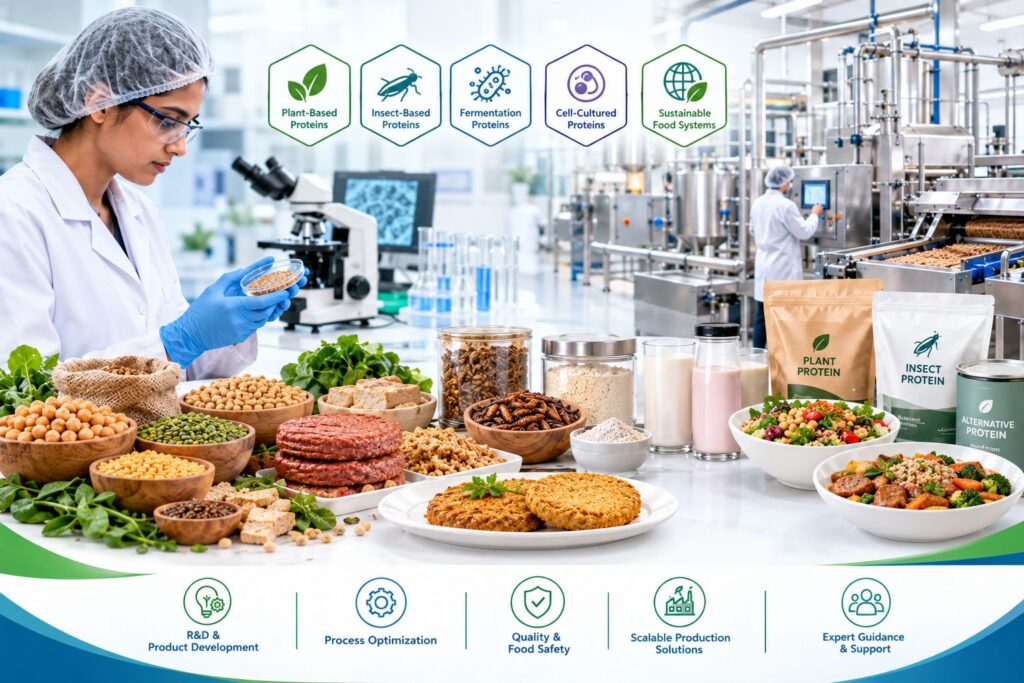
Alternative protein product development with food technology research and processing
FFCE

Top Alternate Protein Product Food Technologists in India

Food technologists in India drive the development of alternative proteins forward by providing wholesome and sustainable answers to the growing need for meals high in protein. Businesses, with the help of organizations such as Frontline Food Consultants and Engineers (FFCE), can develop innovative plant-based, insect-based, and lab-grown protein products. Food technologists are playing an important role in building a more sustainable and diverse food future, and the food industry of India is soon to experience a revolution, despite scalability and public acceptance issues. Introduction A key area of food technology, alternative proteins have emerged in light of the increased demand for creative and sustainable food solutions all over the world. Innovative protein products from plants, fungi, insects, and even lab-grown cells are being developed in India by food technologists and specialists working tirelessly. This movement has leaders like FFCE- Frontline Food Consultants and Engineers that help companies understand the nuances of alternative protein technology. This blog will cover the key players in the market, the role of food technologists in the development of alternative proteins in India, and the contributions made by businesses such as FFCE to this expanding field. The Rise of Alternate Proteins in India The rising population and environmental concerns regarding the rearing of animals are propelling a radical shift in India’s food business toward sustainable nutrition. Alternative proteins attract much attention because they offer wholesome, reasonably priced, and sustainable options to the masses. These include lab-grown meat that is taken from animal cells without a need to slaughter, proteins from insects through mealworms and crickets, plant-based proteins through peas, soybeans, and lentils, and fungus-based proteins such as mycoprotein, sought for high nutritional value and environment-friendly production processes. The culmination of such developments shall be the opening gate to the future of Indian food with greater sustainability.: Mycoproteins from fungi, like Fusarium venenatum, are prized for their nutritional value and sustainability. The Role of Food Technologists in Alternate Protein Development Food technologists are very significant in the development and marketing of alternative protein products. Their knowledge of engineering, innovation, and food science bridges the gap between raw materials and finished goods ready to be sold. Some of the tasks that they perform are: Plant-based proteins: The preparation of plant-based proteins involves combining the right ingredients to ensure that they possess the same flavor, texture, and nutritional content as those from animal sources but derived from plants. Methods of Processing and Extraction: Such proteins are efficiently extracted by highly developed processes like extrusion, fermentation, and hydrolysis which maintain their nutritious content. Sensory Analysis: Sensory analysis refers to the evaluation and improvement of alternative protein products’ organoleptic characteristics to ensure satisfaction of consumer demand. Regulatory Compliance: This is the process of following food safety laws and ensuring that goods meet the requirements specified by food regulators. Key Players in India’s Alternate Protein Sector Some of the best food technology firms and food technologists in India are shaping the future of alternative proteins: Frontline Food Consultants and Engineers (FFCE): Frontline Food Consultants and Engineers (FFCE) is a well-known company in India that provides product development, engineering solutions for advancement in alternative proteins, and food technology consultancy. Its expertise helps companies to steer through the challenges of protein extraction, production scaling, and product creation. Bovum Bio: Focusing on insect protein and sustainable food solutions, Bovum Bio is creating sustainable insect-based protein sources to offer a new alternative to premium protein products. Savor Foods: This company leads plant-based innovations and specializes in the production of plant-based protein products, such as vegan meat and dairy alternatives. GoodDot: GoodDot is well known for its substitutes for plant-based meat alternatives and is changing the way Indians eat with its line of meatless kebabs and plant-based burgers. Challenges and Future Directions in Alternate Protein Development Despite its huge potential, the Indian market for alternative proteins has several issues to be addressed: Consumer Acceptance: The market must be educated on the advantages of alternative proteins as consumers still lack proper knowledge regarding these alternatives. Scalability: Among the most significant challenges would be scaling up the output of cell culture-based meat and plant-based proteins to meet the increasing demand. Regulatory Barriers: Food scientists need to monitor the national and international regulatory environment because new foods such as cultured meat and insect protein are in flux. Conclusion Alternative proteins are on the verge of bringing a major food revolution to India. With food technologists and businesses like Frontline Food Consultants and Engineers (FFCE) at the forefront, India’s food industry is poised to offer sustainable, wholesome, and inventive protein solutions in the future. These professionals’ efforts are necessary to make alternative proteins a practical and widely accepted choice in the world’s food chain. Food scientists in India are setting the stage for a future in which alternative proteins will prove indispensable to overcome the challenges associated with the future of food security through research and development, education of consumers, and technology.

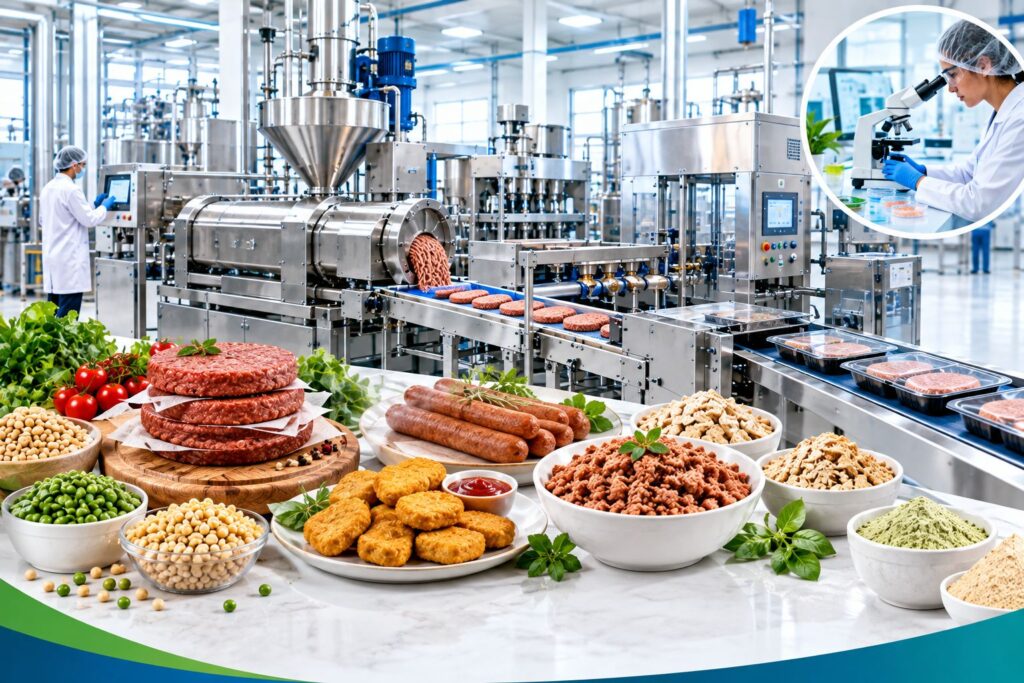
Plant-based meat manufacturing facility with processing and packaging equipment
FFCE

Expert Plant-Based Meat Manufacturing Consultants

Crafting the Future of Food, One Plant-Based Bite at a TimeThe plant-based meat industry is highly growing, yet companies have negligible possibility of being at the forefront and innovating it. Using the plant-derived components such as soy and pea protein in producing plant-based meat enables duplication of the flavor and taste characteristic of animal meat. More conserving to the environment as compared to other alternatives with a minimal amount of fat and cholesterol. you can produce sustainable, market-ready, and high-quality products with professionals like Frontline Food Consultants and Engineers (FFCE). Their custom-made solutions, state-of-the-art methods, and market research will put you on the right track for success in the plant-based meat sector. Introduction The rising plant-based food industry revolves around plant-based meat substitutes. Companies wishing to make a mark in order to manufacture competitive, high-quality products must work with informed consultants. Frontline Food Consultants and Engineers (FFCE) is a well-known brand in food consulting that offers expert help for the manufacturing of plant-based meat substitutes. What is Plant-Based Meat? Plant-based meat is a product, which is fully a plant but carries the nutritional profile, taste, texture, and look of regular meat. Designed to offer a satisfying substitute for those who prefer not to, or can not, eat less or no animal-based products and yet savor the flavor of meat. Why Choose Plant-Based Meat? The demand by consumers who care about is driving the rise in sales of plant-based meat because it contains very little content in: Nutrition and health Reducing their carbon footprints Endorsing sustainable food practices. How is Plant-Based Meat Made? There are various steps in the production process: Ingredient Selection: Ingredient selection refers to the process of choosing the right proteins, lipids, and binders. Mixing and Seasoning: Mixing and seasoning refer to the combining of tastes and spices with other elements. Texturization: The simulation of flesh texture using techniques such as extrusion. Cooking and Shaping: Precooking the mixture for convenience and shaping it into burgers, nuggets, or other shapes How Experts at Frontline Food Consultants and Engineers (FFCE) Can Help FFCE is a food consultancy trusted brand in plant-based meat product development. Here’s how their expertise can benefit your business: Customized Product Development: To meet your business needs, FFCE experts help you create plant-based meat substitutes. They ensure that your product is unique in the market by choosing the best ingredients, be it pea or soy protein, and refining the texture and flavor. Advanced Manufacturing Techniques: The latest food technologies that include protein texturization and extrusion to produce the perfect meat-like texture. Their expertise ensures that your product is delicious and produced efficiently. Market Insights: Companies have to understand the preferences of the modern consumer to stay in the game. You can be assured of your products’ goodness by using FFCE’s valuable market research to identify trends such as high-protein content or clean-label ingredients. Regulatory Compliance: It can be challenging to operate in the food safety law and certification area. FFCE assures you that all of your plant-based meat products meet the required food safety standards so you do not go astray in making costly mistakes and maintaining customer trust. Sustainability: The companies have to adapt themselves to sustainable practices since customers are increasingly becoming environmentally sensitive. Starting from sourcing material to packaging, FFCE helps you make your products sustainable production to make them stand out in the environmentally friendly category. The Future of Plant-Based Meat Food technology has developed rapidly; hence plant-based meat looks, tastes, and feels almost identical to traditional meat. It is for these reasons that more and more people concerned with their health and environment prefer plant-based meat. Companies like Frontline Food Consultants and Engineers (FFCE), which specializes in food consulting, are important as they help companies create premium plant-based meat alternatives. Their innovative approaches are the way forward for this industry, providing a gateway to more sustainable and healthy food. Conclusion In the plant-based meat sector, there is very little opportunity for businesses to lead and innovate in a rapidly expanding market. You can produce sustainable, market-ready, and high-quality products with professionals like Frontline Food Consultants and Engineers (FFCE). Their custom-made solutions, state-of-the-art methods, and market research will put you on the right track for success in the plant-based meat sector.

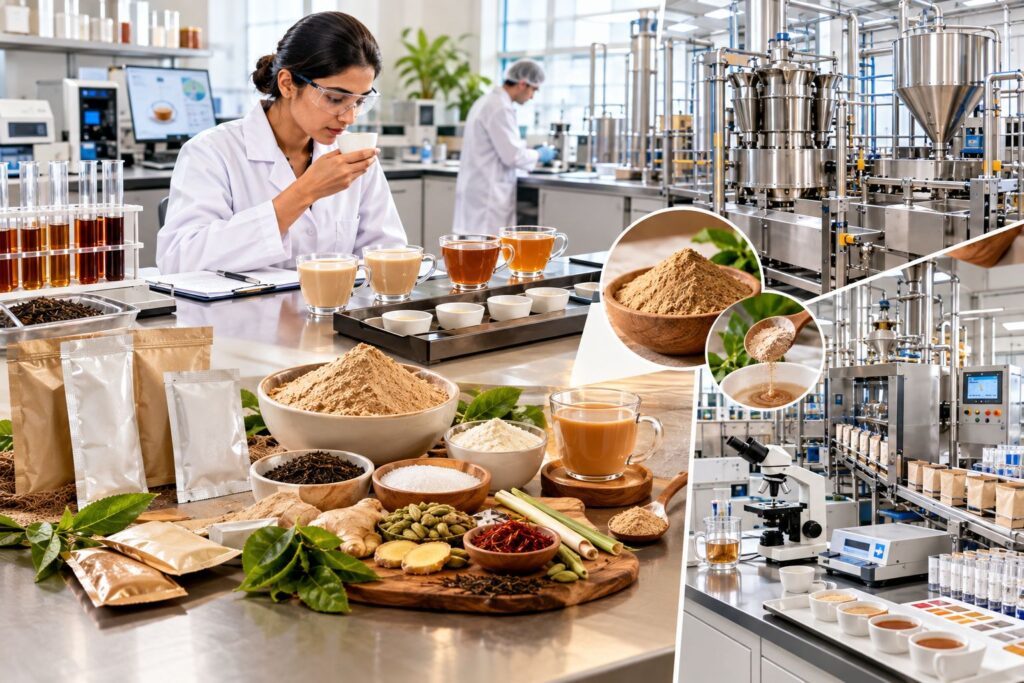
Instant tea premix flavour development and quality evaluation facility
FFCE

Flavour Development & Quality evaluation of instant tea premixe

“You cannot buy an instant happiness, but you can a buy instant Tea Premix!” As we all know that any social event, family get-together is not perfect without a sip of tea in India. It is unexpressed rules that guest cannot reject the offer of tea. So basically we can say that tea is making very easy path to connect people with each other over and over again. Introduction What is Tea Premix? : – It is a readymade powder of sugar, milk solids, tea extract powder and dairy whitener combined together. We can easily make a delicious tea instantly from tea premix by just adding a hot water. It gains a wide range of popularity in cosmopolitan cities, being instant it saves your time because you don’t have to add all the ingredients and boil it for a larger time to make a cup of tea. What Are the Types of Instant Tea Premix? Cardamom Tea Masala Tea Saffron Tea Ginger Tea Lemongrass Tea etc. How to standardize the quality of instant tea Premixes? In Tea premix, quality evaluation is one of the most crucial parameter to be taken care off while we processing. With the help of some technical consultant we can easily overcome this challenge. As quality can create the disinterest in the consumer to buy the products frequently. Thus, it is better to take a help of technical expert in order to validate its quality & sensory parameters.Standardization of tea premix quality can be done by several steps such as by physically verifying the colour of tea, Taste instant tea, evaluate the tea premix by flavour, aroma etc. These all technical guidance can be provided by a technical experts. Why Choose FFCE Consultant? As having a 13 years of experience in the food processing & consultation sectors, they are having a keen knowledge of the food processing sectors & leading demand on a global platform. Their technical experts can guide a various quality validation techniques to standardize the quality of instant tea premix. They can also give us a major market trend report with their internal data. They have been also blessed with the positive response from their customer feedback, at where we have provided our consultation. Market Trend Instant Tea premix has been always in limelight and gain popularity as owing to its health benefits & its cultural significance. Historical data shows the CAGR 3.78% which will be increased up to CAGR 4.1 % by the end of the 2034 year in India. Globally, India hold the 4.34% market share in a field of instant tea premises sectors, which can contribute the major financial goal to the nation. Conclusion To sum up all, we can conclude that instant tea premix is a convenient traditional drink with Ready-To-use purpose. Instant tea premix market such as market size, growth & popularity flourished rapidly among the nation. In today’s health conscious generation, people will always be conscious about their daily intake & its nutritional properties. Instant tea premix also satisfy the need of antioxidant properties. Lastly it recommends a smart investment in instant tea processing plant to navigate the market complexity. Thank you!

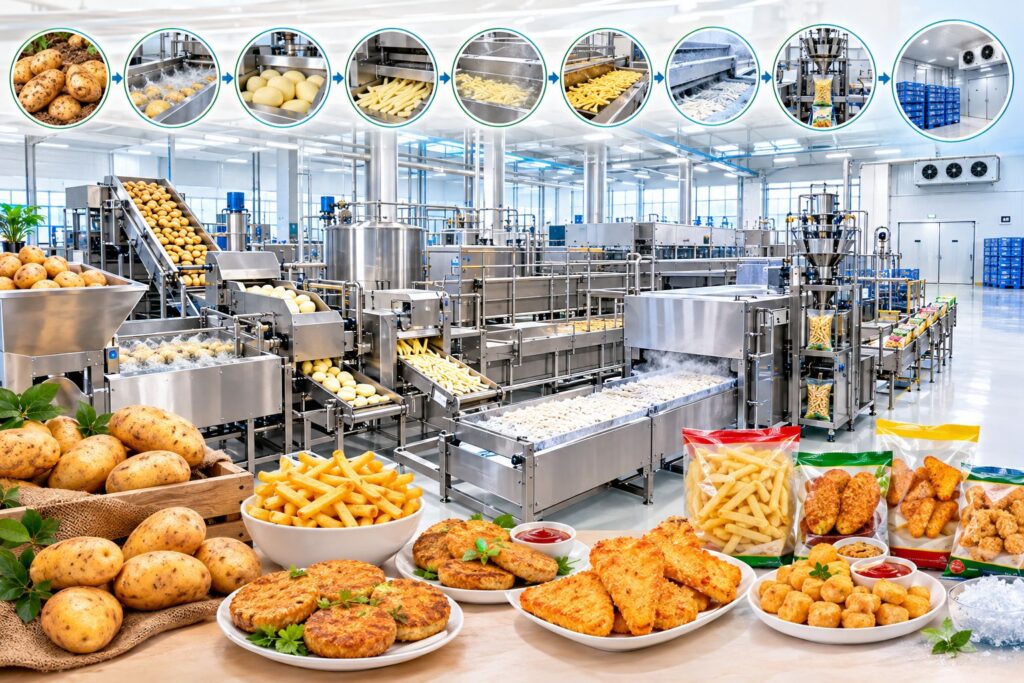
Frozen potato products manufacturing plant with French fries and aloo tikki processing line
FFCE

A complete guide for setting up a frozen potato products such as French fries, aloo tikki etc.

“Where golden moments are frozen & happiness is served with every crispy French fries.” Frozen potato products gains a huge popularity in global market, generating a billion dollar revenue in food industry sectors. The increased consumption of ready to eat and Ready to cook products enhance the market of frozen potato products. A part from that sales of frozen potato products are driven by the more working women in their professions in order to constrain their time zone with family & socialization. Introduction As far as potato is concern, we all know that it is high in nutritional value, having lower the cholesterol & unhealthy fat. Nowadays consumers are very health conscious in their daily diet and keep their self-more aware about their daily foods. With respect to all these targets consumer prefers more such frozen product which keeps them away from poor nutritional profile. As a result of that frozen potato products leads the culinary world with their products. Innovative Frozen potato products, Leading Consumer Demands Consultants assist in developing several products prepared from potato including: Frozen French Fries: It is an excellent source of energy free from gluten for baking and cooking. Frozen Snacks: Baked hash browns, Veggie decker, chesses shots. Herb-rich Frozen foods: Chilly garlic herb shots and Herb potato patty which gives rich content of herbs blended with potatoes. Why choose a consultant for frozen potato plant set-up? As they offers a wider range of ideas about the technical details such as capacity, efficiency, products, market demand of frozen products as well as current trend of market such as what to sell & how to sell the products! They can also guide us about the food safety & quality regulation, legal compliance as per government norms. Why prefer FFCE consultant? Frontline Food Consultants and Engineers (FFCE), known for their mastery in food processing consulting, is one of the good names. The engineers here at FFCE assist various businesses to innovate and expand using customized solutions related to product development and pulse milling. Having more than 13 years of experience in food consultation field, which provides a more strategic ideas. It offers: Tailored solution with current market issues. Their Expert team Support for the installing frozen potato process line in a shorter time. Recommend the latest equipment and technologies. It also offers us End-To-End coverage packages from farm to fork. Conclusion In a nutshell, Frozen potato products gains a huge popularity, These emerging market may proves that they have a potential to grow for frozen potato products. It ultimately contributes to the economy of food sectors. After consulting the firm such as FFCE we can get more idea & market conditions of frozen potato products & its current scenario of the business revenue.

Scroll to Top

Your Trusted Food-Tech Partner Simplifying Solutions, Maximising Success

    Your idea is 100% protected by our Non Disclosure Agreement

    What is Refresh icon

    Your Trusted Food-Tech Partner Simplifying Solutions, Maximising Success

      Your idea is 100% protected by our Non Disclosure Agreement

      What is Refresh icon

      Your Trusted Food-Tech Partner Simplifying Solutions, Maximising Success

        Your idea is 100% protected by our Non Disclosure Agreement

        What is Refresh icon

        Powering your food business forward