
FFCE

Now Hiring: Are you a driven and motivated 1st Line Food Technologist?

Author name: Admin

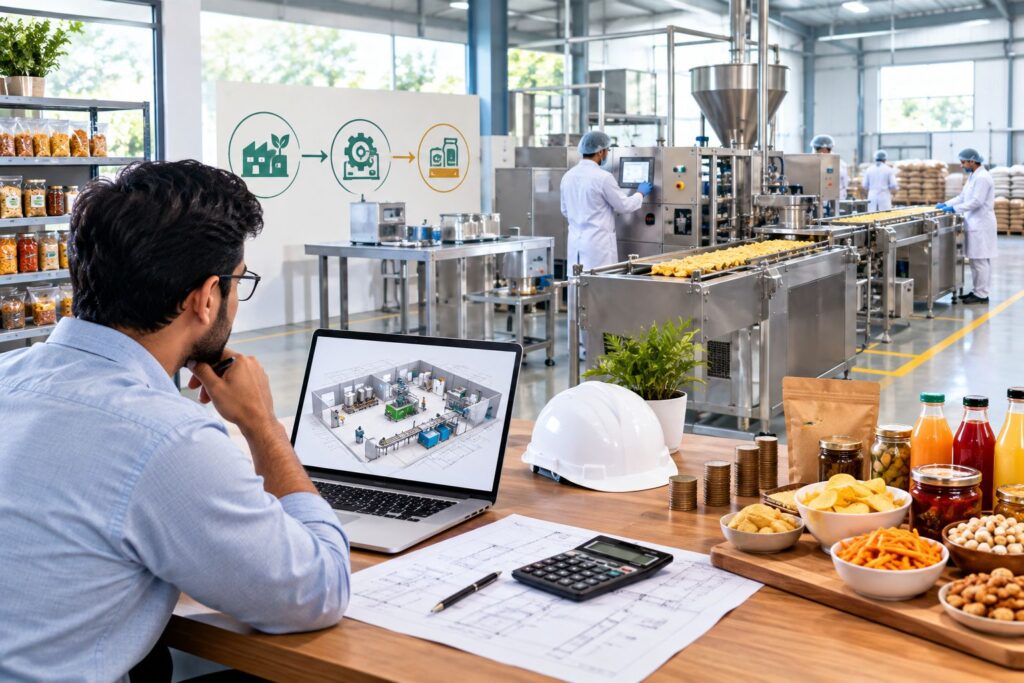
Low-cost food factory setup with efficient processing equipment and production layout
FFCE

Low-Cost Factory Setup Options for First-Time Food Entrepreneurs

For the food factory setup, new food entrepreneurs can save money by selecting flexible options like turnkey projects, modular units, third party manufacturing, or shared kitchens. A food consultant guarantees that your setup is production-ready, scalable, and compliant. Starting a food business becomes more feasible and cost-effective with the correct professional and plan. Products developed 0 + Years experience 0 + Countries served 0 + Clients served 0 + Introduction First-time food entrepreneurs may find the high costs and regulations of setting up a food factory daunting. On the other hand, affordable choices like turnkey projects and shared kitchens provide useful answers. A food consultant can streamline the entire food factory setup with the correct approach. Affordability, scalability, and compliance are guaranteed by professional advice. 1. Implement a Scalable Plan Start small within an active facility can easily exhaust most of your finances. Rather, plan it as an expansion venture that is able to start small but increase through time. A food consultant can work with you to determine your current production needs, market, and future growth as well as recommend space and layout design options as well as equipment that are space-saving. This way you’re building a risk-adverse model as you are keeping lean while being flexible in your setup. 2. Work from a Shared Kitchen or Incubator One of the most inexpensive food factory setups is starting in communal commercial kitchens or food incubator facilities. They provide easily available infrastructure, minimum machinery, and regulatory compliance perfect for initial production and market testing. With the help of a food consultant, owners can streamline processes and remain in compliance. It does away with the necessity for massive capital outlays but is a stepping point toward larger configurations or turnkey projects in the future. 3. Investigate Turnkey Projects If you are ready to have your own facility but do not want to manage construction and installation logistics, turnkey projects can be a great option. In a turnkey project, a service provider will construct and set up the facility, from the design of the food factory to installing heavy machinery, utility enclosures, and doing trial runs with the facility when it is handed off to you. For a first time food entrepreneur, a turnkey project can provide you with a timely, compliant, and efficient solution to set up your food facility. 4. Choose Modular Units and Pre-fabricated Structures Rather than building a traditional brick-and-mortar factory, think about a prefabricated unit or modular units. They are much less expensive, quicker, and you can play with layouts and set them up to easily relocate them. A food consultant can help you with sourcing vendors for a modular kitchen set up related to your category, such as snacks or beverages, or ready to eat meals. 5. Buy Used or Compact Equipment Choose well-maintained secondhand or small multifunctional equipment for a cost-effective factory setup instead of costly new machinery. These are excellent for initial stage scaling and smallbatch manufacturing. Particularly while designing forthcoming turnkey projects, a knowledgeable food consultant can help you find reliable suppliers and make certain the equipment fits your production objectives. 6. Take advantage of Government Subsidies and Schemes India has several schemes which aim to promote food processing and small manufacturing units such as PMFME (Pradhan Mantri Formalisation of Micro food processing Enterprises) as well as schemes from food parks at the state government level that may help. A good food consultant can find and access specific subsidy options that will provide a much-needed financial cushion as you set up your factory. 7. Comply from Day One Not complying early can add costs later. Compliance includes set up of the factory layout, source of water, packaging line, storage, etc., compliant to applicable FSSAI norms. A food consultant will provide vital support on ensuring your facility is on regulatory compliance, which will in turn keep fines from taking away food business profits and ensure compliance for future audits and exports. Conclusion For creating a low-cost and capital-efficient food factory setup, budding food entrepreneurs can adopt the above steps. Be it selecting a shared kitchen, modular unit, or turnkey project in full format, all three are a good beginning depending on budget and capacity. Having a professional food consultant as a business partner guarantees your infrastructure is compliant, economical, and future-friendly. By prioritizing planning and expert advice, you can send your food item out without risking economic stability with the space for further growth. Frequently Asked Questions 1. What is the initial set up for factories that is the cheapest for someone just getting started? For someone getting started, shared kitchens or small modular units will be the cheapest way of starting because they require a relatively low investment. The shared kitchen or modular unit can later be developed into a full turnkey project with the assistance of a consultant specialized in food. 2. How does a food consultant help with the setting up of a food factory? A food consultant will help you with all steps including the right location, equipment purchasing, FSSAI requirements and compliance, layout design. This will help ensure you minimize mistakes, avoid wasting lots of money, save time and ensure that the food factory will be efficient and legally compliant. 3. What are turnkey projects in the food manufacturing space? Turnkey projects are ready to work spaces with the professional team managing everything from the design/development, and installation along with applicable compliance requirements so the person is ready to have an operational food factory setup with a very low investment of time. 4. Are turnkey projects good for small food businesses? Yes, turnkey projects are an excellent choice for small or first time food business setting up and running a professional food business. Usually the food consultant is involved with co-ordination of these turnkey projects as they are familiar with the constructor and supplier processes.

Modern snack branding and packaging designed to appeal to Gen Z consumers
FFCE

Building a Snack Brand for Gen Z – Food Technologist Tips

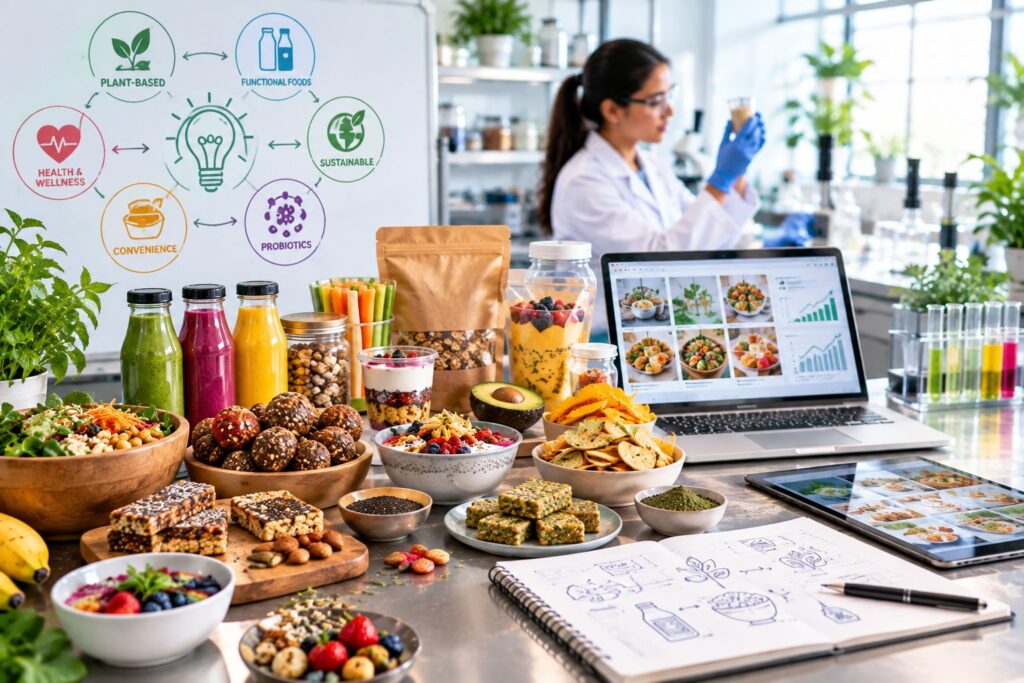
Gen Z is shifting the snack trends through their requests for health, novelty, and bold flavors. To serve this proactive youth market segment, food brands need to combine trend information with technical know-how. A food consultant or food technologist can help you to navigate formulation, shelf-life, and regulatory compliances. Their input can help you to stand out in a fast and dynamic competitive and trend-led market. Introduction: The Gen Z Snacking Revolution Generation Z is changing the snacking landscape a group of consumers that is digitally born, socially aware and experience based. Gen Z does not just consume snacks; they interact with snacks. This group values authenticity, functionality of ingredients, flavor from around the world, and they are heavily inspired by trends on social media. Whether you are a start-up or existing brand, it is important to know about this generation’s preferences. This is where the food technologist and food consultant become your best friends, because they will help you dissect current snack trends and deliver what Generation Z desires. Products developed 0 + Years experience 0 + Countries served 0 + Clients served 0 + Understanding Gen Z and Current Snack Trends To appeal to Gen Z, simply tasting good is no longer sufficient. Gen Z is defining Innovative Snack Food Solutions. They care about the products they purchase being in line with their overall values: sustainability, health and wellness, convenient products, and cultural inclusivity. Popular snack trends include: High protein chips and bars Plant based snacks Exotic and global flavors Minimalist clean label ingredients A food consultant can assist brands in tracking changing trends through market research, surveys with consumers, and international benchmark products. They make sure you don’t just know about trends but know how to stay ahead of them. The Role of a Food Technologist in Snack Development Creating a snack that meets Gen Z’s expectations involves some technical expertise. A food technologist is essential for: Recipe Development: Whether it’s finding the right crunch or adding functional benefits, technologists balance flavor and good nutrition together with texture. Clean Labels: Gen Z’s read labels. They will make sure your formulation supports “no artificial” and transparency. Shelf-life Stability: Good tasting snacks must be shelf-stable without preservatives. Technologists will help with the necessary shelf-life testing and packaging compatibility. Scalability: What is done in the kitchen must be able to handle a similar scale and mass production. A food technologist will make the transition smooth and look after quality. As an example, if you’re creating a puff from quinoa for youth market, your food technologist can work with you on ingredient ratios to optimize texture and performance while cooler avoiding off-notes from natural proteins and some flours. Why a Food Consultant is Crucial for Youth-Centric Snack Brands Successful snack launches require more than just R&D. An experienced food consultant serves as a link between business execution and innovation. Regulatory Compliance: Handling FSSAI, labeling, and nutritional claims is one of their areas of expertise. Co-packing: Connecting you to manufacturers that can make niche snack formats. Packaging: Insights into what Gen Z finds appealing visually and environmentally in packaging – if it is minimalist design, resealable packs, compostable wrappers, etc. Launching Strategies: From positioning, researching and testing pricing, food consultants usually have some experience with established positioning, and you can adapt your brand for the youth market, D2C, quick commerce, etc. Food consultants have a strong industry network, so they will speed up product launch and improve your efficiency. They will also save you from sweating over beginner mistakes that might have been costly. Conclusion Launching a snack brand targeted at Gen Z is both an art and a science. The youth market is bold, curious, and quick to judge. To develop a strong sense of loyalty in Gen Z, your brand must combine innovative snack trends as well as expert formulation and go-to-market execution. When you work with a food consultant and food technologist, you improve your chances of a product that can be elevated from successful snack trend to an actual product that is viable, compliant, and scalable. When snack brands move to really understanding Gen Z and can successfully create a brand that meets their expectations and desires, they will lead the next snacking revolution. Frequently Asked Questions 1. What snack trends are popular in Gen Z today? High protein, plant-based, clean-label, and global flavor influences are leading snack trends from Gen Z. 2. How can a food consultant help launch a snack brand for youth? A food consultant provides insight into market trends, packaging, regulatory compliance, and sources appropriate manufacturers. 3. What makes Gen Z a target youth market for snack brands? Gen Z consumers generally want health, transparency, and innovation, which makes them a significant influential youth market segment. 4. Can a food technologist assist in scaling production for your snack?Yes, a food technologist will help develop recipe and production processes that will produce the same quality snack whether in a small batch or bulk. 5. What are the biggest mistakes that snack startups make in the youth market? Ignoring snack trends, choosing a poor formulation, or not planning for regulatory compliance are all things that a food consultant and food technologist can help identify and avoid.

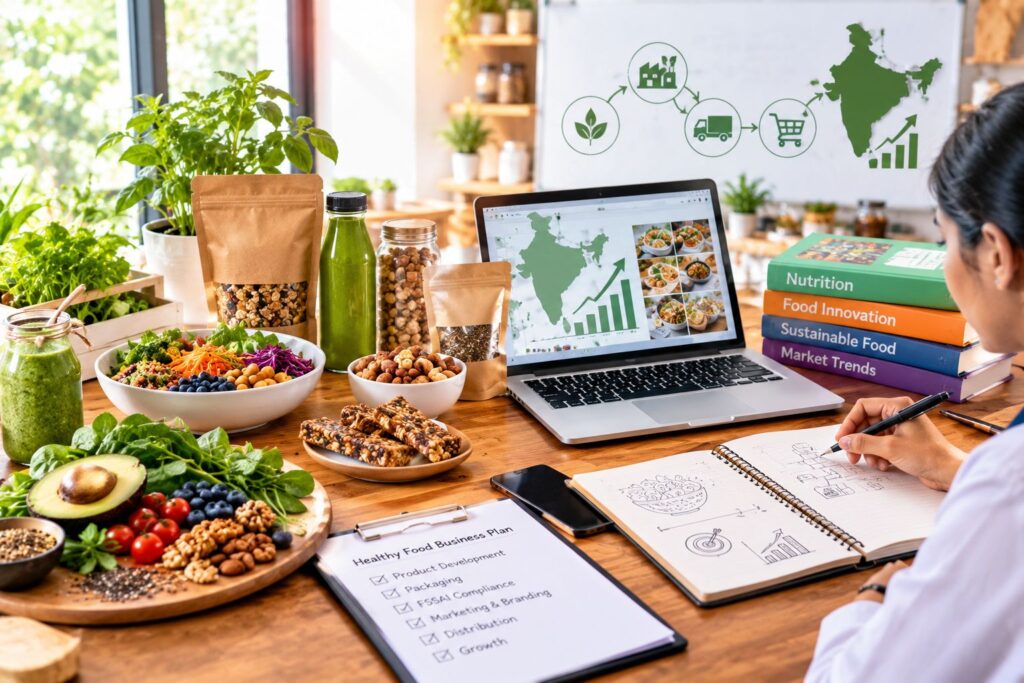
Healthy food business in India featuring nutritious food products and modern packaging
FFCE

Setting Up a Healthy Food Brand in India – Food Consultant’s Insights

It isn’t just a good product that is needed to launch a healthy food business in India; compliance, strategic positioning, and effective procedures are also necessary. Particularly in the early stages of startup setup, food consultants are essential to formulation, packaging, and licensing. In the expanding health food market, entrepreneurs can avoid pitfalls and scale more quickly with professional guidance. Introduction India’s consumer market of health-aware consumers is expanding and propelling demand for clean, wholesome, and functional foods. With more awareness of lifestyle diseases and wellness, ever-increasing entrepreneurs are coming forward to venture into healthy food business units offering improved options for common snacks and ready meals. Starting a healthy food business is, however, more than a winning formula—it’s smart planning, regulation, and proper support. This is why a food consultant is invaluable during your start up set-up stage. Products developed 0 + Years experience 0 + Countries served 0 + Clients served 0 + Understanding the Market for Healthy Food in India Understanding your target audience is very important before you get started. The Indian healthy food sector consists of organic snacks, plant-based products, gluten-free foods, low-calorie foods, functional beverages, and protein-rich meals. Tier 1 and Tier 2 cities are leading the charge in this trend thanks to better disposable income and city living, so there isn’t a lack of demand. But finding demand is just part of the equation in the healthy food sector, along with positioning, and offering something different & creative from the rest. Role of a Food Consultant in Startup Setup In creating a healthy food business, there is a lot more than just taste testing. A qualified food consultant can help guide you through this daunting process of getting from an idea to a product in the market. The food consultants will assist you with the following: Product Development and Formulation: Not only helping with a product that tastes good but ensuring that you can back up your nutritional claims (example, “high protein” or “low sugar”) though lab-tested results. Product Sourcing: Advising you on ingredients that are competitively priced and clean labeled as required under FSSAI, that are compliant with regulations. Packaging and Shelf Life: Helping with designing packaging that is eye-catching and environmentally friendly, but also protects food freshness and properly labelled with nutrition and ingredient lists. Regulation and Licensing: Assisting you with submitting all required documents to obtain licenses to be able to sell your food product. This includes all government licenses such as FSSAI and GST, Trademarks, and label approvals. Connecting with Manufacturers: Would connect you with co-manufacturers who respond to your requests, or help you develop your own small unit of production. Steps to Set Up a Healthy Food Startup in India Here is a simplified guide to the setup of your startup: 1. Concept Validation: Research the market and your competitors. 2. Recipe Development: Work with a food consultant suitable for you to get the formulations finalized. 3. Trial Batches: Taste test your product and stability check and ensure that the product is shelf-stable enough. 4. Brand & Packaging: Develop your brand story, visual identity, and packaging compliant. 5. Licensing & Certifications: Make applications for FSSAI, GST, and any other applications, licenses that apply. 6. Pilot Launch: Start small with D2C (Direct to Consumer) channels, farmers’ markets, curated health stores. 7. Scale & Distribution: When validated, you can launch on e-commerce platforms and into modern trade channels. Common Challenges and How Food Consultants Help Many new founders do not fully understand the operational and regulatory requirements of running a healthy food business until they face the complexities and challenges of ingredient substitution, short shelf life, or various FSSAI non-compliance issues which can not only delay but will also make you cancel your launch or force product recall. A professional food consultant can reduce the risk of these potential dilemmas by documenting thoroughly, engaging a third-party laboratory for testing of your product, and actively examining on a real-time basis emerging trends by these industries. Conclusion The Indian market has a lot of potential for innovation in the healthy eating space. To ensure your brand is noticed, and to scale on a small budget, you need to be well supported by experts in the startup set-up phase. By working with a food consultant, you have access to both the development tools, and the general business overview to help you realise your vision for your healthy food business. Frequently Asked Questions 1. How to open a healthy food business in India? Opening a healthy food business in India requires a good concept, FSSAI registration, a dependable procedure to produce the food, approved packaging, and use of a food consultant to help you with your startup process. 2. Why use a food consultant for my healthy food startup? Food consultants can help streamline your setup process, offering support in product development, compliance, sourcing ingredients and manufacturers. 3. What are the main mistakes the new healthy food startups make? Mistakes of new healthy food startups can include not following FSSAI guidelines, improper shelf life and changes in flavour. A food consultant can help avoid those mistakes during your training / startup setup. 4. Can the food consultant help with scaling my healthy food business? For sure, food consultants can be vital in supporting your brand after the initial setup with pilot batches, and all the way to commercial production. 5. What are the most profitable segments in the healthy food business in India? There are many profitable segments including protein snacks, plant-based foods, organic, and functional beverages – all areas where food consultants can support.

Emerging food product innovation trends shaping the modern food industry
FFCE

Top Trends in Food Product Innovation -Advice from a Food Consultant

The food industry is changing rapidly with exciting product trends, such as functional foods, clean-label products, and plant-based products. A good food consultant or food technologist helps food innovators and FBOs on turning their food innovation ideas into marketable products. To be successful at food innovation it is critical to use the expertise of a food consultant or food technologist, ensure you are accessing market information and compliance expertise, and understand food technology. Introduction: Why Food Innovation Matters Today Today’s consumers are changing the world, and now food innovation is not an option, it is a requirement. Changing lifestyles, shifting into health-conscious eating, and attention to the environment are changing consumer choices in food. This change has stimulated new product trends in many food categories; from snacks to drinks to well-related foods. To compete, food brands must change quickly, and the food consultant or food technologist is a critical resource to help them become food innovators. Food consultants and food technologists align product development based on trends that are appealing but compliant. Products developed 0 + Years experience 0 + Countries served 0 + Clients served 0 + Top Food Product Trends Every Brand Should Watch 1. Functional Foods and Beverages One of the biggest trends in food innovation is functional products – those that have health benefits that go beyond basic nutrition. Think of juices that boost immunity, snacks that are high in protein, and fermented drinks for gut health. A food technologist will help identify ingredients (such as probiotics or collagen, or adaptogens) and help with the proper integration of them without compromising taste or shelf life. 2. Plant-Based Product Vegetarian meat, plant-based confectionery, and so on are a growing food innovation movement. With consumers more and more looking for sustainability and purity, businesses seek the aid of food consultants and food technologists to tackle formulation challenges—such as selecting ingredients, flavor masking, and texture—in formulating plant-based equivalents that rival conventional ones. 3. Clean Label and Minimal Ingredients Clean label is one of the most significant food innovation trends, whereby consumers want natural, simple ingredients. Food technologists and food consultants use natural additives to reposition brands without compromising on product stability and acceptability, in accordance with modern product trends. 4. Regional and Traditional Flavors Externally, food innovation is utilizing non-traditional food products like, Indian gooseberry, turmeric, and millets. Local taste experience (and health) combines with these product trends. A food technologist customs nutrition and authenticity here as a food consultant develops modifications for today’s market. 5. Sustainability and Upcycled Ingredients Sustainability is a major food trend. Brands are using upcycled ingredients like fruit pulp and surplus grains to demonstrate this, and a food technologist helps ensure food safety, quality, and taste is not compromised within the context of modern product trends. 6. Ready-to-Eat Formats and Convenience There are more failures due to poor execution than due to poor concept. A food consultant provides technical experience, regulatory experience, and category experience. They trim cost, remove trial and error, and remove time, whether they’re taking a recipe from kitchen to volume or nuance out of a factory process. An expert food technologist looks after the entire process of formulation, shelf life testing, and packaging. Why Work with a Food Consultant or Technologist? Some of the most exciting food processing trends are based on a combination of AI, automation, and data analytics. Examples include: Smart Factory: Fully connected production units, where machines communicate with each other, and even make self-adjustments. Digital Twins: Virtual replicas of food production systems are where changes can be modeled ahead of real-world application. Sustainability Focus: A drive to eliminate waste of water, energy and raw materials through automation and AI. Conclusion Food innovation is not just about creative ideas but a combination of a current product trend, market potential and regulations. Regardless of if you are starting a new plant-based line or developing a functional beverage with health claims, a food consultant or food technologist is always beneficial to defend your process and ensure you are creating something that will be successful. Your innovative idea could become the next “Hot Product” in the food industry with the right help! Frequently Asked Questions 1. How can product trends influence food innovation in India? Product trends in product trends like millet snacks, ayurvedic beverages, and local products and sites, are initiating local food innovation in India around traditional dishes that now have more convenient and accessible forms. 2. Can food innovation help me extend the shelf life of my product?Yes, food innovation with a food technologist may look at ways to add natural preservatives, types of processing, and clever use of smart and active packaging, to try and extend the shelf life of a food product without loss of quality. 3. Why do startups use consultants for food product trends? Startups use food consultants because they need to keep up with emerging product trends and a consultant will advise on food innovation in a compliant way, with the aim of creating innovative new food products ready for the market, with the help of food technologists. 4. What are the most popular food product trends in recent times? The top product trends are functional foods, plant-based options, clean label products, regional flavors, and sustainable packaging – these are the five key areas of food innovation – some stronger than others.

Food technologist developing and standardising a biscuit brand for commercial production
FFCE

Why Every Biscuit Brand Needs a Food Technologist at the R&D Stage

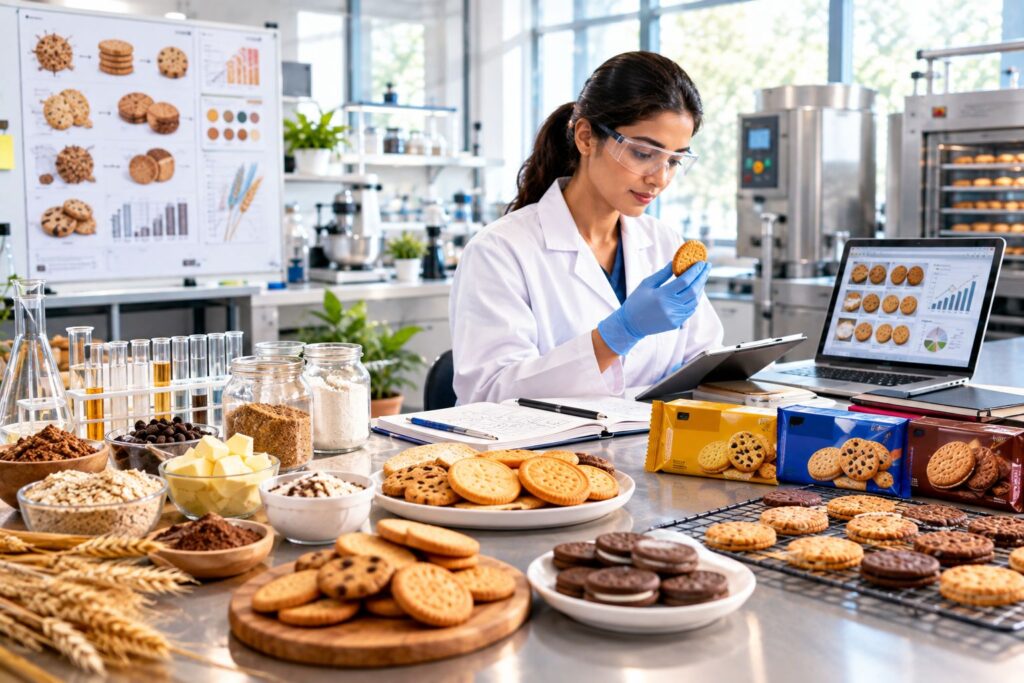
The food technologist is critical when developing the R&D phase of any biscuit formulation as it pertains to the consistency of quality, texture, and taste. Recipe development is possible with the help of a skilled food consultant to help brands innovate and stay competitive in this ever changing food landscape. With knowledge from sourcing ingredients to final product validation, there is specialized knowledge to ensure success from batch one. Introduction When developing a new biscuit product or optimizing an existing one, many brands put a significant amount of thought into marketing, packaging or price. While biscuit formulation, those are all important areas to focus on, the success of a biscuit really hinges on performance – taste, texture, and shelf-life are all defined at the R&D stage. This is where the food technologist comes into play. Products developed 0 + Years experience 0 + Countries served 0 + Clients served 0 + The Foundation of Success: Biscuit Formulation Effective biscuit formulation depends on effective formulation, which determines the finished product texture, taste, and consistency. A food technologist uses the scientific approach in choosing ingredients and optimizing process. They realize how the mixture of flours, fats, sugars, and leaveners. Without these, the outcome can vary from too dry to too crumbly. Having a food consultant on board from early R&D stages saves time and money and avoids expensive mistakes. Effortless and scalable recipe development is assured right from the outset. Recipe Development That Delivers Consistency and Innovation Recipe development is not simply mixing ingredients together, it is creating the right flavor structures, ensuring proper structure, and developing the appropriate baking condition. A food consultant with recipe development experience knows how to develop a biscuit that meets customer expectations while representing the brand. Whether the aim is a high-fiber health biscuit, a buttery indulgent cookie, or a gluten-free one, the right food consultant will guide you through the recipe development process in an efficient manner by considering target shelf-life sourcing ingredients, processing equipment, consumer trends and these are all important elements when developing a sellable and viable product. The Competitive Edge of Working with a Food Consultant A lot of startups and even established brands think they can use in-house chefs or trial-and-error baking for biscuit development. However, this usually leads to delays, quality variations, and high costs without a scientific approach to biscuit formulation. A professional food consultant bridges the gap between idea and reality. They understand the market required and the associated technical feasibility of the biscuit, allowing you to confidently scale production. With skilled recipe development, the food consultant’s expertise will allow you to define a strong USP, whether it be high protein, sugar-free, clean-label, etc.; but at the same time, ensuring your biscuit maintains and increases taste and texture quality. From Lab to Market: The End-to-End Impact A food technologist doesn’t just stop at recipe development. They are an integral part of troubleshooting during pilot batches, adapting formulations for co-manufacturing units, and being engaged in quality assurance. Having a food technologist involved in those procedures makes certain that what works in a test kitchen also works for mass production. Having the expertise a food technologist possesses in terms of food safety law, ingredients, labeling, and shelf-life testing gives brands an extra level of protection when entering competitive and saturated markets. Moving into India or looking at exports, having an active food consultant, can be a huge difference in the entire process. Conclusion If you’re really serious about building a biscuit brand, recruiting a food technologist to the table as part of the R&D phase is not optional; it is essential. With professional biscuit formulations and recipe development and expert advice from a food consultant, you will have everything you need to deliver products of the right quality that please your customers and stand out in an already crowded marketplace. Frequently Asked Questions How can a food consultant assist in biscuit development? A food consultant will have a strong base of technical experience that couples with market knowledge to improve the biscuit formulation to address consumer expectations and manufacturing potential. What is the role of a food technologist in the recipe development process of biscuits? The food technologist will enable the recipe development process to be done scientifically, scaling it up for commercial production and complying with food safety regulations. Can a biscuit recipe be developed without a food consultant? It can, but developing a biscuit recipe without working under professional guidance could lead to problems such as incorrect texture, poor shelf-life or worse, no dough under scale up. A food consultant will prevent some of these problems. What are the most common difficulties when developing biscuit recipes? The main difficulties are producing the correct crunch or softness, dealing with moisture, identifying the right functional ingredients, and achieving control over uniformity in biscuit formulation.

HACCP and FSSAI food safety certification process with a food consultant
FFCE

How to Get HACCP & FSSAI Certification – With Help from a Food Consultant

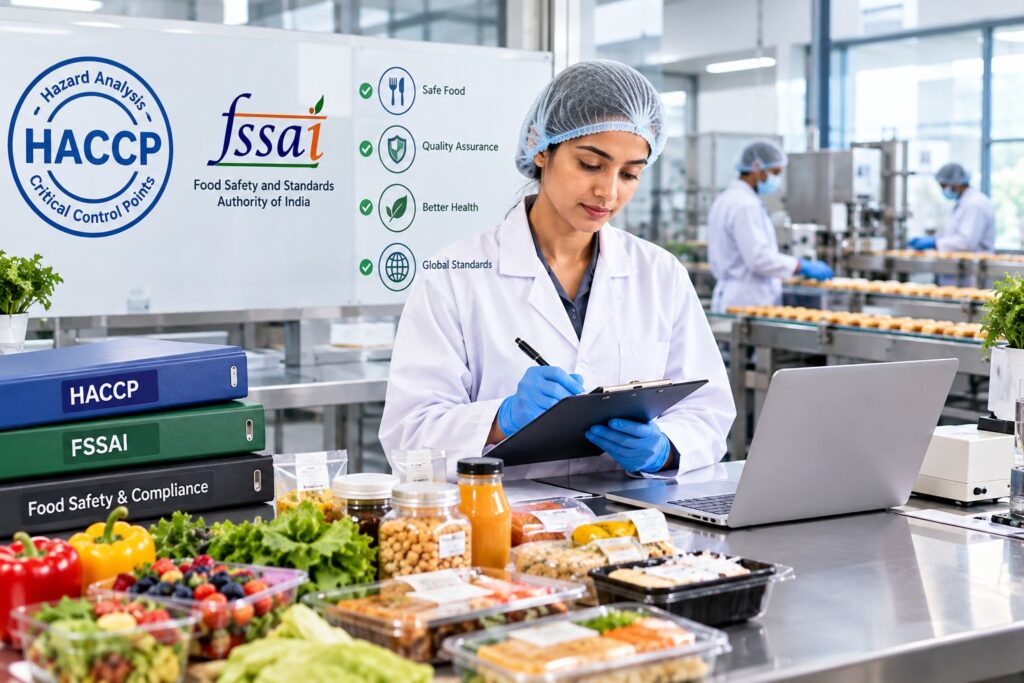
+Getting HACCP and FSSAI certification is important for food companies to achieve food compliance and food safety standards in India. A food consultant or food technologist can make this easier by providing you with the guidance you require for documentation, audits and system execution. They also know whether your food business activities meet national and international regulations. Introduction The two important pre-requisites certifications to legally operate a food business in India are: FSSAI (Food Safety and Standards Authority of India) & HACCP (Hazard Analysis Critical Control Points) certifications. Both certificates protect food safety and develop consumer confidence and make your business exports ready. However, it is not a simple task to get certified. There are food compliance protocols to adhere to, documentation process to consider and inspections to undergo. A food consultant or food technologist will be your best friend in this situation. With their technical experience, commercial knowledge and their understanding of the compliance environment, they can help guide your certification process and reduce the potential for delays that may end up being costly. Products developed 0 + Years experience 0 + Countries served 0 + Clients served 0 + What is FSSAI Certification? FSSAI is India’s top regulatory body for regulating food enterprises and enforcing food safety standards, mandatory for food enterprises to manufacture, process, pack, distribute, and sell. Any food enterprise irrespective of their food items is mandatory to have an FSSAI license. There are three types of FSSAI licenses based on the size of business:  • Basic Registration – for small food businesses (turnover < 12 lakh/year)  • State License – for medium-sized businesses (turnover 12 lakh – 20 crore)  • Central License – for large-sized businesses, and for export/import businesses. To obtain an FSSAI license, food businesses must complete the following steps: -Register their business -Complete Form B -Provide the layout of the premises and plan for equipment -Provide a list of food products -Provide a plan for a food safety management system -Provide a declaration and affidavits. A food consultant can assist you in gathering and preparing the documentation and can also identify the appropriate ‘category’ of registrations or licenses and submit the documents with no errors. What is HACCP Certification? Hazard Analysis Critical Control Point (HACCP) is a food safety management system that is recognized internationally, where hazards are identified and evaluated, and controlled. HACCP systems are not a legal requirement in India for all businesses, but ideally, HACCP is for businesses that want: -Maintain greater levels of food safety -Enhance their export opportunities -Comply to global standards (in particular European, USA, and Gulf standards). The steps involved with HACCP are: -Hazard analysis -Identifying critical control points (CCP) -Establish monitoring procedures -Maintain documentation and verification systems A food technologist has been trained to deal with the technical aspects of HACCP and are able to visit your facility, assess the facility, help you implement preventative measures, train your staff, and prepare a SOP’s and manuals to suit your operations. Why Work with a Food Consultant? Here’s how a food consultant or food technologist can ease your certification process: 1. Gap Analysis They will conduct an audit of your current systems to identify any deficiencies that would need to be addressed to be HACCP or FSSAI compliant. 2. Customized Documentation The food consultant will prepare customized documentation, including hazard plans and SOPs, that are tailored to your business processes while allowing for compliance. 3. Support with Implementation Not only will they support you in implementing necessary changes to your infrastructure but also meaningful hygiene practices, staff training, and sanitation practices essential for sustaining certification. 4. Preparing for Audit Your food consultant will prepare your team and assist you with preparing for both internal and external audits to ensure you have minimized opportunities of non-conformance. 5. Compliance Support Post-certification Food consultants can support with your annual renewals, upgrades, and continuous improvements of your food compliance standard. Conclusion Whether you are starting a new food business or scaling your existing food business, achieving food safety through HACCP and FSSAI certification should not be an option but a requirement. Using a food consultant or food technologist with experience in compliance will provide you with a time-efficient and less stressful way to make sure you achieve food compliance from day one. Investing in support is not just about achieving legislation compliance – it is about ensuring the food compliance of your brand, protecting your customers, and ultimately your future in food. Frequently Asked Questions Why do I need help of food consultant for both FSSAI and HACCP certification?A food consultant helps you understand complex regulatory requirements, prepare appropriate documentation and they will provide steps for an audit, all to have complete food compliance to achieve a smooth and quick certification. How does a food technologist make a difference in helping me achieve food safety standards?A food technologist uses their scientific and technical expertise to improve hygiene, identify hazards and implement the necessary food safety procedures (as needed for HACCP and FSSAI compliance obligated). Is HACCP obligatory for food businesses in India? HACCP is inconsistent for all businesses under Indian law, as it is not obligatory, but many businesses involved in exports, large manufacturers and businesses wanting to demonstrate advanced food safety systems have access directly to HACCP standards recommended. What is the full process for obtaining FSSAI certification?After you select the right licensing type, you will: Fill out the documents: i.e. Form B, layout of the facility, list of products or food types, plan for food safety management, after this fill out all obligations for food compliance inspection.

Herbal drink product development and launch with food consultant support
FFCE

Step-by-Step Guide to Launching a Herbal Drink – Food Consultant View

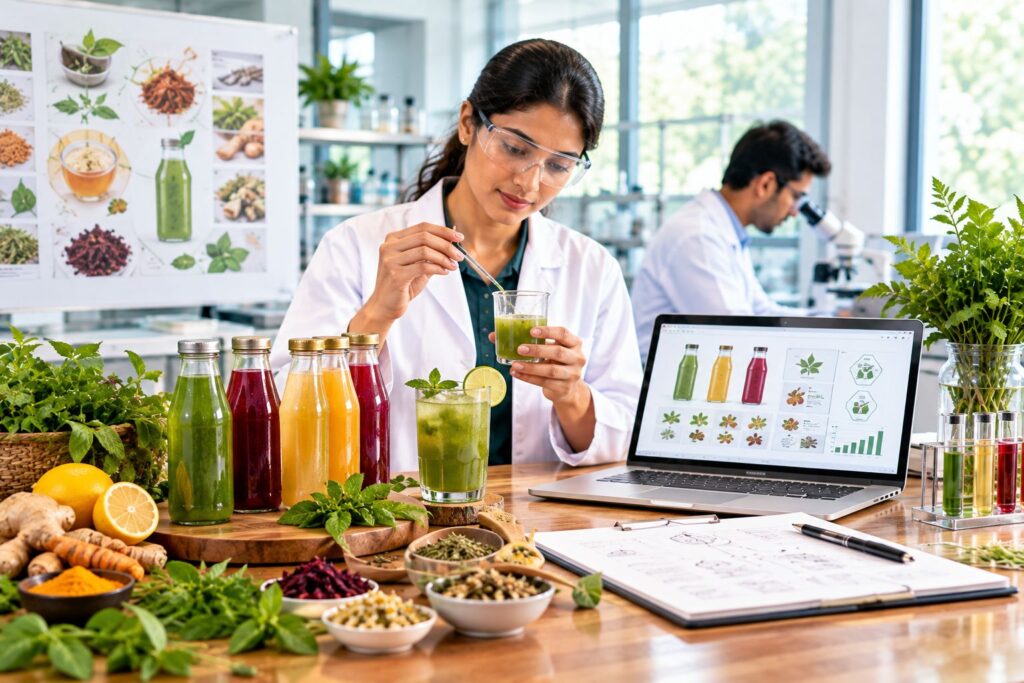
You can develop herbal drink concepts into a profitable functional beverage brand with the assistance of a good food consultant. Your product becomes scientifically sound when a food technologist oversees formulation, safety, and processing. Technical accuracy and health positioning are essential in the market for herbal drinks. Commercial success and regulatory compliance are ensured by launching with the appropriate expertise. Introduction Herbal drinks are no longer merely herbal remedies; they have evolved into trendy functional drinks that consist of health positive attributes in combination with contemporary consumption. The market is migrating towards natural health products and so the time may be right to think about launching an herbal drink brand. But it takes more than just making herbal drinks to compete in that market. A market strategy, knowledge of regulations and proper formulation this is where the food consultant/food technologist comes in. Products developed 0 + Years experience 0 + Countries served 0 + Clients served 0 + Step 1: Determine the function of your Herbal Beverage Herbal beverages are not all created equally. Some offer immunity support, others digestion support, energy support, detox support, relaxation support and so on. The first step is to isolate the function of your product so that we know what type of herbs extract we will be selecting and how they will support the needs of the target consumer. Example: Ashwagandha and Tulsi for stress. Turmeric and Ginger for anti-inflammation. Amla and Hibiscus for Skin care and Immunity. A food technologist can assist in matching the function with the correct type of ingredients and proportions to achieve effectiveness in use and taste. Step 2: Work with a Food Technologist to handle the formulation Formulating a stable great tasting herbal drink with consistent benefits is not such a straightforward task as there is science to it. A food technologist will: Select appropriate herbal extracts based on solubility, pH, and shelf stability Use natural flavouring agents to mask any bitterness with overbearing flavours. Ensure that clarity, colour and mouthfeel of the liquid meets consumer expectations. Complete microbial and chemical stability tests to establish shelf-life. Step 3: Regulatory Reasons and Safety Compliance In India, herbal drinks are regulated as functional beverages, and they must follow the FSSAI regime. In consultation with your food consultant: They will assist you in classifying your product correctly (nutraceutical, health supplement or proprietary food). They will be sure that you have proper approval for your ingredients, and correct labels. Guide you through the FSSAI license, nutritional declarations, and claim validation. Food safety testing and documentation is mandatory especially for export products. Step 4: Selecting the Right Processing and Packaging The method that you process your herbal drink is important because it may affect taste and nutrition. For example of methods to extract functional ingredients: Cold-pressed extraction Infusion and filtration Pasteurization or UHT for shelf-life stability. Grounded in what you are producing, packaging-wise you will maintain functional ingredients to target health-conscious audiences. Some containers that you could use are Glass bottles, PET bottles with UV protection or tetra packs. You will need to ensure through your food technologist that the containers meet suitability with the drink, and that there will be no interaction between the drink ingredients and the packaging. Step 5: Prepare a Pilot Batch for Sensory Testing A pilot batch will need to be made and tested prior to a commercial launch. The sensory analysis will focus on taste, smell aroma, appearance, and aftertaste. Taking feedback from users will help you adjust your recipe or branding. A food consultant will be able to organize a tasting before the launch, or you will be obligated to record feedback data and structured trials for your own technical decision-making process. Step 6: Brand Positioning on Go-to-Market Plan Modern herbal drinks need to not only be healthy endearingly but also aspirational. Work with your food consultant to: Utilize functional claims like it will enhance energy or will reduce stress Speak to clean-label and label the use of ingredients Take advantage of the trending concepts of Ayurvedic wellness or adaptogen-powered herbal drinks. When you have decided on your sales channels, whether retail, e-commerce, wellness houses, or cafes you will have to develop a marketing strategy that sticks with how your herbal drink uniquely relates to consumers’ life-style and wellness-selecting. Automation: Smarter Food Processing Let’s make your herbal dream a functional beverage brand An herbal drink is a phenomenal opportunity in the fast-growing market of functional beverages. The entire process is very technical and tightly regulated. You can convert your herbal concept to commercial products on the shelf with an experienced food consultant and food-technology scorer and create a product that leverages a science-based and traditional innovation. Frequently Asked Questions 1. Why would I seek help from a food technologist to help me develop my herbal drink? A food technologist will help make sure that your herbal drink is safe, stable, tasty and adheres to the food regulation accordingly so that your idea is developed into a healthy functional beverage. 2. Is there any herbal infusion that can be developed as a functional beverage? Not really. An herbal drink can only be developed into functional beverage categories if the herbal drink has evidence, has safe ingredients, and adheres to the legislation of FSSAI, which will be properly guided by a food consultant. 3. How can a food consultant assist in the process of herbal drink product development? A food consultant helps in formulation of recipes, finding ingredients, with FSSAI regulations, shelf life testing, and packaging for functional beverages. 4. Is there any regulation when developing herbal drinks in India? There is regulation regarding this, as herbal drinks must comply with FSSAI functional beverage standards, containing the specific approved ingredients, in ensuring safety for these beverages, and correctly labeling.

Food laboratory testing and quality analysis before launching a food product
FFCE

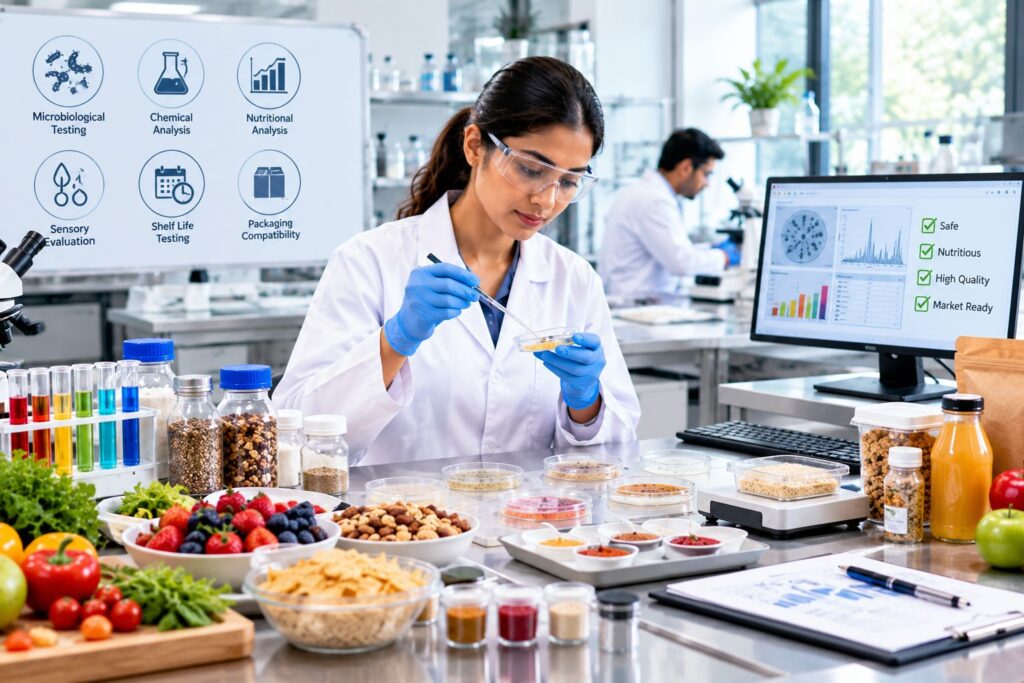
Essential Food Lab Tests Before Market Launch – Food Consultant Checklist

Prior to launching any food product, shelf-life testing and food quality testing are critical to ensure suitable safe food products and happy consumers. The food technologist’s job is to plan and supervise these very vulnerable and crucial lab tests. A seasoned food consultant can assist start-up companies in creating a comprehensive food lab testing checklist that ensures compliance and good consumer acceptance. Introduction Bringing a new food product to the market entails more than taste and packaging. You will need to conduct important lab tests on your product about food quality, safety, and compliance. Shelf life testing and true shelf-life ranges are a single part of this process, and it’s wise to engage a food consultant and food technologist irrespective of whether you are a start-up, or someone who has already begun a food brand. You need to understand the style of testing you will need to have done to make sure you are compliant with today’s health and regulatory standards prior to bringing your product to market. Products developed 0 + Years experience 0 + Countries served 0 + Clients served 0 + 1. Shelf Life Testing: Predicting Product Durability When evaluating any product prior to market, shelf life testing will determine how long the product retains its intended safety, flavor, texture and nutrient content, under variable storage conditions. Indeed, shelf-life testing can be one of the most critical evaluations for any food product. Without careful evaluation, businesses are at risk of selling, spoiled or degraded food and by extension, damaged reputation and health risks to consumers! Important shelf life tests include: Microbiological stability (growth of bacteria, yeast and mould) Chemical Stability (oxidation, rancidity and nutrient loss) Physical changes (texture, colour and moisture loss through time) A food technologist will evaluate all these parameters, and ensure the results are assessed in information that can be used to develop and improve the product formulation and packaging for better shelf-life. 2. Quality Testing: Meeting industry and consumer expectations Food quality testing includes more than just taste. It also takes into consideration the physical, chemical and sensory characteristics that determine acceptance of the product. Food quality testing assures consistency from batch to batch and validates your brand promise. Types of testing performed: Sensory evaluation for taste, aroma and appearance. Nutritional testing to validate product label, for example calories, protein, fat, vitamins etc. Texture testing for appearance, crispness, firmness, chewiness etc. Colorimetry to measure visual appeal for consistency. When engaging a food consultant, the consultant will coordinate with a food technologist for food quality testing with accredited labs and will ensure the testing meets your brand goals and market expectations. 3. Role of a Food Technologist in Lab Testing A food technologist contributes the scientific imprecision necessary to formalize every aspect of food development and testing. They are responsible for working with labs and the data, ranging from setting up and developing tests, to troubleshooting a failed experiment. The following are the duties of a food technologist: Get samples ready and send them to be accredited labs for analysis. Confirming that tests follow national and international food safety laws. Interpret laboratory reports and recommend a product reformulation, or process change. Provide support to packaging for consistency with expected shelf-life impacts from testing. By working with a food consultant and coordinating the assessment together, you receive a “full circle” perspective of the whole process from test planning to compliance documentation led by a food technologist who knows the chemistry behind your product. 4. Why is a Food Consultant Your Greatest Resource An experienced food consultant will not only advise you on what to test, but they can also explain the reasons and process behind it. The food consultant usually has expertise in: Choosing accredited labs with the required capabilities Developing a testing plan that matches your product launch timeline. Developing a budget for essential tests and optional tests Deflecting unnecessary test costs Providing strategic decisions based on your business model. The advantage of being a food consultant and a food technologist is that your food product will be tested in a rigorous manner while also complying with compliance, and building relationship equity with consumers to encourage long term trust. Conclusion By not completing food lab tests, or by underestimating their importance, you could be risking a launch delay, or your brand could be incurring additional costs related to recalls of your food product. While shelf life testing, food quality testing, and consultation with a food technologist will give you confidence, when you test the food product with little time to spare looking over your shoulder, you realize that the test reported have now become your roadmap to getting your food product to market in a safe, delicious and successful way. Frequently Asked Questions 1. Why should you consider shelf life testing, before you launch your food product? Shelf life testing will verify that your product can remain safe, stable and high in quality during its intended shelf life. 2. What are some things involved with food quality testing? Food quality testing could involve tasting, textural comparison, color assessment, nutritional testing, etc., to guarantee the food product is consistent and as the consumer expects in quality. 3. How does a food technologist help with lab testing? A food technologist would design, run and interpret lab tests to assure a food product is safe, stable and provides information to comply with government regulations. 4. Will shelf life testing demonstrate when a product may spoil? Yes, it demonstrates when your food product is at risk of becoming unsafe to eat by consumers or food may no longer be acceptable to potential consumers. 5. What will a food consultant do to carry out shelf life testing? A food consultant will choose appropriate laboratories, will prepare a testing protocol to follow but will also have the information for the market is requiring and the government wants to know to be compliant.

Reformulation and product development of ready-to-cook foods in India
FFCE

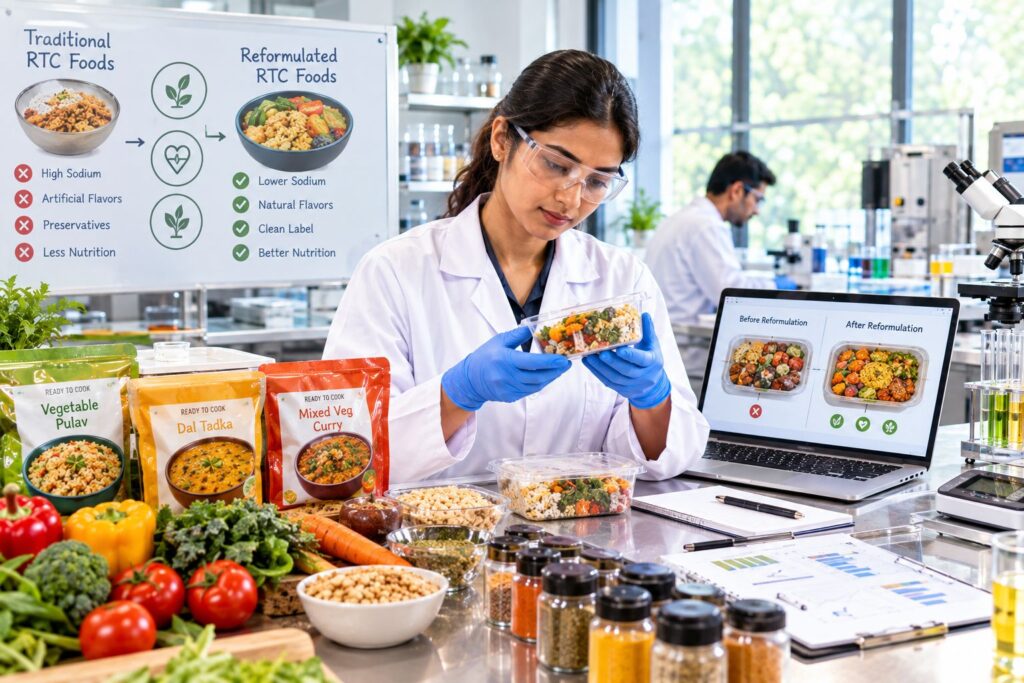
Reformulation of RTC Foods in India

The Indian Ready-to-Cook (RTC) foods industry has undergone a sea change in the past decade. What was dominated by basic necessities like instant poha, idli/dosa mixes and parathas frozen earlier now witnesses today’s consumer specifically looking for far more varied, health-oriented, and gourmet options. The recent scenario of the Indian food industry is longer characterised by primitive packaging designs and ill-reformulations. It is driven by innovation. They’re now fueled by RTC innovations, everything from rajma chawal and chole chawal meal bowls to air-fried samosas, millet khichdi, quinoa upma, and protein-filled kebabs, all easy and nutritious. But with this changing scenario comes technical challenges in formulation, processing, stability, flavor protection, and clean-label acceptance. +And that’s exactly where Frontline Food Consultants and Engineers (FFCE) shines, as a strategic partner to brands wishing to make their mark in this fast-growing category. RTC Foods in India: A Market on the Move Growth Drivers: Urban lifestyles hectic, dual-income households Increasing Gen Z and millennial population Increasing consumer demand for regional, comfort, and healthier foods in convenient forms. The New Focus: From mere mixes and breads → to complete meals, healthful snacks, protein-based choices. From mere convenience → to convenience + nutrition + taste Products developed 0 + Years experience 0 + Countries served 0 + Clients served 0 + Expansion from Basic to Complex Meals Earlier, the RTC variants were limited to products such as upma mix, instant poha, and frozen chapati. But now, the ready-to-cook biryani kits, rajma chawal, dal makhani, amritsari chole, kadhi chawal, and even pasta arrabbiata like options are emerging and thriving well. FFCE’s Role: Recipe breakdown, batch standardization Cooking time optimization (5–8 mins prep goal) Spice paste stabilization, freeze/thaw integrity Ensuring texture retention in grains and legumes 2. Rise of Ethnic and Street-Style RTC Snacks Earlier, only plain frozen samosas or spring rolls were available as snack options under the RTC category, which limited customer conversions and was devoid of novelty. However, today, options like Paneer tikka samosas, kathi rolls, mom’s-style cutlets, dilli chaat patties, and even dabeli puffs are widely available. Quick commerce platforms have a major role to play in this rising demand. Technical Needs: Pre-frying or par-frying to optimize reheat performance Moisture barrier coatings to retain crunch Crust and core balance in frozen-to-fry formats The Modified atmosphere packaging (MAP) or vacuum packaging FFCE’s Support: Frying oil management and moisture optimization Packaging film compatibility for RTC snacks Air fryer and oven-ready compatibility testing 3. Millet and Plant-Based Innovations There’s a surge in demand for: Millet upma, ragi dosa, bajra khichdi Plant-based RTC kebabs, soya chaap, jackfruit biryani Challenges: Hydration ratios and binding in non-wheat flours Anti-nutritional factors in millets Bitterness and beany flavors in plant proteins Maintaining structure during cooking and freezing FFCE offers: Pre-gelatinized millet base development Protein blending (pea, soy, lentil) for better structure Sensory optimization and clean-label masking 4. Clean Label & Health-Centric RTC Reformulation Today’s consumer reads labels. They want: No MSG, no preservatives Low oil, high protein, low-carb, high-fiber options Diabetic-friendly or heart-friendly RTC foods Formulation Focus: Natural preservatives like vinegar, rosemary extract, etc. are some of the possible additives which can be utilized. Pure emulsifiers, stabilizers such as the guar gum, xanthan gum, citrus fiber, other fibers such as inulin etc are getting increasingly popular. Cutting down on sodium content without losing flavor. FFCE’s Expertise: Nutritional modeling for protein, fat, carbs Additive replacement with natural counterparts Pilot batch testing and shelf-life simulation RTC Processing Key processing technologies include: Process Purpose FFCE’s Involvement Blanching Pre-treatment for vegetables/pulses Time-temp optimization to retain texture Flash Freezing/ IQF Preserve RTC items like tikkis, parathas, samosas IQF design, freezer capacity planning Retort Processing For gravies and rice dishes (chole, rajma, dal) Retort pouch design, process validation Extrusion For snacks or protein-rich blends Twin screw extruder selection, die design MAP/ Vacuum Packaging Extend shelf life for pre-fried snacks, doughs Packaging selection, gas mix compatibility How FFCE Supports RTC Brands in India With vast experience across ready-to-eat, ready-to-cook, and frozen categories, FFCE provides: Product Formulation and R&D Custom recipes for target prep times (3–8 minutes) Standardizing spice blends, batters, sauces Rehydration ratio calibration for RTC mixes Shelf Life Optimization Natural preservation, packaging integrity, thermal processing Microbial and sensory testing for refrigerated/frozen formats Packaging & Equipment Selection of laminated pouches, retort pouches, MAP trays Support for semi-automatic and fully automatic RTC lines Layout planning for freezing tunnels, retort units, cooking kettles Turnkey Projects Plant setup for frozen or ambient RTC lines Integration of cooking, mixing, cooling, filling and packing Cost optimization and vendor tie-ups The Rising RTC Trends in India High-Protein Bowls: Dal+quinoa, Chickpea+foxtail millet Frozen Fusion Snacks: Paneer cheese bombs, Veg pizza kachori Ayurvedic & Functional RTC Meals: Triphala khichdi, Ashwagandha laddoos Chef-Curated DIY Kits: RTC biryani with garnishing sachets FFCE works with clients to co-create innovative RTC concepts that blend authenticity, speed, and nutrition. Conclusion The RTC category in India is no longer an afterthought—it’s a strategic growth driver in the packaged food industry. Reformulation is the need of the hour, as consumers demand more from their convenience foods—more variety, better nutrition, and authentic taste. At Frontline Food Consultants and Engineers (FFCE), we offer holistic support—from recipe design and pilot trials to plant setup and regulatory compliance—empowering food brands to lead the RTC revolution with innovation and confidence.

HACCP and FSMS food safety management system implementation with expert consultants in India
FFCE

HACCP and FSMS in the Food Industry

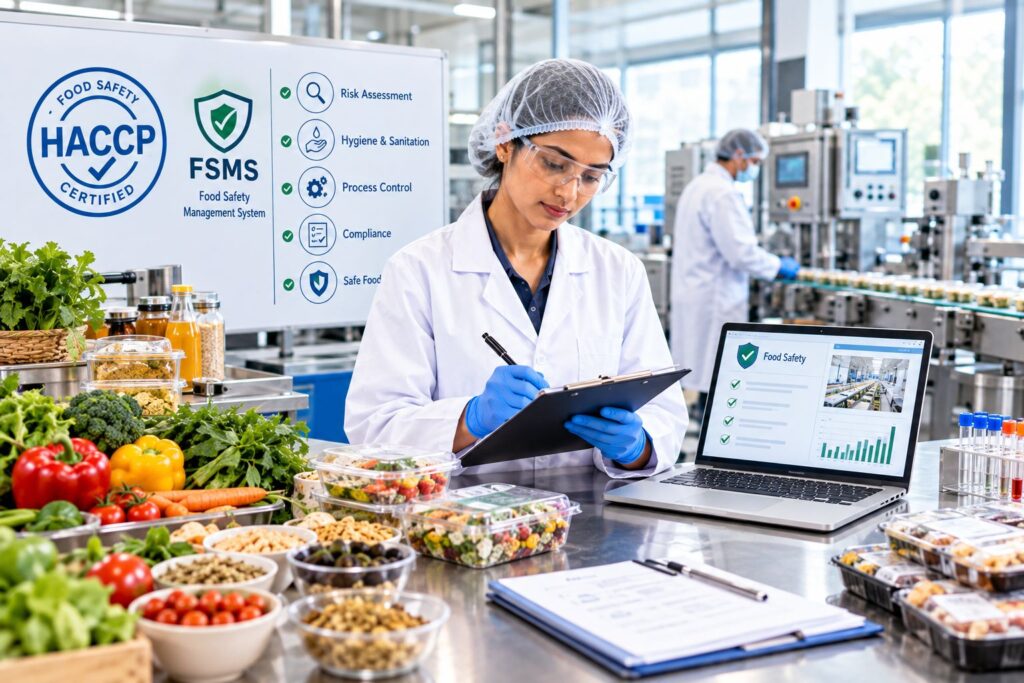
Food safety stands essential as a requirement because of today’s food industry environment which features strict rules and  worldwide supply systems and consumer education growth. Food safety acts as the foundation which establishes trust among customers and  ensures regulatory compliance and market competitiveness. Modern food safety management depends on two critical components: Hazard  Analysis and Critical Control Points (HACCP) and Food Safety Management Systems (FSMS). Food  businesses in India that are startups or SMEs or exporters or large manufacturers need to implement HACCP and  FSMS for reasons beyond regulatory compliance and auditor satisfaction. The goal looks to create a strong framework that  stops food safety problems from starting. Professional food consultants including Frontline Food Consultants and Engineers help companies build  and implement and maintain these systems through technical precision and operational effectiveness and regulatory compliance. They make a  major difference here. What is HACCP in the Food Ecosystem Hazard Analysis and Critical Control Points, or HACCP for short, is a methodical preventive strategy used to guarantee food safety. It lists the biological, chemical, and physical risks associated with the production process. It also identifies critical control points (CCPs) to either eliminate or manage the risks thus created. Relies on activities such as checking, fixing, and observing to ensure that food is not contaminated. HACCP, compared to testing of the final product, focuses on the reduction of the risks at each phase of food production, starting from the handling of raw materials to packaging and distribution. Products developed 0 + Years experience 0 + Countries served 0 + Clients served 0 + What is FSMS in Food Industry FSMS (Food Safety Management System) is a broader, structured framework that incorporates:HACCP principlesPrerequisite programs or the PRPsDocument verification and record-keepingContinuous improvement via internal audits and management reviewsThe globally recognized FSMS standards include:ISO 22000FSSC 22000BRCGSSQFIndia-specific: FSSAI’s Schedule 4 and FoSTaC training modules Why HACCP & FSMS Are Critical for Food Businesses in IndiaLegal Compliance with FSSAIFSSAI has made it mandatory for medium to large manufacturers to adopt HACCP-based food safety programs.As per Schedule 4 of FSS (Licensing and Registration) Regulations, the implementation of GMP, GHP and risk control is necessary. 2. Advantages:Avoids costly food recalls, fines, factory shutdown, consumer harm, and reputational damage.Builds preventive culture instead of relying on end-product testingBoosts Consumer and Retail ConfidenceEnables entry into modern trade, export markets, and online retailRecognized globally as a gold standard in food safetySupply Chain risk management and Brand Risk MitigationManagement of crucial categories such as dairy, meats, RTC/RTE foods, beverages, and snacks 3. Implementation of HACCP and FSMSHACCP Implementation Steps:Decide the hazards that can occur at each step during the production processList down the critical control points (CCPs) for instance, steps FSMS Implementation Includes:Infrastructure and hygiene SOPsPest control, water quality, waste managementSupplier control and traceabilityStaff hygiene, training, and food handling practicesInternal audits and continual improvement mechanisms Role of Food Consultants like FFCE in HACCP & FSMS ImplementationImplementing HACCP and FSMS is highly technical and tailored to each operation’s unique risks and process flow. At FFCE, we help businesses move from confusion to compliance through the following:Gap Assessment and Plant AuditOn-site inspection to assess current practices vs. HACCP/FSMS requirementsIdentifying high-risk zones, cross-contamination points, infrastructure gaps Custom HACCP Plan DevelopmentDetailed process flow chart creationRisk analysis matrix (likelihood vs. severity)CCP identification with monitoring toolsCreation of HACCP manual and SOPs FSMS Framework DesignISO 22000 or FSSAI-aligned FSMS setupDocumentation control, internal audit protocolsPRPs and OPRPs (Operational PRPs) implementation Team Training and CertificationOn-site training of food handlers, production and QA teamsSupport in FoSTaC certification (FSSAI-mandated)Record-keeping formats and audit preparedness Audit Readiness and Certification SupportPre-audit preparation for FSSAI, ISO, FSSC, BRCGS auditsSupport during third-party inspections and post-audit corrective actionsAssistance in supplier audits for B2B/private label contracts Who Needs HACCP & FSMS in India?RTD/RTC Food ManufacturersBeverage and Dairy UnitsFrozen and Ambient Snacks ProducersCloud Kitchens and QSR ChainsThird-Party Manufacturing UnitsExport-Focused Food Businesses Even small and medium enterprises are increasingly being asked by B2B buyers or retail partners to present their HACCP plan or FSMS certification as a precondition for business. FFCE’s Track RecordAt Frontline Food Consultants and Engineers, we have successfully implemented HACCP and FSMS across:Milk and flavored dairy beverages plantsFrozen snacks and samosa manufacturing unitsMakhana and other nut-based snack plant setupContract manufacturing/ third party manufacturing facilities across NCR, Maharashtra, Bihar, and Gujarat, Nepal, etc.Export-focused spice and ready to cook units Conclusion HACCP and FSMS are the strategic necessities and the backbone of the food safety structure in India, and abroad. In today’s highly competitive and regulated food business, these systems provide tangible business advantages, from ensuring consistency of product quality and decreased operational risks, to ensuring faster market access and customer satisfaction. Collaborating with expert consultants such as FFCE ensures that you obtain tailored, efficient, and compliant HACCP & FSMS systems—not paperwork—irrespective of whether you are a developing food entrepreneur or an existing manufacturer opening up.

Scroll to Top

Your Trusted Food-Tech Partner Simplifying Solutions, Maximising Success

    Your idea is 100% protected by our Non Disclosure Agreement

    What is Refresh icon

    Your Trusted Food-Tech Partner Simplifying Solutions, Maximising Success

      Your idea is 100% protected by our Non Disclosure Agreement

      What is Refresh icon

      Your Trusted Food-Tech Partner Simplifying Solutions, Maximising Success

        Your idea is 100% protected by our Non Disclosure Agreement

        What is Refresh icon

        Powering your food business forward