FFCE

Now Hiring: Are you a driven and motivated 1st Line Food Technologist?

Author name: Admin

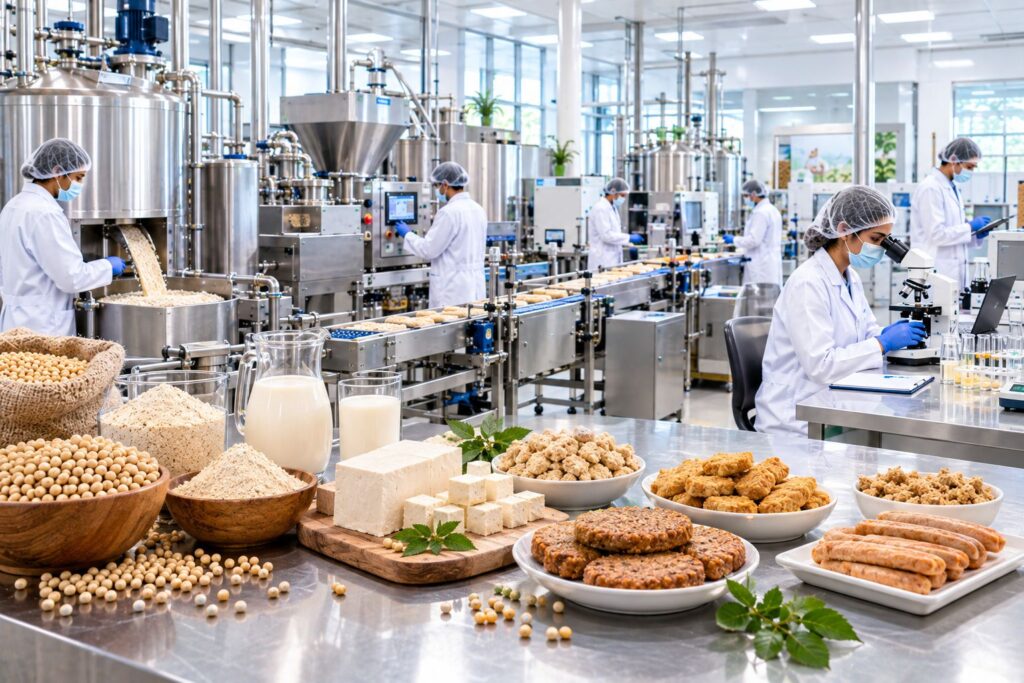
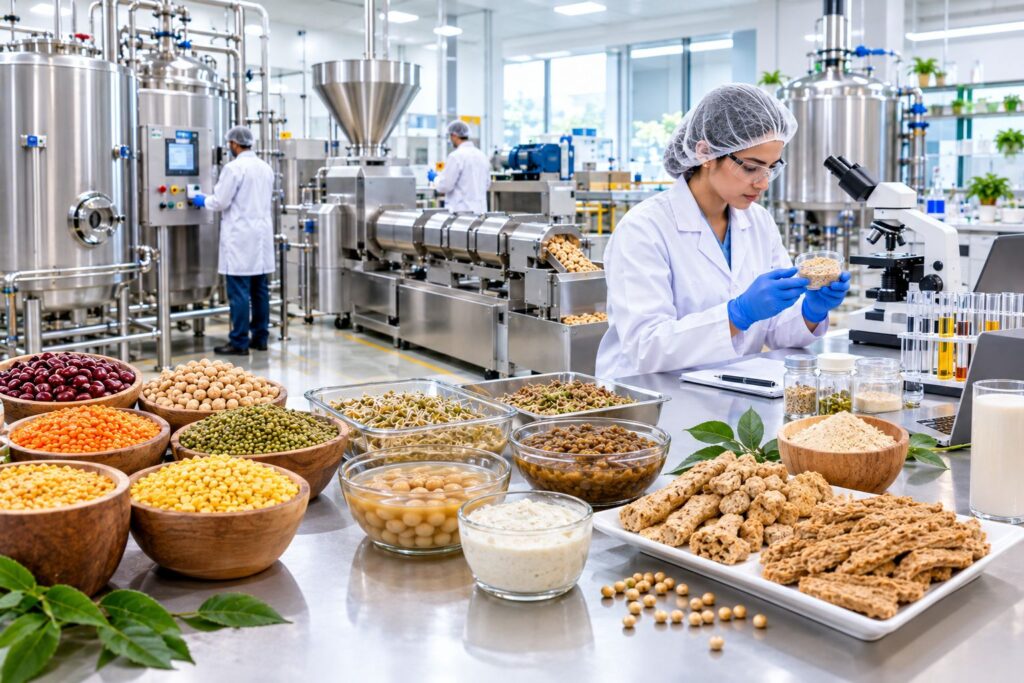
Legume protein processing facility with laboratory analysis and plant-based protein products
FFCE

How Processing Affects the Digestion of Legume Proteins

Processing has a considerable influence on legume protein digestibility by changing structures, eliminating dosages of antinutritional factors, and improving nutrient accessibility. Soaking, cooking, fermenting, and extruding are all examples of processing techniques that increase legume protein digestibility, yet do not compromise their nutritional quality and value. This has made legumes more palatable for consumption and has helped sustain the rising demand for plant-based protein products. Consultants help the processor to receive the best possible optimization of processing technologies, incorporating market trends in the entire design, product quality, and consumer satisfaction. Introduction Lentils, chickpeas, and beans are important sources of plant protein and Important amino acids, as well as micronutrients. The digestibility of these proteins is yet limited by both structural, as well as by the presence of antinutritional compounds such as phytic acid, tannins, then trypsin inhibitors. Processing methods are critical in breaking down these barriers, making protein from legumes more digestible and accessible. Using the processing methods, a way to enhance the digestibility of legume proteins has become clear, within the context of the consumers more and more inclined toward plant diets, which yield opportunities in the market. Products developed 0 + Years experience 0 + Countries served 0 + Clients served 0 + The Process of Improving Legume Protein Digestibility Processing Legumes will involve a range of techniques designed to improve the quality and digestibility of protein. Most commonly, these steps include: Soaking Moisture application to initiate the process of enzyme activity whereby toxic factors are reduced. Cooking This involves application of heat for denaturation of proteins, softening of fibers, and deactivation of antinutritional factors. Fermentation The process of using harmless microorganisms to decrease protein bioavailability and complex compounds. Extrusion At high temperatures and pressure, legumes could be transformed into textured protein meat, which increases digestibility. Germination or Sprouting Sprouting legumes increases enzymatic activity, enhancing protein digestibility. Key Points in the Process 1.Protein Structure Modification Heat and enzymatic activity modify protein structure, allowing these proteins to become more available for digestion. 2.Reduce Antinutritional Factors Soaking, cooking, and fermentation Process help to maintain lower the level of inhibitors to nutrient absorption. 3.Improvement in Amino Acid Availability Germination and fermentation process have beneficial effects on the balance and bioavailability of essential amino acids. 4.Improved Palatability Processing of legumes lessens bitterness and hardness, making them more commercially appealing. 5.Nutrient Retention Whenever modern processing techniques are used, there is little nutrient loss. Market Trends 1.Demand for Plant Proteins Rising popularity of legumes for sustainable sources of protein reflects latest dietary trends toward vegetarianism and veganism. 2.Functional Foods Fortified and functional legume-based products are becoming popular for their incurable health properties. 3.Clean-Label Products Consumers want minimally processed legume-based products free from artificial ingredients. 4.Sustainable Processing Emphasis on processing to minimize water and energy consumption. 5.World Market Development Increasing demand and consumption of legume-based products, such as plant protein powders, meat substitutes, or snacks. Role of Consultants  1.Process optimization Skill fully advising on proper, economically viable processing methods to improve protein digestibility. 2.Product Development Help create innovative legume-based products deemed fit by consumer standards. 3.Regulatory Compliance Ensuring food safety and labeling compliance for processed legume products. 4.Market Strategy Determining trends and advising businesses in suitably positioning legume-based products in the marketplace. 5.Sustainability Initiatives Advising on efficient processing and waste management norms. Conclusion Processing is, thus, crucial in enhancing the digestibility and nutritional quality of legume proteins to ensure applicability for different dietary requirements. Such treatment as soaking, cooking, fermentation, and extrusion also potentially improve protein quality; thus, consumer demand for whole foods and plant-based products is being met. One area in which consultants really shine is the domain of helping companies optimize their method of processing, assuring product quality, and meeting market expectations, thereby assuring the presence of legumes in the ever-evolving food landscape.
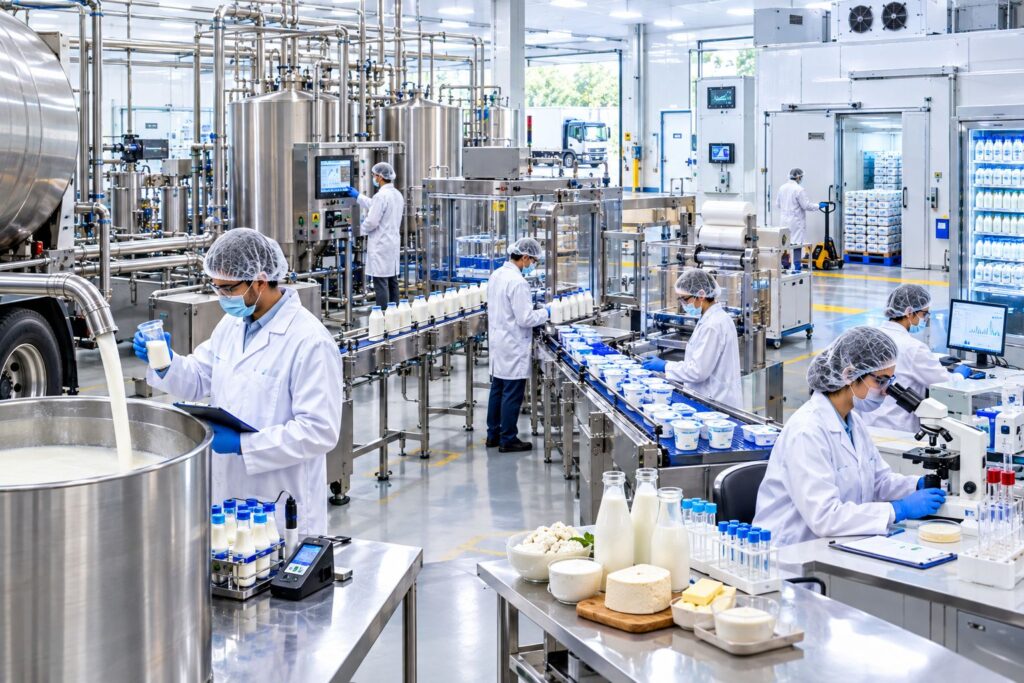
Potential safety control points in the dairy value chain
FFCE

Potential Control Points for Safety in the Dairy Value Chain

Food safety is an assurance of consumer health with adherence to industry regulations. This is accomplished through the identification and monitoring of possible control points such as sourcing of raw milk, pasteurization, and storage for the prevention of contamination risks. This incorporation of safety systems such as Hazard Analysis and Critical Control Point (HACCP), coupled with modern technology, provides a second layer of protection, adding to the safety, quality, and shelf life of dairy products. As consultants design, implement, and audit safety measures, it is vital to help dairy organizations uphold high food safety standards and consumer confidence. Introduction Dairy is one of the most crucial areas in the global food business supplying essential nutrients to millions. However, ensuring the safety of dairy products requires tremendous, meticulous attention due to their terrain of microbial contamination, as well as spoilage. Potential control points during the entire process of dairy processing must be brought to focus and better managed for risk attenuation. Most of the modern safety protocols depend on expert advice to ensure safe but high-quality dairy products are delivered to the consumer. Products developed 0 + Years experience 0 + Countries served 0 + Clients served 0 + Brief About Dairy Safety Process: The safe production and processing of dairy are assured by the rigorous monitoring and control carried out at each stage of production. Limited control points are: 1.Raw Milk Collection Are conditions hygienic during the milking and transportation of milk at the source? 2.Pasteurization Heating infected milk to a temperature which will kill pathogenic microorganisms without detrimental effects on the nutritional value of the milk. 3.Processing and Packaging Maintaining hygienic conditions during processing and using tamper-proof packaging for the prevention of contamination. 4.Storage and Distribution Temperature and humidity gamut should be checked regularly to prevent spoilage during storage and transport. 5.Final Product Testing Microbial, chemical and sensory analysis preceding products reaching the consumer. Key points on the way 1.Textiling and raw milk characteristics All the antibiotics have to be screened and tested, alongside aflatoxins. The test on microbial pathogens must also be done at regular intervals. 2.Hygiene practice Underlying hygiene principles must be strictly maintained by equipment to personnel if a dairy is to be cleaned on the inside and outside. 3.Temperature management Properly adjusted temperatures should be maintained at all times, starting from pasteurization to storage to transportation, so that there is perfect control over the multiplication of bacteria. 4.Good Traceability System Since anything can happen sometimes, a traceability system should be employed to identify the product from farm to table for effective recalls if needed. 5.Regulatory compliance Being in compliance with food safety standards like FSMA and Codex Alimentarius at the level of local and international compliance. Market Trends 1.Focus on Transparency Demand of consumer is greater transparency in food sourcing and production processes. 2.Technology Integration Integration of IoT and blockchain enabled real-time monitoring and traceability of the milk supply chain. 3.Probiotic and Functional Dairy More attention is focused on the safe production of functional dairy products blended with health benefits. 4.Sustainability Practices Leans toward waste reduction and eco-friendly packaging while assuring product safety. 5.Globalization of Dairy Trade Need to comply with international safety standards gaining increased importance because of the global nature of dairy trade. The Role of Consultants 1.HACCP Implementation Develop and implement HACCP systems for identification and control of risk at critical control points. 2.Safety Audits Conduct Regular inspections and audits to ensure adherence to safety regulations. 3.Technology Deployment Advising on the use of advanced monitoring systems such as IoT and sensors for increased safety control. 4.Training and Education Personnel training on hygienic practices, equipment operation, and regulatory compliance. 5.Regulatory Support Supporting businesses with advice in navigating and complying with local and global food safety standards and regulations. Conclusion Food safety is a multi-faceted concept within the dairy industry involving an array of methodically monitored control points. By adopting a proper advanced safety system and strict hygiene and quality standards, producers would be able to reduce these risks and deliver safe, premium dairy products. Consultants provide with the determination and insights into attaining these objectives and, when fulfilled, ensure consumer confidence, growth for the industry, and a sustainable dairy operation.

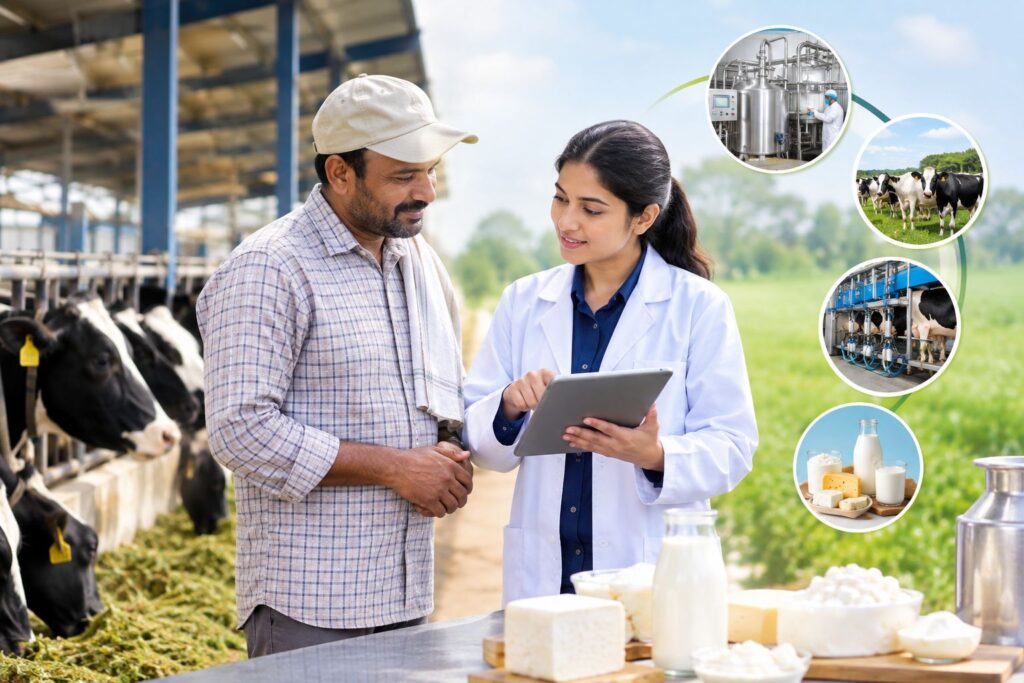
Practical intervention for dairy farms with healthy cows, hygienic milking, sustainable dairy farming, and modern dairy sector management.
FFCE

Practical Intervention For Dairy Farms and Other Dairy Sectors

These practical interventions target a better understanding between dairy production-nature, animal welfare, and product quality. This includes advanced feeding practices, efficient milking systems, waste management, and the utilization of data-driven technologies to help modern dairy goings on sustain the environment and increase profitability. On the scene begin to hit small-scale operations, consultants put in place these strategies and understand the many regulations while aligning operations with market trends. Introduction The dairy industry forms a backbone of the world food system, yet it is plagued by uncertainties regarding demand, rising operational costs, and numerous environmental challenges. With practical interventions in place, a lot could change in dairy farms and processing plants. The practical interventions aim to fully benefit resource use, animal welfare, and reduced Odor as well as enhanced quality and safety of dairy products. The technology fusion and sustainability themed approach is expected to show us a new route of efficiency along with minimized environmental degradation. Products developed 0 + Years experience 0 + Countries served 0 + Clients served 0 + The Process of Implementing Interventions 1.Assessment and Planning Perform an evaluation of farm scenarios, resources, and operational workflows to separate into areas of improvement. 2.Technology Integration Automated systems, IoT devices, and data analytics are integrated to monitor the processes in real-time. 3.Sustainability Practices Eco- or nature-friendly practices that include using renewable energy, recycling water, and proper manure management, are practiced. 4.Training and Capacity Building Train staff in best practices for animal care, hygiene, and sustainable operations. 5.Monitoring and Optimization Monitor key performance indicators constantly and adjust the way things are being done for continuous improvement. Key points in the process 1.Animal Welfare Proper feeding, housing, and health monitoring of dairy animals enhance milk yield and quality. 2.Feeding and Nutrition Precision-feeding systems monitored closely on livestock requirements improve productivity and lower waste. 3.Efficient Milking Systems Uptake of robotic milking systems results in operational efficiency and better hygiene. 4.Waste Management The conversion of waste into bioenergy or fertilizers helps minimize the environmental impact and adds value to by-products. 5.Water and Energy Efficiency Water and energy conservation measures will reduce costs and environmental footprint. Market Trends 1.Sustainability-Centric Consumer demand for eco-friendly dairy products drives the adoption of sustainable practices. 2.Digital Transformation AI, IoT, and blockchain are being increasingly used for better traceability and operational efficiency. 3.Health-Conscious Products Functional dairy products in demand-requiring probiotics, fortifications. 4.Automation and Robotics Automated milk feeding and monitoring systems are used to improve productivity and quality. 5.Expanding Global Dairy Trade External market demands for international quality and safety standards from dairy products are only amplifying focus on exports. Role of consultants 1.Operation Optimization Identifying where things go wrong in workflow and recommending improvements. 2.Technology implementation Assistance in integrating new tools using robotic milking systems and data analytics platforms. 3.Sustainability strategies Advising on the adoption of renewable energies, recycling waste, and environmentally friendly farming practices. 4.Compliance with regulations involved Assist in maintaining dairy production standards at all levels of government export markets. 5.Trainings Training workshops and in-the-field training to give current farm staff an introduction to modern methods and best practices. Conclusion Interventions in practice make up important parts of character which are apparent on dairy farms and other dairy sectors in meeting modern-day challenges and opportunities. For this reason, integrating technology, sustainability measures, and efficient practices into dairy farming will go a long way in increasing productivity, decreasing cost, and improving product quality. Consultants plays important role in advising interventions for businesses to remain competitive and in line with the changing market Trends. Focusing on innovation and sustainability sustains the long-term growth and success of the dairy sector.

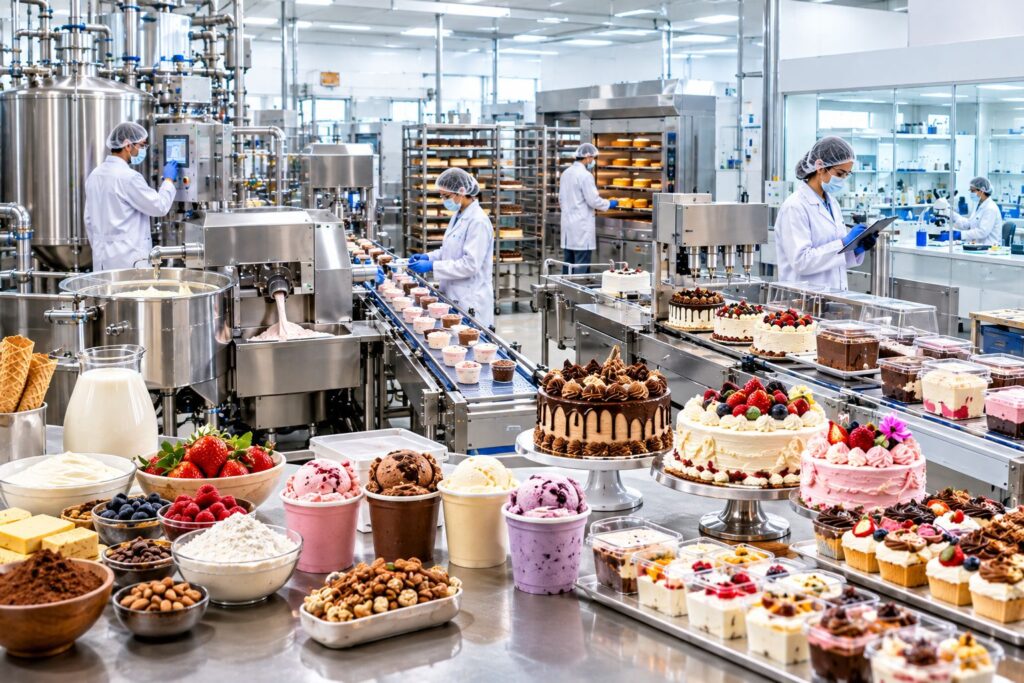
Food processing consultants for ice cream cake production
FFCE

Top Food Processing Consultants for Ice Cream Cake Production

Manufacturing technology on ice cream cake production food consultants help the producers in generating higher production yields of superior quality ice cream cakes. Such consultants assist customers including Tetra Pak, Dairy Management Inc., and Goma Engineering with regards to the adherence to high food safety requirements, optimization of recipes, and efficiency of manufacturing. Food Consultants advise on the design of high-quality ice cream cakes while improving the competitiveness of businesses through the promotion of innovation, quality enhancement, and consistency in the delivery of their products. Introduction Developing the perfect ice cream cake calls for careful detail and deep understanding of ingredients with an innovative mind working beyond mixing just the elements. To guide food manufacturers to deliver delicious quality products that surpass customer satisfaction but still reach the market according to expectations, the work of food processing consultants is precious. This report takes a journey in how renowned food processing consultants such as FFCE, or Frontline Food Consultants and Engineers can be pivotal to an enhanced process in the development of any product. Products developed 0 + Years experience 0 + Countries served 0 + Clients served 0 + Why Hire a Food Processing Consultant for Ice Cream Cake Production? While ice cream cakes combine rich flavors and satisfying textures, mastering the production of them involves intricate considerations. These include: Optimization of texture The required balance of firmness, creaminess, and aeration for both the ice cream and cake layers. Shelf-life stability The maintenance of quality and sensory attributes in the ice cream cake throughout its shelf life. Nutritional Optimization As mycoprotein inherently contains a high amount of protein, supplementing products with additional vitamins, minerals, and other essential ingredients can enhance the nutritional value. This makes food products based on mycoproteins even more attractive to health-conscious consumers. Food Safety Compliance Ensuring high standards of food safety compliance in order to avoid contamination and maintain consumer safety. Flavor Balance Preparing a flavor balance that blends well with the ice cream, cake, and any topping added. Manufacturing Efficiency Ensuring the most efficient production processes that can reduce waste and increase output to lower costs. With this critical knowledge, a food processing consultant like FFCE can: Optimize recipes, for example, improve ingredient formulations for better flavors, textures, and overall sensory appeal. Design Streamlined Manufacturing Processes: Implement efficient production workflows to improve productivity and reduce costs. Facilitate Consistency: Develop standardized procedures to ensure consistent product quality across production batches. Key Considerations for Selecting a Food Processing Consultant: Expertise Ensure the consultant possesses in-depth knowledge and experience specifically in ice cream cake production. Track Record Evaluate the consultant’s past successes and client testimonials. Client-Centric Approach Choose a consultant who is focused on understanding your business needs and objectives. Communication and Collaboration Select a consultant who communicates his or her findings clearly and collaborates closely throughout the engagement. Benefits of Working with a Food Processing Consultant like FFCE: Professional Guidance: Experts at FFCE bring valuable knowledge that can help in perfecting ice cream cake recipes, reducing the incidence of flaws during production, and maximizing sensory appeal. Customized Solutions Consultants tailor recommendations to specific manufacturing processes and equipment by optimizing ingredient combinations and production workflows. Regulatory Compliance Consultants ensure compliance with all applicable food safety regulations, thereby reducing the chances of costly product recalls and sustaining consumer confidence. Innovation New flavors, textures, and production techniques introduced through food processing consultants like FFCE allow for constant innovation and differentiation of products. It is very important to collaborate with an experienced food processing consultant, such as Frontline Food Consultants and Engineers (FFCE), especially when developing new products or improving existing ones for ice cream cake production. The right consultant will be able to help businesses overcome the different challenges that they face, including recipe development, production optimization, and regulatory compliance, which are necessary to meet the business’s production and market goals.

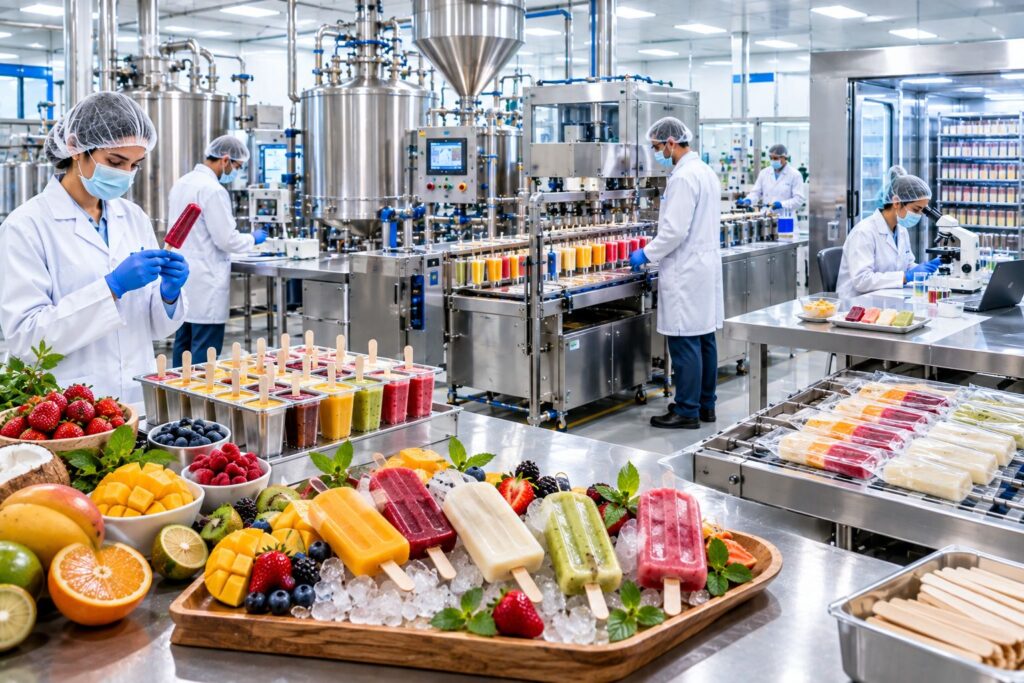
Food processing consultant for popsicle production
FFCE

Top Food processing consultant for popsicle production

Food technology consultants are an integral part of helping the popsicle industry evolve in product innovation, process optimization, regulatory compliance, and food safety management. Consultants help companies to create innovative recipes, streamline the manufacturing process, and stay up to date on food safety laws. Brands can also find aid in their strategy content marketing and digital outreach as they seek to establish brand identity and connect with customers. With the right consultancy, popsicle manufacturers can increase productivity, cut costs, and gain a competitive edge in the frozen dessert market. Introduction Working with an experienced food technology consultant can make all the difference in the popsicle production process, ensuring high-quality products and efficient operations. Whether you are a new entrant into the frozen dessert market or an established brand looking to expand, food consultants bring technical expertise and industry knowledge to the table. This article discusses the critical contributions of food consultants in popsicle production, focusing on product development, production optimization, and compliance with food regulations. Products developed 0 + Years experience 0 + Countries served 0 + Clients served 0 + What is a Popsicle? Popsicles are frozen, flavored, liquid-based desserts usually served on a stick. They can be formulated using a variety of ingredients, including fruit purées, juices, creams, or plant-based alternatives. With growing consumer interest in health-conscious options, popsicles now come in sugar-free, dairy-free, and organic variations, catering to a wide array of dietary preferences. The Role of Food Technology Consultants in Popsicle Production 1. Product Development and Innovation Food consultants recommend popscle composition unique in competitive markets. To do this, they: Formulate Recipes: They create unique popsicle recipes with an appealing flavor profile, utilizing innovative ingredients such as organic fruits, natural sweeteners, and functional additives that may give them a winning edge. Prototype Development: They help scale recipes from concept to pilot production to check for technical feasibility and consumer acceptance. Healthy Attributes: They also guide the development of healthier popsicles with lower calories, vegan, or fortified popsicles. 2. Optimization of Production Effective production is the key to profitability and sustainability. Consultants aid manufacturers in: Process Mapping: Study of the present production processes that help identify the areas of inefficiency and bottlenecks. Equipment Recommendations: Advanced machinery for freezing, molding, and packaging to increase productivity and consistency. Waste Reduction: Strategies are developed to minimize raw material loss and optimize the use of ingredients, thereby reducing costs. 3. Food Safety and Regulatory Compliance Food safety does not bargain when it comes to popsicle production. Consultant services include: Regulatory Advice: Advising on compliance with local and global food safety regulations, such as those of FSSAI, FDA, or EU. Quality Assurance Systems: Developing a strong quality control system, with hazard analysis and critical control points (HACCP). Traceability Solutions: Developing a digital system to trace raw materials and finished goods through the supply chain. 4. Marketing and Brand Support Besides production, consultants help in devising effective marketing strategies that create consumer interest in the product. Content Marketing: Developing stories based on the product’s uniqueness, health benefits, and sustainable practices. Digital Campaigns: Leveraging social media, SEO, and influencer marketing to target a specific demographic efficiently. Conclusion In order to remain competitive in the frozen food market, especially for popsicles, something more than just a good taste is necessary. The consulting firms with food technology consultants enable companies to innovate and make their business more efficient, along with making them compliant with regulatory requirements. Such collaboration promotes the quality of products, efficiency in operations, and brand development. For both small-scale companies and large enterprises, consultancy service investment is an essential step towards the long-term prosperity of a popsicle market business.

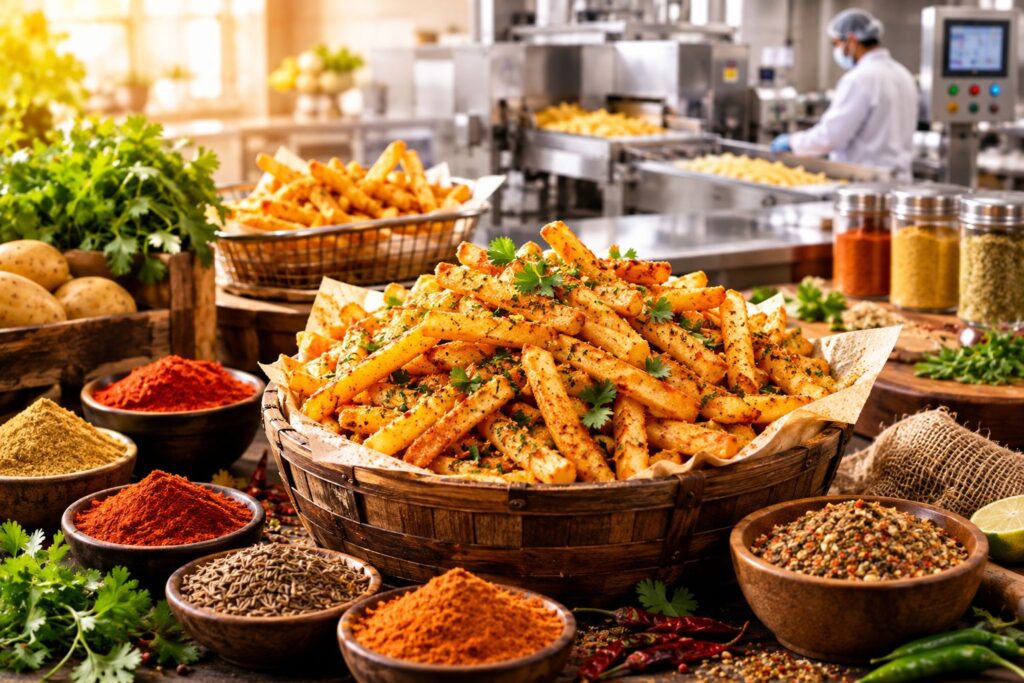
Indian French fries with spices and innovative flavours
FFCE

The Indian French Fry Revolution: Where Spices Meet Crispy Perfection

India’s French Fry Revolution produces unique new fry styles by combining local spices with global flavor profiles. Food consultants play an important role in fueling the trend, aiding companies to satisfy the diversified taste and healthy demand of the customer base. This revolution changes India’s snacking culture as well, giving innumerable choices for flavouring. “The French Fry’s Origins: A Tasty Tale of Tradition and Transformation” The history of this most popular fry around the world, however, remains full of mystery and culinary controversy. The Belgian and French peoples have been claiming to be its originators. Before the Meuse River froze up in the 1600s, Belgian villagers started frying their potatoes instead of fish. Meanwhile, in France, in the late 1700s, “pommes frites” became widely popular. French immigrants brought fries to the United States in the early 20th century, making it a global phenomenon. In the 1940s, McDonald’s was largely responsible for the commonality of fries as fast food throughout the world. People around the globe dig French fries, and now, over the ages, people have come up with and fancy their forms- whether crispy, sweet potato, or loaded. Products developed 0 + Years experience 0 + Countries served 0 + Clients served 0 + The Rise of French Fries in India This concept of French fries is not a new one for India. Years ago, people enjoyed the popular snack in all its different Flavors, with fast food restaurants catering to their versions of golden, crispy fries. But what is truly exciting about this revolution is the creativity and Flavors that are turning the simple fry into something quite new. For the last few years, Indian snack enthusiasts have been clamoring for more distinct, bold, and customized French fries. India’s rich heritage offers the opportunity to mix and match an array of spices and Flavors into the whole potato treat. Cheese and butter fries, peri-peri-style sour-tasting fries, or masala-spiced, with possibilities endless. How Food Consultants Are Shaping the French Fry Revolution Food consultants are among the most significant elements of this movement. They provide advice and guidance to food business organizations. Knowing the tastes and preferences of Indian consumers, novelties of food, and trend of food influence the way they consume French fries in India. They are involved in this change in the following ways: Flavor Innovation Food consultants are working closely with fast food restaurants, snack bars, and restaurant chains to create new flavors that will appeal to the Indian palate. These consultants are driving the effort to make French fries more interesting by experimenting with international flavors such as truffle oil and adding regional spices like garam masala or chutneys. Menu Development Consultants are supporting food businesses to expand their menu by offering such different variations of French fries such as sweet potato fries, loaded fries, or serving fries with various dipping sauces. This variety is not only beneficial but also supports the healthy trend of consumption with baked fries or air-fried versions. Equipment Selection A food processing consultant offers valuable recommendations on selecting the right equipment based on factors such as capacity, throughput, and product type. Additionally, they assist in designing an efficient layout to minimize operational bottlenecks and reduce contamination risks. Consumer Insight Only an understanding of what the Indian consumer wants will be important. Food consultants collect valuable consumer data, comparing trend and preference analysis from which they advise businesses on local tastes that would respond best to the businesses. For example, for fusion foods, prepared French fries are a must be served in styles that benefit today’s adventurous eaters. Quality Control Though innovation in flavor matters, the quality and homogeneity of French fries are fundamentally important for long-term success. Food consultants oversee supply chain management in the business, source the appropriate type of potatoes, and decide on the best cooking technique to get crispy, fresh, and even Savory fries. Focus on Sustainability and Health Food consultants are helping companies determine how to make French fries a healthier snack as consumer demand for more sustainable and healthful food options is increasing. This may include organic potatoes, less oil, or gluten-free and plant-based alternatives. The French fry revolution in India is a cultural change in how we perceive and consume snacks rather than a fad. The entire movement continues to push further in combining the latest cooking methods and traditional Indian spices, led by food consultants, and finds an endless variation in the French fries used as a blank canvas for some imagination play. The changing market of French fries in India offers exciting new tastes and experiences to consumers and business opportunities simultaneously.

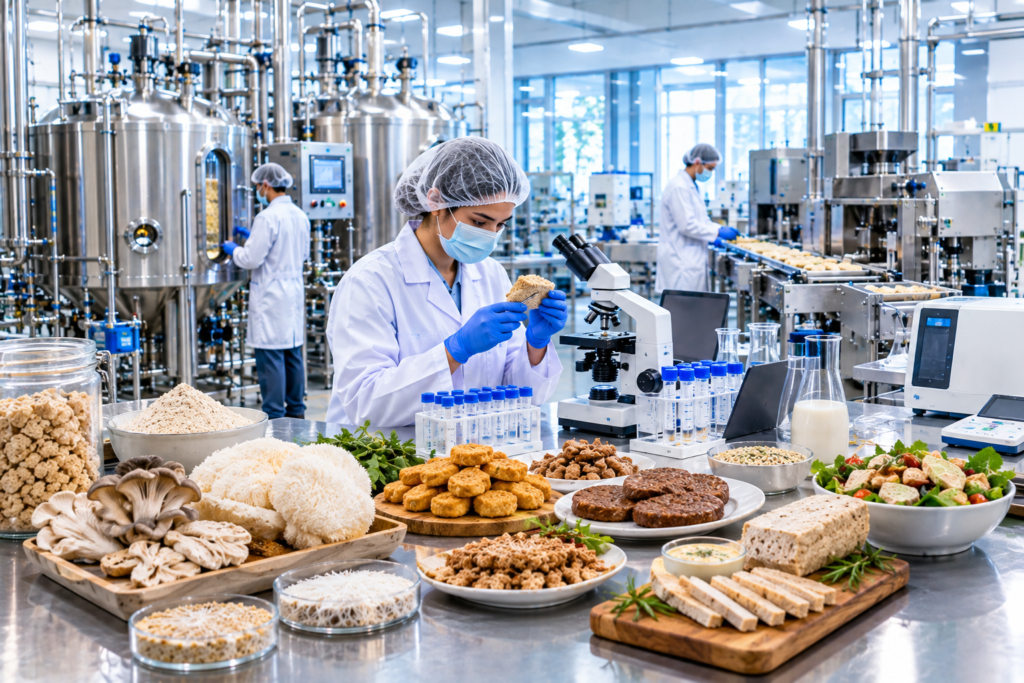
Mycoprotein formulation consultants for plant-based protein products
FFCE

Top Mycoprotein Formulation Consultants: Leading the Way in Plant-Based Protein Innovation

Mycoprotein is a sustainable, plant-based protein high in fibre and low in fat. High protein, mycoprotein as a meat substitute, has been performing quite impressively. For the formulations of mycoprotein, the most crucial product developers are involved in nutritional development, texture improvement, and taste optimization. The growth of plant-based proteins can be driven by these companies, developing delicious, nutritious, and market-ready goods while maintaining compliance with the law. Introduction Due to growing interest in this global shift to sustainable eating, mycoprotein, a rich plant-based alternative to protein replacement, has found significant interest and application. Developed from fungi, mycoprotein provides a versatile, nutrient-rich source of protein with a structure akin to animal meat for generating plant-based versions of meats, among other highly protein-based products. However, the production and marketing of these mycoprotein products require considerable expertise, for which the cream of mycoprotein formulation research scientists are poised to lead innovation. Products developed 0 + Years experience 0 + Countries served 0 + Clients served 0 + What is mycoprotein? Mycoprotein is a fermented protein sourced from the fungus Fusarium venenatum. Due to its richness in protein, fibre, vitamins, and minerals, it has a wholesome and sustainable content instead of animal-based proteins. It feels like meat, hence often featured in plant-based products such as meat alternatives that offer low-fat, cholesterol-free, and a healthy alternative to consumers who wish to be plant-based. Why is Mycoprotein Becoming a Popular Choice? High in protein and containing high quantities of fibre, vitamins, and minerals, mycoprotein is an excellent substitute source of meat in many respects, particularly for people who reduce their animal-based protein consumption since mycoprotein has no cholesterol and fewer saturated fats. It also makes it a staple in the growing plant-based food industry as it can be used in numerous plant-based products, such as sausages and burgers. For ethical, environmental, or health reasons, mycoprotein is rapidly becoming more and more popular as people increasingly turn to plant-based diets. The Role of Mycoprotein Formulation Consultants Experts for formulating the right mycoprotein-based product will require experience in product development, market research, and new ingredient innovation. Major areas in which leading mycoprotein formulation experts influence: Product innovation and recipe development The consultants significantly collaborate with the food manufacturers to design and enhance mycoprotein recipes to satisfy customer preferences and nutritional needs. They try out a variety of flavours, textures, and combinations to ensure that the products stand out in this crowded market of plant-based proteins. Improvement of Texture and Taste  While the texture of mycoprotein is like meat, food technologists refine the product to render it more acceptable to most consumers. This is necessary to acquire the approval of the converts to plant-based diets or unfamiliar fungus-based proteins. Nutritional Optimization As mycoprotein inherently contains a high amount of protein, supplementing products with additional vitamins, minerals, and other essential ingredients can enhance the nutritional value. This makes food products based on mycoproteins even more attractive to health-conscious consumers. Recommendations for Regulation and Compliance Food consultants help companies with labelling, certification, and food safety regulations while ensuring that mycoprotein products meet all the safety and regulatory requirements. Leading mycoprotein formulation consultants significantly drive the future of plant-based proteins. They help businesses develop new, market-ready mycoprotein products that meet customer demand for excellent taste, nutrition and sustainability. Thus, they leverage their knowledge in developing products, enhancing flavors, nutritional optimization, and adherence to regulations.

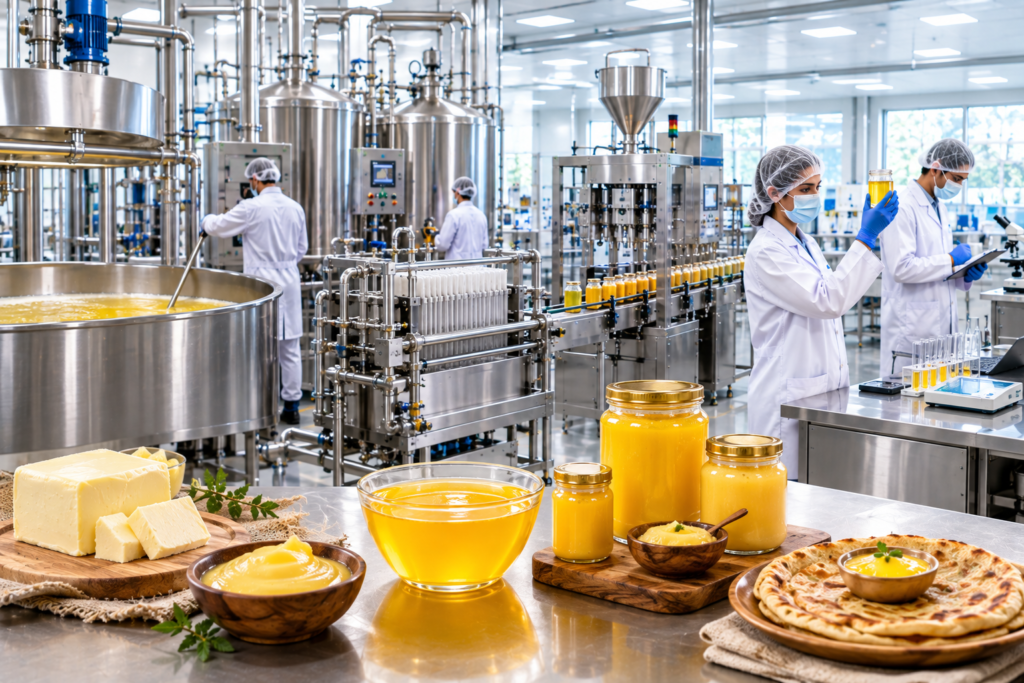
Food consultants supporting quality ghee production and processing
FFCE

The Role of Food Consultants in Ghee Production: Ensuring Quality and Success

Food consultants are essential to producing ghee because they ensure consistent quality, simplify production processes, and ensure legal compliance. They help streamline processes, reduce waste, and increase the production efficiency. A consultant’s skill in branding, quality assurance, and market strategy ensures that your ghee stands out and meets customers’ needs, which eventually drives business success. Introduction Today, a high-quality food product from this expensive food industry must be age-appropriate for consumption in the current market. Hailed as the “liquid gold,” ghee is one prized item in various home kitchens thanks to its exemplary flavour and multiple health benefits. Mass-producing a large quantity of high-quality ghee is quite a challenge. Food consultants might help in this area by providing the expertise and knowledge required to guarantee high standards, optimize manufacturing processes, and ensure your product is unique in the market. Products developed 0 + Years experience 0 + Countries served 0 + Clients served 0 + Why Ghee Production Needs Expertise Ghee production is associated with various critical processes like sourcing the best butter, converting it to ghee, and losing none of its nutritious value. Mistakes at any stage can ruin the final product’s flavour, texture, and quality. Food experts play a significant role in ensuring your ghee is produced consistently, safely, and highly. Knowing the Production Process: Making ghee involves carefully heating butter to separate the milk solids and carefully timing to avoid burning. Every step must be followed carefully to ensure the nutritional value is retained and the flavour is rich and fragrant. The food consultants provide extensive knowledge through these procedures, which optimizes the approach for the best outcomes. Staying Consistent: One of the major issues in food production is ensuring uniformity between batches. Every time they buy ghee, they expect the same flavour and texture. It will be the job of a food consultant to have mechanisms in place that would ensure quality control, standardized processes, and even stringent testing to make sure every batch of ghee meets your high demands. The Benefits of Hiring Food Consultants Improved Production Efficiency Proper productivity is essential while producing food; consultants ensure resource maximization on your part as they streamline a process, curtail manufacturing costs, and lessen waste. As such, such insights can also help your firm run smoothly or increase your bottom line by simply automating pertinent operations and utilizing the workforce to a maximum. Food processor compliance Generally, all food manufacturers should observe the food safety regulations at local, national, and international levels. To confirm that your product is compliant, food consultants help you manage certifications, labelling laws, and food safety guidance. They are up to date with all the rules and regulations related to ghee manufacturing. They further help you with required audits and inspections that will help to curb costly mistakes. Developing a Strong Brand Image In a competitive market, you must have a unique, recognizable brand to make your product stand out. Food experts will assist you with everything from container design to determining your target market. They also bring new insights into branding and marketing tactics. With their help, your ghee product can attract health-conscious customers and stand out on retail shelves. The ghee preparation might seem easy, but the process requires accuracy, expertise, and attention to detail. Using food consultants, you can access the most extensive knowledge for increasing production efficiency, consistency in quality, overcoming regulatory hurdles, and brand identity. Their advice could distinguish between a failed ghee company that cannot satisfy consumer wants and a successful one. Culinary consultants are a big help in producing the best possible ghee regardless of the size of your business.  

Soy-based food innovation and product development in India
FFCE

Exploring Soy-Based Food Innovation in India: The Role of Leading Food Technologists and Consultants

Increased demand for plant-based food is fuelling the growth of soy-based food in India. Food technologists and consultants are innovating items such as meat alternatives, improving soy’s flavour, texture, and nutritional value. They play an essential part in the prosperity of India’s soy food industry by ensuring sustainability and satisfying the demands of health-conscious consumers. Introduction In India, soy-based foods are increasingly being consumed as consumers’ demand is rising for plant-based protein sources. From tofu and meat substitutes to soy milk, soy provides many sustainable nutrient-dense options. Still, the commercial success of soy-based products remains very much in the hands of food technologists and consultants who develop and optimize production methods. Products developed 0 + Years experience 0 + Countries served 0 + Clients served 0 + Why Soy-Based Foods Are Growing in Popularity A nutritional powerhouse, soybeans are rich in protein and low in saturated fats. This can be cooked in many ways and can be the future of diets among Indians. Since more and more Indians switch to plant-based diets for various reasons, from ethics to environmental or health issues, soy-based products are ready to fill that demand for animal-free foods. Soy products also become necessary for daily diets since more and more people are switching to veganism and health awareness. The Role of Food Technologists Food technologists play a vital role in developing soy-based foods in India. They are constantly improving soy products’ flavour, texture, and nutritional quality to gain acceptance from the local market. These innovators are revolutionizing the plant-based food industry by developing novel soy-based snacks and protein-rich foods and reformulating soy milk. Key areas of focus for food technologists include Improvement of Texture and Taste: Some people do not like soy’s unique taste and feel. Food consultants work with companies to experiment with methods of improving those, thereby making soy even more appealing and delectable to meet consumer preferences. Product Innovation: Due to the growing demands of convenience and health-conscious customers, food consultants aid in innovating new products from soy products, including prepared-to-eat foods and alternative meat products. With their deep knowledge of current market trends, they help their companies be better prepared with their innovative products in advance. Sustainability: With rising environmental concerns, food consultants also guide the production of soy-based products very effectively and sustainably. As per the consumers’ needs and environmental necessities, they further ensure the best utilization of nutrition of soy-based food, enhance production process optimization, and minimize waste. The Role of Food Technologists Food consultants bring product development knowledge, market research, and regulatory compliance into the soy food sector. Consultants assist companies with food safety regulations, trend analysis, and satisfying customer needs. Consultants also optimize recipes and cost structures to make soy-based products tasty and affordable. This is the driving reason behind the growing demand for soy-based foods in India, with the cooperation of food technologists and consultants who emphasize innovation and assure the quality of products. Ultimately, with ever-changing customer tastes moving toward sustainable and healthier options, such experts are crucial for the survival of India’s soy food industry.

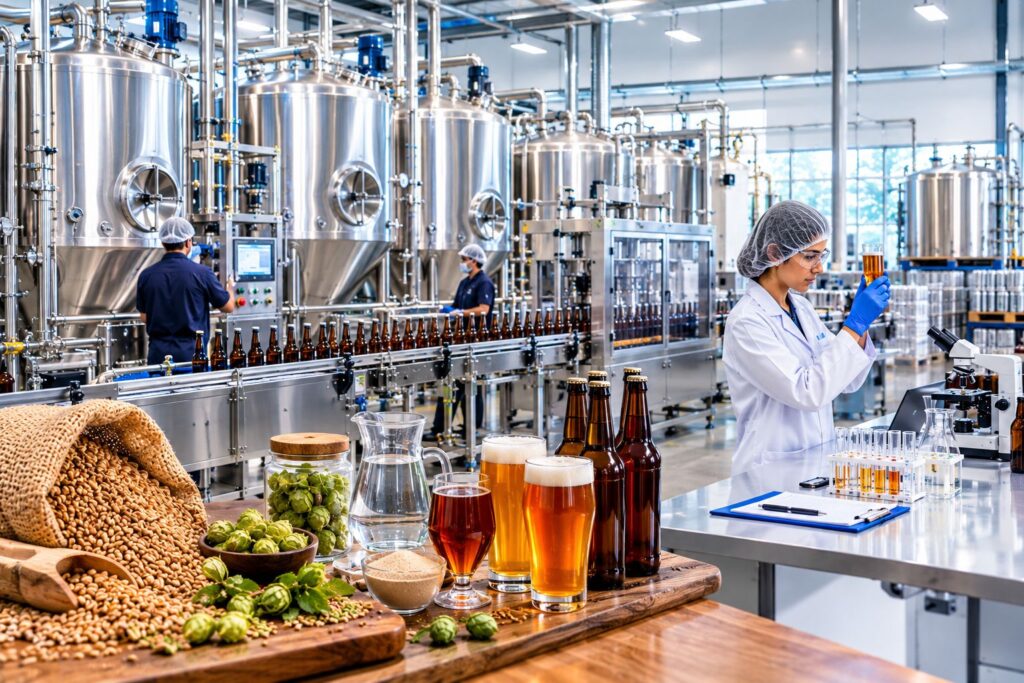
Beer manufacturing consultants supporting brewery production in India
FFCE

Beer Manufacturing Consultants in India

It is now the quest for craft beers that drive current Indian brewing industry growth. The process of making a beer starts with water, malt, hops, and yeast, along with an intermingling of art and science for craft brews, featuring a firm belief in sustainability, getting a cohesive feel from alcohol strength, and the application of ingredients tasting like India. The expertise of specialty beverage formulation is directed at the making of beers compatible with changing palates of Indian customers. When it comes to these consultants for beer production and third-party production here, it’s the case that more and more they are becoming bigger role players of deciding the future that may unfold in the industry.   The transition point that Indian brewing has reached now is being propelled by the demand for craft beers and specialty beers. Although beverage formulation is one of the key mechanisms for seeing this transition, it is synonymous with the gamut of localized tastes, trends, and variations in local beans.The beer consultancy is essentially formulated with the skills to fit beverage formulations, production, market trends, and developing products that connect with the consumers. Third-party beverage manufacturers, on the other hand, provide a good option for actual as well as new brands looking to tap into more production with minimal capital risk involvement. This shared model will allow the brands to concentrate their energy on marketing and innovation while relying on specialized facilities for their production. Products developed 0 + Years experience 0 + Countries served 0 + Clients served 0 + Understanding Indian Beer Markets The major shaking is going on in India’s craft beer market, ever since the youth populace increased, and their quest for craft and specialty beers grew. While typical lagers have been a staple with drinkers for a long time, the trend is now toward those with bold flavors in IPAs and uniquely flavored ales. In this competitive vicinity, brands must develop products to correspond to local flavors and trends while also ensuring another competitive factor in the sector: refreshing, delicious products at accessible price points. That is where third-party manufacturers and consultants in brewing fit in. While consultants offer knowledge and foresight into tastes of consumers, ingredient sourcing, and formulation methodologies, third-party manufacturers provide both manufacturing space and autonomy together. Major Ingredients in Beverage Formulation Water, malt, hop, and yeast represent the basic ingredients which make up beer. Well-prepared drinks are made from these basic ingredients. Water Quality Quality water constitutes almost 90% of beer, hence its quality is very crucial in beer preparation. In India, the water quality within different geographical areas varies hugely; hence, pH level and mineral content need to be uniform. With this, beer consultants trace and modify water profiles with brands in order for every batch to meet necessary standards while engaging a third-party production company, which has an elaborate filtering and treatment system, to maintain water quality. Choosing the Malt Malt constitutes a scaffold for beer, supplying fermentable sugars that give rise to alcohol as yeast action commences. The selection of the malt heavily influences the taste, color, and mouthfeel of the final beer. Someone will educate the brand on how to choose the proper malt varieties for target flavor profiles, while a contract manufacturer assures careful handling and processing throughout the entire life cycle of the beer. The one peculiar contribution of specific hop plant types with special yeast strains gives the beer character, tremendous bitterness, flavor, and aroma.In this way, the beer consultants advise the brand to try various hops and yeast forms in order to produce a new beer. They can achieve quality and consistency in the final product depending on the fermentation process handled by these third-party manufacturers. Role of Beer Consultants The beer consultants intervene with substantial expertise in recipe formulation, production assistance, and market trend navigation to assist a brand in dealing with myriad complexities. Consultants may assist in the following areas: Development of the recipe to suit local tastes. Procurement of ingredients and quality assurance. Streamlining processes for efficiency and consistency. Analysis of the market and establish trend forecasting. Thus, the consultant provides the brand with an opportunity to gain growth fast and stand out in a crowded market.Third-party manufacturing naturally becomes a favorite choice among beer brands in India, especially among the startup companies and micro-level manufacturers. The option comes with many benefits Cost-Efficiencies: Companies will be kept away from big capital investments needed for setting up a brewery;Flexibility: Such types of third-party manufacturers may vary the volume produced per order and allow a brand to scale without impediment.Technical know-how: Mature manufacturers provide technical know-how and quality control, which guarantees the resulting product would meet established standards.Innovation focus: Companies can get on with innovation in products, branding, and marketing while allowing the experts to deal with manufacturing. Conclusion Indian craft beer is poised for great growth propelled by the changing consumer tastes and innovative product development. Beer development consultants and third-party manufacturers are key allies in the process, wielding the technological and infrastructural skills and resources essential in positioning winning brands. Such competencies will elevate the creation of a new genre of quality, locally inspired beers that will win the Indian palate and add momentum to the beer industry.  

Scroll to Top

Your Trusted Food-Tech Partner Simplifying Solutions, Maximising Success

    Your idea is 100% protected by our Non Disclosure Agreement

    What is Refresh icon

    Your Trusted Food-Tech Partner Simplifying Solutions, Maximising Success

      Your idea is 100% protected by our Non Disclosure Agreement

      What is Refresh icon

      Your Trusted Food-Tech Partner Simplifying Solutions, Maximising Success

        Your idea is 100% protected by our Non Disclosure Agreement

        What is Refresh icon

        Powering your food business forward